
Smart homes represent the convergence of advanced technology and sustainable living, revolutionizing the way we inhabit residential spaces. They enhance daily life by automating systems, improving energy efficiency, and fostering better organization. Understanding smart homes in the context of sustainability and organization is crucial for designing future-ready residences that prioritize human comfort and environmental responsibility.
The demand for sustainable architecture has never been higher, as climate change and resource scarcity challenge traditional building methods. Smart homes offer an opportunity to address these issues through innovative design, energy management, and optimized spatial organization. Emphasizing slow, intentional living, these homes reflect a human-centered approach that integrates architectural innovation with ecological mindfulness.
This article explores the multifaceted relationship between smart homes, sustainability, and organization. We will examine how technology reshapes residential architecture, the principles guiding sustainable smart homes, and effective strategies for creating organized, climate-aware living environments. Each section provides detailed insights for architects, homeowners, and designers seeking to harmonize technology with the natural world.
Innovations in Smart Homes Technology
Integrating Automation for Enhanced Sustainability
Smart homes leverage automation to optimize energy use, reduce waste, and support sustainable living. Automated lighting, heating, and cooling systems adjust dynamically to occupant behavior and environmental conditions, significantly lowering energy consumption. These intelligent systems utilize sensors, machine learning, and real-time data to maintain comfort while conserving resources.
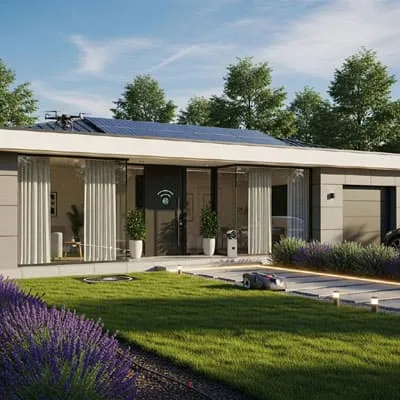
By automating resource management, smart homes minimize human error and inefficiency, contributing to long-term sustainability goals. This technological integration also supports renewable energy use by managing solar panels and battery storage effectively.
Smart home automation is not only about convenience but about creating a symbiotic relationship between inhabitants and their environment, reducing the carbon footprint while enhancing quality of life.
Key Technologies Driving Smart Home Evolution
- Internet of Things (IoT) devices for seamless connectivity
- Artificial intelligence for predictive energy management
- Advanced sensors detecting occupancy and environmental factors
- Integration with renewable energy systems
- Voice and gesture control interfaces
These technologies form the backbone of modern smart homes, enabling systems to communicate and adapt continuously. IoT devices create an interconnected ecosystem where lighting, security, HVAC, and appliances work in harmony. AI algorithms analyze patterns to improve efficiency and occupant comfort, while sensors provide precise environmental data.
Renewable energy integration is enhanced by smart grid technologies, allowing homes to become active participants in energy markets. User-friendly control interfaces ensure that technology remains accessible and intuitive, promoting widespread adoption.
Challenges and Opportunities in Smart Home Implementation
Despite technological advances, implementing smart homes presents challenges such as high initial costs, data privacy concerns, and system interoperability issues. Ensuring that devices and platforms communicate seamlessly requires standardized protocols and robust cybersecurity measures.
However, these challenges also present opportunities for innovation in design, manufacturing, and policy frameworks. Developing affordable, secure, and modular smart systems can accelerate adoption, particularly in sustainable residential construction.
Architects and designers must consider these factors early in the planning process, aligning technology choices with sustainability and organizational goals to create resilient, user-friendly smart homes.
Smart Homes and Sustainable Architecture
Principles of Sustainable Smart Home Design
- Maximizing energy efficiency through insulation and passive design
- Utilizing renewable energy sources such as solar and geothermal
- Incorporating water conservation and recycling systems
- Choosing sustainable, non-toxic building materials
- Designing for adaptability and long-term resilience
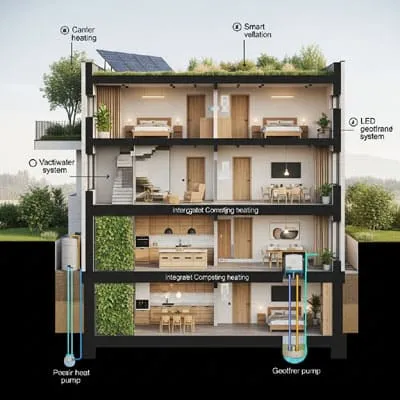
Sustainable smart home design begins with architectural strategies that reduce energy demands and environmental impact. Passive solar orientation, natural ventilation, and high-performance insulation form the foundation of energy-efficient homes. When combined with smart technology, these strategies enhance performance by adapting to changing conditions.
Renewable energy integration is essential for reducing reliance on fossil fuels, while water-saving technologies contribute to resource conservation. Material selection focuses on longevity, recyclability, and health considerations to ensure homes are both environmentally responsible and comfortable.
Benefits of Combining Sustainability with Smart Technology
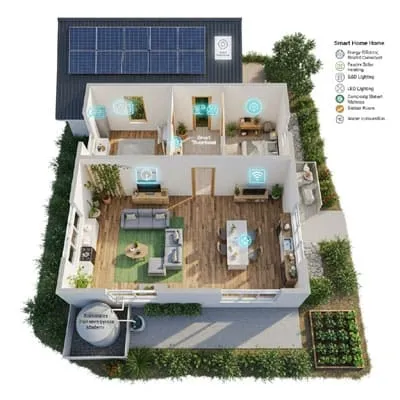
Smart homes designed with sustainability in mind offer multiple benefits, including lower utility costs, reduced carbon emissions, and improved occupant well-being. Real-time monitoring enables homeowners to track energy and water usage, promoting conscious consumption habits.
Adaptive systems adjust to environmental changes and user behavior, enhancing comfort while minimizing waste. These homes also increase property value and market competitiveness by meeting growing demand for eco-friendly living.
The integration of smart technology and sustainable design fosters healthier indoor environments through improved air quality and lighting control, supporting holistic well-being.
Comparing Traditional and Smart Sustainable Homes
| Aspect | Traditional Sustainable Home | Smart Sustainable Home |
|---|---|---|
| Energy Management | Manual controls and fixed systems | Automated, adaptive energy optimization |
| Resource Usage Monitoring | Periodic manual checks | Real-time tracking and alerts |
| Occupant Comfort | Static environmental settings | Dynamic adjustment based on preferences |
| Maintenance | Reactive, scheduled | Predictive and proactive through analytics |
Organizational Strategies for Smart Living Spaces
Optimizing Spatial Layout for Functionality
- Designing multi-functional rooms to maximize use
- Incorporating modular furniture for flexibility
- Defining clear zones for work, leisure, and rest
- Utilizing vertical space for storage efficiency
- Creating clutter-free environments to support mental clarity
Smart homes emphasize deliberate spatial organization to enhance daily living. Thoughtful layouts that allow fluid movement and multifunctionality reduce wasted space and improve efficiency. Modular elements enable adaptation to changing needs, supporting long-term usability.
Defining zones for different activities helps occupants maintain focus and balance, while effective storage solutions prevent clutter accumulation. These organizational strategies align with slow living principles, encouraging calm and intentional inhabitation.
Incorporating Technology for Seamless Organization
Technology plays a critical role in maintaining organized smart homes. Digital assistants, inventory management apps, and automated scheduling systems help residents stay on top of daily tasks and household maintenance.
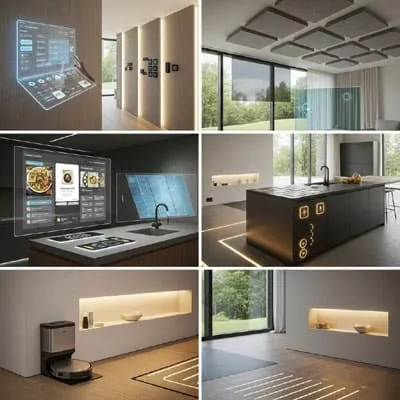
Smart storage solutions integrate sensors that monitor item usage, reducing loss and duplication.
These tools assist in streamlining routines and freeing mental space, allowing occupants to focus on meaningful activities. Technology-enabled organization supports sustainable living by minimizing overconsumption and waste.
Architects and designers must integrate these systems unobtrusively within the home’s architecture to preserve aesthetic coherence and comfort.
Environmental Psychology in Organized Smart Homes
Understanding how space organization impacts human behavior is essential for designing smart homes that promote well-being. Cluttered, chaotic environments increase stress and reduce productivity, while calm, intentional spaces foster relaxation and creativity.
Incorporating principles from environmental psychology, smart homes utilize lighting, acoustics, and spatial arrangement to support mental health and social interaction. This human-centered approach ensures that technology enhances rather than disrupts the inhabitant’s experience.
Designers must balance technological complexity with simplicity, creating environments that feel natural and welcoming despite advanced systems.
Energy Efficiency and Resource Management
Smart Energy Systems and Their Impact
- Automated lighting and HVAC controls
- Integration with smart grids for energy trading
- Real-time consumption analytics
- Battery storage and load shifting
- Demand response participation
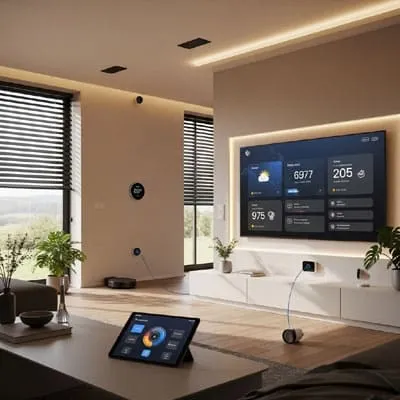
Energy efficiency is a cornerstone of sustainable smart homes. Automated systems adjust energy use in response to occupancy and external conditions, significantly reducing waste.
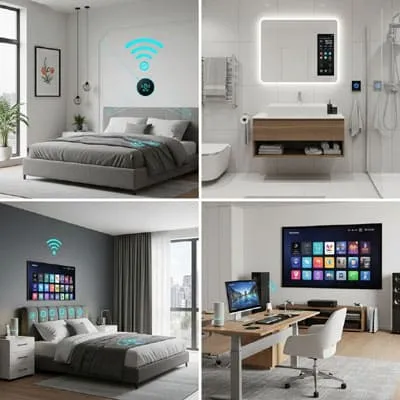
Integration with smart grids allows homes to sell excess energy back to utilities, enhancing overall efficiency.
Real-time analytics provide occupants with actionable insights, encouraging energy-conscious behaviors. Battery storage enables load shifting, reducing peak demand and lowering costs.
Participation in demand response programs further supports grid stability and environmental goals.
Water Conservation Technologies in Smart Homes
Water management is equally important in sustainable smart homes. Technologies such as smart irrigation, leak detection sensors, and greywater recycling systems optimize usage and prevent waste. These systems monitor consumption patterns, alerting homeowners to anomalies and inefficiencies.
Smart plumbing fixtures reduce water use without sacrificing comfort, contributing to broader sustainability objectives. Incorporating rainwater harvesting into home design supports self-sufficiency and resilience.
Effective water conservation complements energy efficiency efforts, resulting in holistic resource management.
Comparative Analysis of Resource Management Systems
| System | Traditional Approach | Smart Home Integration |
| Lighting | Manual switches | Motion sensors, adaptive brightness |
| Heating/Cooling | Thermostatic controls | AI-driven climate control |
| Water Usage | Standard fixtures | Smart meters and leak alerts |
Human-Centered Design in Smart Homes
Balancing Technology and User Experience
Successful smart homes prioritize the user experience, ensuring that technology enhances rather than complicates daily life. Interfaces must be intuitive and accessible, catering to diverse user abilities and preferences. Customizable settings empower inhabitants to tailor their environment without technical frustration.
Designers focus on minimizing sensory overload, using calm aesthetics and intentional layouts to create serene living spaces. This balance fosters a sense of control and well-being.
Human-centered design bridges the gap between cutting-edge technology and timeless architectural values.
Designing for Adaptability and Longevity
Smart homes must be adaptable to evolving technologies and occupant needs. Modular systems, upgradable components, and flexible spaces ensure that homes remain functional and relevant over time. This adaptability supports sustainability by reducing the need for costly renovations or replacements.
Architectural design anticipates future changes in family size, lifestyle, and technology integration, promoting resilience. Longevity is achieved through quality materials and craftsmanship, combined with smart infrastructure.
These principles align with slow living, encouraging thoughtful investment in lasting homes.
Creating Calm and Intentional Spaces
Calm and intentional design is fundamental in smart homes that respect human rhythms. Natural materials, soft lighting, and acoustic control contribute to peaceful environments. Spaces are organized to minimize distractions and support mindfulness.
Intentional design choices encourage slow living, where technology serves to facilitate presence and connection rather than distraction. This approach leads to healthier, happier residents.
Architectural interventions subtly integrate technology to maintain harmony and balance.
Global Perspectives on Smart Sustainable Homes
International Trends in Sustainable Smart Architecture
Globally, smart sustainable homes reflect diverse climatic, cultural, and regulatory contexts. Scandinavian countries emphasize energy efficiency and minimalism, while Asian markets integrate high-density living with smart technologies. Emerging economies explore affordable, scalable smart solutions aligned with sustainability goals.
International collaboration fosters knowledge exchange, accelerating innovation in materials, design, and technology. Policies incentivize green building practices and smart home adoption worldwide.
Understanding these trends helps architects design contextually appropriate smart homes that respect local environment and culture.
Climate-Aware Design Adaptations
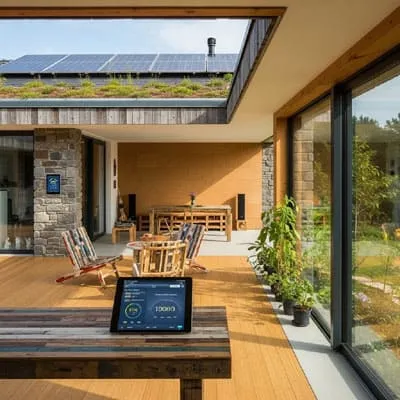
Climate-aware smart homes adjust to regional environmental challenges such as extreme temperatures, humidity, or natural disasters. Adaptive building envelopes, responsive shading, and resilient infrastructure protect occupants while minimizing energy use.
Smart technologies enable real-time monitoring and rapid response to climate events, enhancing safety and comfort. Water scarcity and air quality concerns are addressed through integrated filtration and conservation systems.
These adaptations demonstrate the crucial role of smart homes in building climate resilience at the residential scale.
Cross-Cultural Organizational Practices
- Utilizing local materials and craftsmanship
- Incorporating traditional spatial hierarchies
- Balancing communal and private spaces
- Adapting technology interfaces to language and customs
Organizational strategies in smart homes vary by culture, reflecting diverse social norms and lifestyles. Some cultures prioritize open, flexible communal spaces, while others value defined private areas. Smart home technologies must accommodate these preferences to remain relevant.
Integrating local materials and artisanal techniques enhances sustainability and cultural authenticity. Customizing interfaces and automation routines ensures usability and acceptance across varied populations.
Architectural Integration of Smart Home Systems
Designing Infrastructure for Seamless Technology
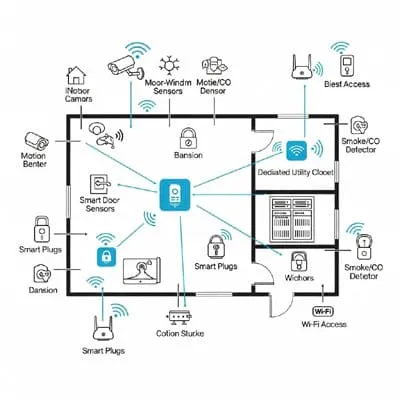
- Concealed wiring and sensor placement
- Dedicated spaces for control hubs and servers
- Flexible conduits for future upgrades
- Harmonizing technology with architectural aesthetics
Architectural integration requires foresight and precision. Designing infrastructure that supports smart systems without compromising aesthetics or functionality is critical. Concealed wiring maintains clean lines and minimalism, while accessible control hubs facilitate maintenance.
Flexible conduits allow technology to evolve without invasive renovations, extending home longevity. Thoughtful sensor placement ensures optimal system performance without disrupting living spaces.
This integration reflects an architectural approach that prioritizes both form and function.
Material Selection and Its Role in Smart Homes
Material choices influence the performance of smart sustainable homes. High thermal mass materials improve energy efficiency, while low-VOC finishes promote healthy indoor air quality. Reflective surfaces and glazing optimize natural light, reducing reliance on artificial sources.
Materials also impact sensor accuracy and system responsiveness; non-interfering substances enhance smart system reliability. Sustainable sourcing and recyclability further align with ecological objectives.
Architects must balance aesthetic appeal with functional compatibility when selecting materials for smart homes.
Case Study: Architectural Excellence in Smart Sustainable Housing
| Project | Location | Key Features |
| EcoNest Residence | Sweden | Passive solar design, AI-controlled HVAC, rainwater harvesting |
| Urban SmartHome | Japan | Compact modular layout, IoT integration, adaptive lighting |
| GreenWay Villa | USA | Solar panels, smart irrigation, sustainable timber frame |
These exemplary projects demonstrate how architectural innovation merges with smart technology and sustainability. Each case addresses unique climatic and cultural contexts, showcasing adaptability and design excellence.
They serve as benchmarks for future developments in residential architecture that prioritize smart homes, sustainability, and organization.
Future Directions in Smart Home Sustainability
Emerging Technologies Shaping Sustainable Living
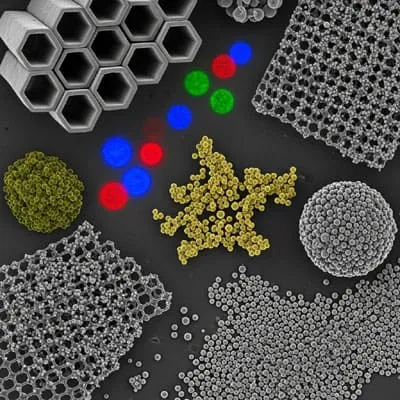
Next-generation smart homes will incorporate technologies such as blockchain for energy trading, advanced AI for predictive maintenance, and biophilic design elements enhancing occupant connection to nature.Nanomaterials and 3D printing promise more efficient, customizable construction methods.
Integration of these innovations will further reduce environmental impact and increase occupant satisfaction.
Architects must stay informed and engaged with these trends to lead sustainable residential design forward.
Policy and Incentives Supporting Smart Sustainable Homes
Government policies and incentives play a pivotal role in accelerating smart sustainable home adoption. Subsidies for renewable energy installations, tax credits for energy-efficient upgrades, and building codes mandating green standards encourage investment and innovation.
International agreements and local regulations increasingly emphasize sustainability, creating a favorable environment for smart home technologies. Collaboration between policymakers, industry, and design professionals is essential to align goals and implementation.
These frameworks ensure that smart sustainability becomes accessible and scalable.
Long-Term Vision: Organized, Sustainable Communities
- Integration of smart homes into smart neighborhoods and cities
- Shared resources and community energy systems
- Emphasis on walkability and green public spaces
- Data-driven urban planning for sustainability
The future of smart homes extends beyond individual residences toward interconnected, sustainable communities. Organized neighborhoods leverage shared infrastructure and collective resource management to amplify environmental benefits.
Urban design will increasingly incorporate data analytics to optimize transportation, waste management, and energy use, creating resilient habitats for diverse populations.
This vision embodies a holistic approach to sustainability, technology, and human-centered design.
Architectural integration
Smart homes, sustainability, and organization intertwine to redefine residential living in the 21st century. Through innovative technologies and human-centered design, these homes optimize resource use, enhance comfort, and support intentional living. Architectural integration of smart systems ensures that homes remain adaptable, efficient, and aesthetically coherent.
As climate challenges intensify, embracing smart sustainable homes becomes imperative for resilient futures. Designers, homeowners, and policymakers must collaborate to foster environments where technology and nature coexist harmoniously, creating organized, sustainable living spaces that truly serve human needs.
Frequently Asked Questions
What Defines a Smart Home in the Context of Sustainability?
A smart home in sustainability integrates technology to optimize energy and resource use, reduce environmental impact, and enhance occupant comfort. It combines automation, renewable energy, and efficient design to create eco-friendly living spaces.
How Does Organization Impact the Effectiveness of Smart Homes?
Organization in smart homes supports efficient space utilization, reduces clutter, and improves system accessibility. Well-organized environments enable technology to function optimally and enhance occupant well-being by fostering calm, intentional living.
Are Smart Sustainable Homes Affordable for Most People?
While initial costs can be higher, smart sustainable homes often reduce long-term expenses through energy savings and maintenance efficiency. Advances in technology and policy incentives are gradually making these homes more accessible.
Can Smart Homes Adapt to Different Climates and Cultures?
Yes, smart homes are designed to be adaptable, incorporating climate-specific technologies and culturally relevant organizational strategies. This ensures they meet diverse environmental and social needs effectively.
What Role Do Architects Play in Developing Smart Sustainable Homes?
Architects integrate technology with sustainable design principles, ensuring homes are functional, comfortable, and environmentally responsible. They balance aesthetics, user experience, and technical infrastructure for future-ready residences.

Architect with extensive experience in residential and commercial design, including renovations and modular construction. Love to share information about Architecture, home and lifestyle in this blog.