Last updated on October 16th, 2026 at 05:08 pm
Outdoor spaces like patios and balconies offer an exceptional opportunity to extend living areas and create serene retreats. Integrating thoughtful furniture, vases, umbrellas, and pool elements elevates these environments, balancing functionality with architectural intent and good decor taste. These elements are essential for crafting calm, intentional, and climate-aware outdoor living areas that respond to real human needs.
Designing outdoor spaces involves more than just decoration—it requires understanding how people interact with their environment daily, especially in residential settings. Climate considerations, durability, and the flow between indoor and outdoor areas play crucial roles in selecting the right furniture, vases, umbrellas, and pool features to optimize comfort and style.
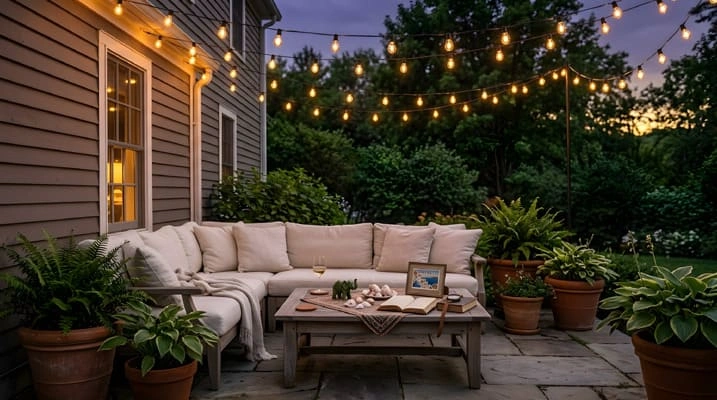
This article explores seven key approaches to enhance patios and balconies in 2026, focusing on how furniture, vases, umbrellas, and pool components can be thoughtfully integrated. Each section dives into architectural, functional, and climate-sensitive solutions to inspire purposeful outdoor design.
Innovative Furniture Solutions for Outdoor Living
Material Selection for Durability and Comfort
Choosing the right materials for outdoor furniture is fundamental in ensuring longevity and comfort. Weather-resistant options such as teak, aluminum, and synthetic rattan provide excellent durability against UV rays, moisture, and temperature fluctuations. These materials maintain structural integrity and aesthetic appeal, resisting warping or fading over time.
Comfort is equally important; cushions with quick-dry foam and fade-resistant fabrics enhance usability without sacrificing style. The integration of ergonomic design principles ensures that furniture supports natural postures, allowing residents to relax fully in their outdoor spaces.
Additionally, sustainable sourcing and eco-friendly finishes align with climate-aware design philosophies, reducing environmental impact while maintaining high performance.
Modular and Multi-Functional Furniture Designs
Modular furniture allows customization and flexibility, adapting to different space sizes and user needs. Pieces that can be rearranged or expanded accommodate gatherings of various scales, enhancing usability throughout seasons.
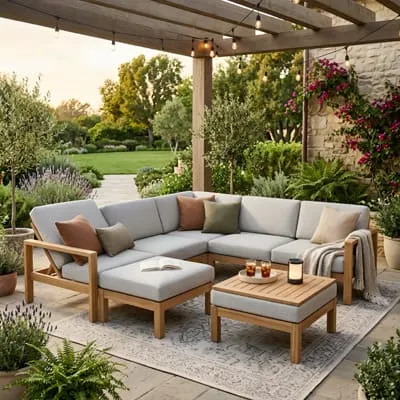
Multi-functional furniture, such as storage benches or tables with integrated planters, maximizes limited patio or balcony footprints.
This adaptability supports slow, intentional living by encouraging mindful use of space and resources. It also contributes to a cohesive architectural language that respects the spatial context of residential outdoor areas.
Incorporating modularity can also facilitate maintenance and seasonal changes, enabling easy cleaning and rearrangement without compromising design integrity.
Ergonomics and Spatial Planning
Effective spatial planning ensures that furniture placement optimizes circulation and sightlines while providing comfort zones. Considering human scale and movement patterns prevents overcrowding and fosters a calm atmosphere.
Adequate clearance around seating and tables enhances accessibility and usability.
Ergonomic design extends to the height and angle of seating and tables, promoting relaxation and social interaction. Thoughtful layouts can accommodate both intimate gatherings and solo retreats, reflecting human-centered design principles.
Incorporating built-in furniture elements, such as benches or ledges, can define spaces architecturally while maintaining openness and flow between indoor and outdoor realms.
Enhancing Ambiance with Decorative Vases and Planters
Choosing the Right Vases for Architectural Cohesion
- Material compatibility with overall outdoor palette
- Proportions relative to surrounding furniture and space
- Durability against outdoor elements like wind and rain
- Design simplicity to complement rather than dominate
- Integration with plant selection for texture and color balance
Vases and planters serve as architectural accents, punctuating patios and balconies with organic forms.
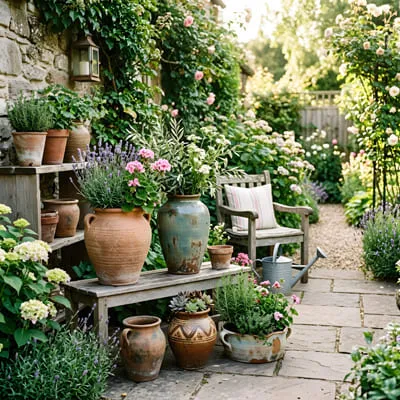
Selecting pieces that resonate with the broader materiality and color schemes of the outdoor setting reinforces design harmony.
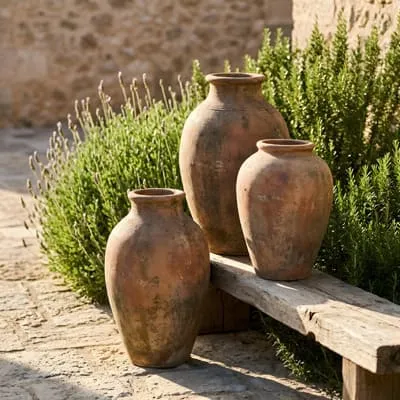
For example, matte ceramic vases echo natural stone facades, while sleek metal planters mirror contemporary furniture finishes.
Durability is paramount; vases must withstand environmental stressors without losing structural or visual integrity. Their scale should be proportionate to surrounding furniture and spatial constraints, creating balanced compositions that feel intentional and grounded.
Plant Selection and Placement Techniques
Choosing the right plants for vases enhances outdoor microclimates and aesthetics. Native and drought-resistant species reduce water consumption and maintenance, aligning with climate-aware principles.
Combining varied textures and heights creates dynamic visual interest while supporting biodiversity.
Placement strategies include clustering vases to form focal points or distributing them to delineate pathways and seating areas. Elevating planters on pedestals or integrating them into furniture pieces adds layers of depth and encourages exploration within the space.
Regular rotation and seasonal updates of plants sustain freshness and engagement, fostering slow, intentional interaction with the outdoor environment.
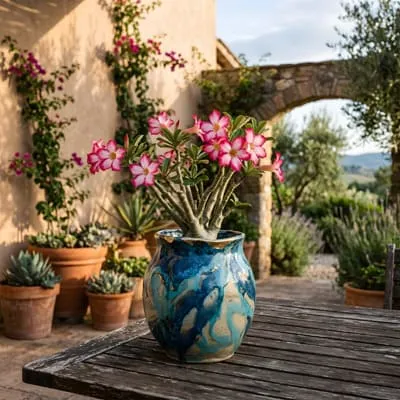
Maintenance and Longevity Considerations
Maintaining vases and planters involves consistent cleaning, drainage management, and monitoring for wear. Materials like concrete or fiberglass require different care routines compared to terracotta or metal. Ensuring proper drainage prevents root rot and extends plant health.
Protective treatments, such as sealants or UV-resistant coatings, prolong the lifespan of decorative elements while preserving their appearance. Regular inspection and timely repairs uphold the overall aesthetic and functional quality of the outdoor area.
Integrating maintenance into design choices reflects a human-centered approach, anticipating real-life usage and care requirements.
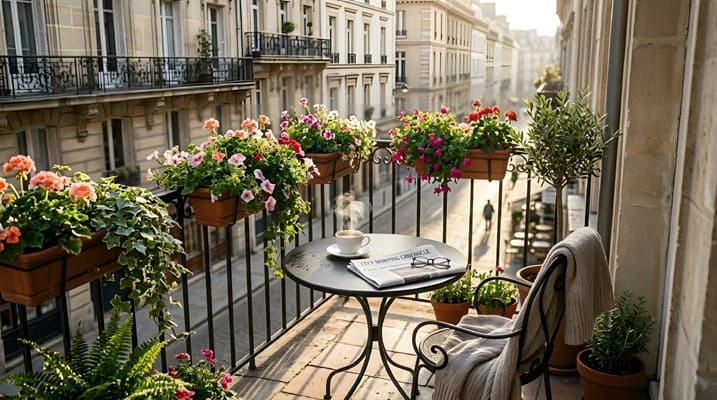
| Vase Material | Durability | Maintenance |
|---|---|---|
| Ceramic | Moderate | Requires sealing, fragile |
| Fiberglass | High | Low, easy cleaning |
| Metal | High | Periodic rust prevention |
| Concrete | Very high | Low, heavy |
Umbrella Designs That Balance Shade and Style
Material Innovations for Longevity and Function
- UV-resistant canopy fabrics
- Corrosion-resistant aluminum frames
- Windproof mechanisms for stability
- Adjustable tilt and rotation features
- Easy-to-clean and quick-dry textiles
- Environmentally friendly fabric options
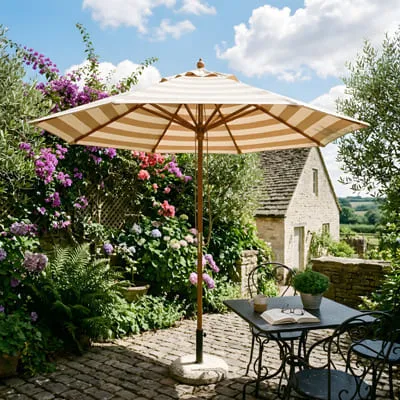
The umbrella is a critical element for outdoor comfort, providing necessary shade while contributing to the architectural character of patios and balconies. Modern umbrellas employ durable materials such as solution-dyed acrylic fabrics with UV protection, enhancing longevity and color retention.
Frames made from powder-coated aluminum resist corrosion and reduce weight, facilitating ease of use. Wind-resistant designs with reinforced ribs and secure bases enhance safety and performance in variable climates.
Integration with Outdoor Furniture and Layout
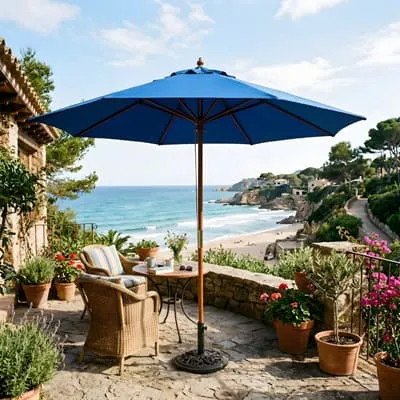
Strategic umbrella placement complements furniture arrangements, ensuring unobstructed movement while maximizing shaded areas. Cantilever umbrellas offer flexibility by freeing up central floor space, allowing more versatile layouts.
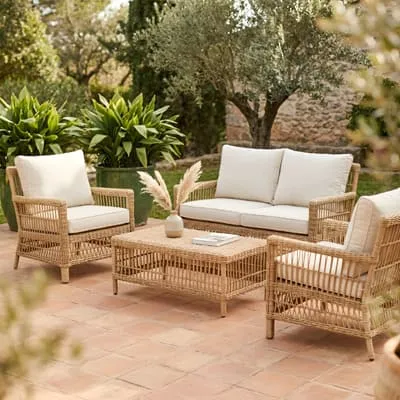
Coordinating umbrella colors and textures with furniture and decorative elements creates a cohesive outdoor aesthetic.
Consideration of sun paths and seasonal changes informs umbrella positioning, optimizing shade coverage during peak hours. The ability to adjust tilt and rotate umbrellas ensures dynamic adaptability to shifting light conditions, enhancing user experience.
Umbrellas also function as vertical anchors in design, adding architectural interest without overwhelming the spatial balance.
Design Trends for Calm and Intentional Outdoor Spaces
Current trends emphasize minimalist, slow-living inspired umbrella designs that prioritize subtlety and function. Neutral color palettes and natural textures integrate seamlessly with surrounding materials, supporting a calm and grounded atmosphere.
Incorporating umbrellas with integrated lighting or misting systems adds layers of comfort and usability during evenings or hot weather. These features align with human-centered design by enhancing sensory experiences and extending outdoor usability.
Customizable options allow homeowners to tailor umbrellas to specific climate and spatial requirements, fostering intentional and mindful outdoor living.
Pool Features That Complement Outdoor Furniture and Aesthetics
Architectural Pool Design Principles
- Integration with surrounding landscape and structures
- Use of natural materials for coping and decking
- Incorporation of eco-friendly filtration systems
- Consideration of scale relative to patio or balcony
- Water features that enhance tranquility
- Seamless transitions between pool and seating areas
- Safety elements that blend with design
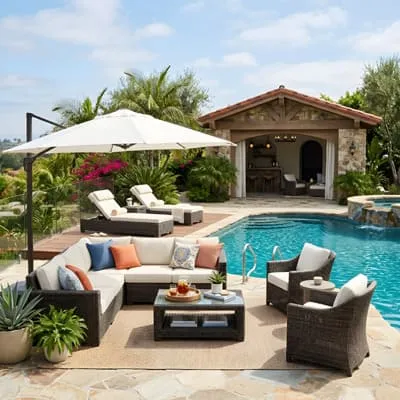
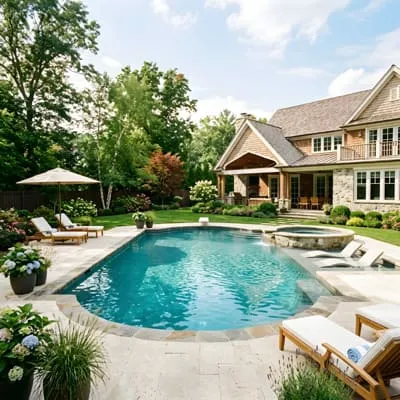
Pools serve as focal points in outdoor design, blending utility with architectural expression. A successful pool design considers the relationship between water, furniture, and circulation paths, creating a unified spatial experience. Natural stone or textured concrete decking complements outdoor furniture finishes and enhances tactile quality.
Eco-conscious pool systems reduce environmental impact through energy-efficient pumps and water-saving technologies. Incorporating subtle water features like gentle cascades or reflecting pools adds calming auditory and visual layers to the space.
Furniture Placement Around Pools
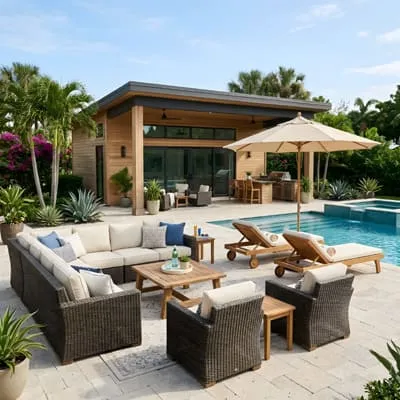
Positioning furniture near pools requires attention to safety, comfort, and usability. Slip-resistant surfaces and furniture feet protect against accidents, while water-resistant fabrics ensure longevity.
Loungers, side tables, and umbrellas are arranged to maximize sun exposure and shade balance, fostering relaxation and socialization.
Strategically placed planters and vases introduce greenery, softening hard edges and enhancing privacy. Clear pathways between pool edges and furniture prevent congestion and maintain flow.
Furniture choices emphasize modularity and durability, accommodating seasonal weather changes and frequent use.
Maintenance and Seasonal Adaptation
Pool areas demand consistent maintenance to preserve water quality and surrounding materials. Regular cleaning, chemical balance monitoring, and equipment checks are essential for safety and aesthetics. Furniture and decorative elements require seasonal storage or protective coverings to extend lifespan.
Designing for easy disassembly or mobility supports efficient adaptation to winter months or heavy rains. Materials selected for outdoor furniture and pool surrounds should resist mold, mildew, and UV damage.
Incorporating built-in storage solutions near pool zones facilitates organization and upkeep, reflecting intentional design.
| Pool Feature | Benefit | Maintenance Level |
|---|---|---|
| Natural Stone Decking | Durability, aesthetic appeal | Moderate – sealing required |
| Eco-Friendly Filtration | Energy efficiency | Low – regular checks |
| Water Features | Tranquility, sensory enhancement | Moderate – cleaning pumps |
Climate-Responsive Outdoor Furnishings
Materials Suited to Local Weather Conditions
Selecting furniture materials that withstand specific climate challenges is essential. For humid environments, rust-resistant metals and quick-drying fabrics prevent degradation. In arid or sunny regions, UV-stabilized plastics and treated woods resist fading and cracking.
These choices reduce maintenance frequency and extend furniture lifespan, ensuring sustained performance. Incorporating natural ventilation and breathable fabrics enhances comfort during hot seasons.
Climate-aware material selection supports sustainability by minimizing replacement cycles and resource consumption.
Design Strategies for Temperature Control
Furniture and umbrella designs that facilitate airflow create cooler outdoor environments. Open-weave materials and slatted surfaces prevent heat buildup, while strategic shading reduces direct sun exposure. Incorporating water elements near seating areas can also lower ambient temperatures.
Adjustable umbrellas allow users to control shade dynamically throughout the day, responding to shifting sun angles. Light-colored finishes reflect heat, further improving comfort.
These approaches embody intentional design, prioritizing user wellbeing in outdoor settings.
Enhancing Durability Through Protective Finishes
Applying protective coatings such as sealants, stains, and rust inhibitors preserves furniture integrity against harsh weather. Regular reapplication of these finishes is part of a proactive maintenance routine that extends product life.
Innovations in nanotechnology offer advanced surface treatments that repel water and dirt, reducing cleaning efforts. Choosing finishes that are environmentally friendly aligns with sustainable design goals.
These measures contribute to a slow-living mindset by supporting long-term use and reducing waste.
Innovative Vases and Planters for Functional Decoration
Material Innovations and Sustainability
- Recycled composite materials
- Biodegradable planter options
- Self-watering planter technologies
- Lightweight but durable designs
- Customizable modular planter systems
Recent advances in planter design emphasize sustainability without compromising style or function. Materials combining recycled content with durability reduce environmental footprints. Self-watering planters integrate reservoirs to minimize watering frequency, aligning with climate-conscious care.
Lightweight composites ease installation and seasonal rearrangement, promoting intentional engagement with outdoor spaces. Modular systems enable users to adapt planter configurations as their needs evolve.
These innovations illustrate how vases and planters transcend decoration, becoming integral components of sustainable outdoor architecture.
Designing for Seasonal Flexibility
Planters designed for ease of plant replacement and relocation support dynamic outdoor environments. Features like removable liners and drainage controls simplify seasonal transitions. This flexibility encourages slow, mindful interaction with greenery, allowing adaptation to changing weather and user preferences.
Seasonal planting cycles enhance biodiversity and visual interest, contributing to year-round outdoor enjoyment. Selecting neutral planter colors and forms ensures compatibility with varied plant palettes over time.
Intentional design anticipates these shifts, providing solutions that balance aesthetic continuity with functional adaptability.
Integration with Furniture and Architectural Elements
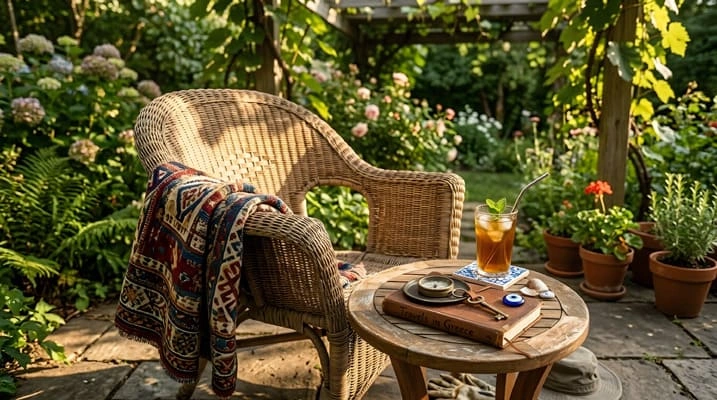
Planters that complement furniture materials and architectural lines create a cohesive outdoor language. Embedding planters into furniture or building elements fosters seamless transitions between hardscape and softscape. This integration enhances spatial coherence and supports calm, grounded environments.
Consideration of scale, texture, and color ensures that planters contribute to overall balance rather than visual clutter. Thoughtful placement near seating or circulation paths encourages interaction and appreciation of natural elements.
This approach reflects a human-centered design ethos, emphasizing lived experience and sensory connection.
Umbrella Innovations for Enhanced Outdoor Experience
Advanced Mechanisms for Ease of Use
Modern umbrellas incorporate intuitive opening and closing mechanisms, such as crank handles and push-button releases, to facilitate effortless operation.
Motorized systems offer automation for larger or more complex umbrellas, enhancing convenience and accessibility.
These features reduce physical strain and increase usability, especially for elderly or mobility-impaired users. Simplified mechanisms encourage frequent adjustments, optimizing shade and comfort throughout the day.
Ease of use aligns with human-centered design by accommodating diverse user abilities and preferences.
Lighting and Climate Control Integration
Incorporating LED lighting systems within umbrella ribs or poles extends outdoor usability into evening hours, creating inviting atmospheres. Some umbrellas feature integrated misting systems or fans, providing active cooling on hot days.
These additions enhance sensory comfort and support longer, more enjoyable outdoor stays. Power sources can be solar or battery-operated, reducing environmental impact and supporting off-grid installations.
Such integrations represent a holistic approach to outdoor comfort, blending technology with architectural restraint.
Customizable Aesthetic Options
Custom umbrellas offer a range of canopy colors, patterns, and textures, allowing personalization that complements architectural styles.
Interchangeable canopies provide seasonal flexibility and refresh the look without replacing the entire structure.
Frame finishes can be selected to match furniture metals or outdoor fixtures, reinforcing visual cohesion. Subtle branding or decorative trims add character without overpowering the calm and intentional atmosphere.
Customization supports individual expression while maintaining design integrity and environmental responsiveness.
Elements of Environment Composition
Implementing well-considered furniture, vases, umbrellas, and pool elements transforms patios and balconies into purposeful, climate-aware outdoor extensions of the home. Emphasizing durability, comfort, and architectural cohesion ensures these spaces support real-life patterns of use and enjoyment.
By integrating these components thoughtfully, homeowners can craft calm, intentional environments that encourage slow living and meaningful connection with nature. Consider these strategies to elevate your outdoor areas in 2026 and beyond.
Frequently Asked Questions (FAQ)
How Do I Choose Outdoor Furniture That Lasts in Varying Climates?
Select materials specifically designed for your local weather, such as rust-resistant metals for humid areas or UV-stable fabrics for sunny climates. Prioritize durable finishes and consider modular designs that allow seasonal adjustments and maintenance.
What Types of Plants Work Best in Outdoor Vases and Planters?
Native and drought-tolerant plants are ideal, as they require less water and maintenance. Choose species that thrive in your patio’s light conditions and complement the scale and style of your vases to maintain visual harmony.
How Can I Maximize Shade with Outdoor Umbrellas?
Use adjustable umbrellas with tilt and rotation features to follow the sun’s path throughout the day. Cantilever umbrellas free up space and can be repositioned easily to provide optimal shade coverage.
What Features Should I Look for in a Pool Area to Enhance Outdoor Living?
Focus on natural materials for decking, energy-efficient filtration systems, and safety features that blend with design. Arrange furniture thoughtfully to balance circulation, comfort, and pool access.
How Can I Maintain Outdoor Furniture and Decorative Elements Year-round?
Regular cleaning, applying protective finishes, and storing or covering pieces during harsh weather help prolong lifespan. Choose materials and finishes that suit your climate, reducing maintenance needs.

Architect with extensive experience in residential and commercial design, including renovations and modular construction. Love to share information about Architecture, home and lifestyle in this blog.