
Creating a productive space for remote work no longer means just setting up a desk in a spare room. The design of a home office involves a thoughtful integration of architecture, ergonomics, and human behavior to foster focus, well-being, and efficiency. In this context, a home office is more than a place—it’s a tailored environment that supports diverse work styles while responding to residential and environmental realities.
This article explores how intentional design can elevate your home workspace beyond functionality. By grounding the discussion in architectural principles and lived experience, we’ll examine how to build a home office that sustains productivity without sacrificing comfort or calm.
What You Need to Know
- A well-designed home office balances natural light, acoustic control, and ergonomics to enhance concentration and reduce fatigue.
- Integrating climate-aware strategies, such as passive ventilation and shading, improves comfort and lowers energy use in residential workspaces.
- Flexibility in layout accommodates different work tasks and postures, supporting cognitive shifts and reducing physical strain.
- Thoughtful material selection and biophilic elements contribute to a calming atmosphere that supports mental clarity and reduces stress.
- Not all solutions fit every home; contextual factors like space constraints and household dynamics shape the effectiveness of design choices.
The Design of a Productive Home Office: Balancing Architecture and Human Needs
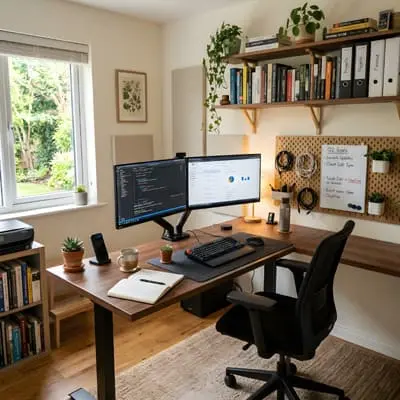
Formally, a home office is a designated area within a residence optimized for professional tasks, incorporating elements such as lighting, furniture, technology, and environmental controls.
From an architectural standpoint, this means designing or adapting a space that enhances productivity while integrating seamlessly into the home’s overall function and aesthetic.
Practically, the most effective workspaces reflect how people actually operate: they require zones for focused work, places to shift posture, and access to resources without clutter. For example, I have observed that professionals working extensively from home experience fatigue when natural light is insufficient or when background noise is uncontrolled. These factors directly impact cognitive performance and comfort.
“The difference between a makeshift desk and a purpose-built home office is not just aesthetics—it lies in how the space supports the worker’s physical and mental rhythms.”
Acoustic treatment, daylighting strategies, and ergonomic furniture are essential components. According to the U.S. Occupational Safety and Health Administration (OSHA), ergonomic design reduces musculoskeletal disorders, which are common complaints among remote workers. Additionally, data from the International WELL Building Institute highlights that access to daylight and views to nature increases alertness and emotional well-being.
Key Architectural Elements That Enhance Home Office Productivity
Successful home office design hinges on architectural decisions that prioritize environmental quality and spatial comfort. Here are critical elements to consider:
- Natural Light and Glare Control: Position desks near windows to maximize daylight, but use adjustable shading to prevent glare on screens.
- Acoustic Management: Use sound-absorbing materials or partitions to reduce noise from household activities or external sources.
- Thermal Comfort and Ventilation: Passive cooling strategies, such as operable windows and cross-ventilation, maintain a comfortable temperature without heavy reliance on mechanical systems.
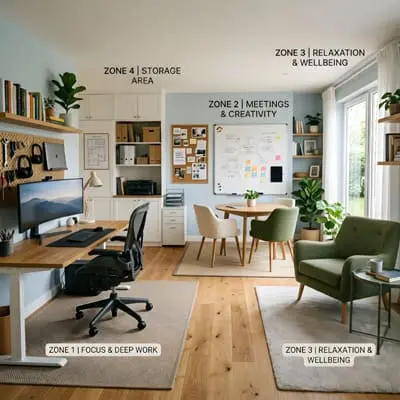
- Spatial Zoning: Define work areas distinctly from living zones to mentally separate professional tasks from relaxation.
For instance, in a compact apartment, a folding desk adjacent to a window with layered blinds can transform a small corner into an effective workspace.
In larger homes, a dedicated room with a door and integrated storage reduces distractions and maintains organization.
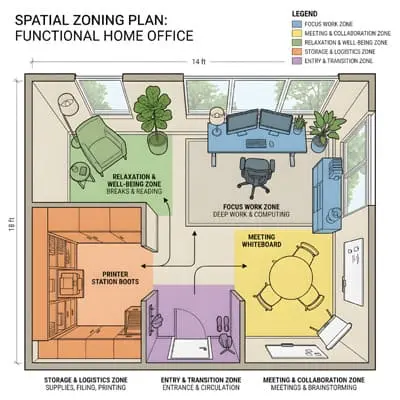
Human-Centered Design: Ergonomics and Well-Being in the Home Office
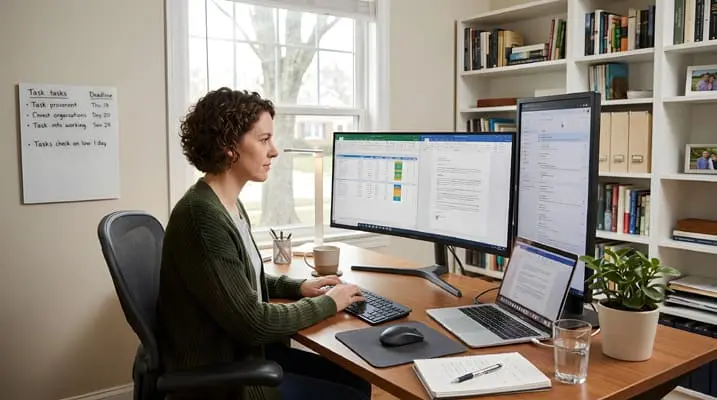
Ergonomics involves designing work environments that fit the worker’s body and cognitive processes. In the home office, this means choosing adjustable chairs, desks at appropriate heights, and monitors positioned to reduce neck strain. But it goes beyond furniture:
- Movement and Posture: Encourage alternating between sitting and standing, and allow space for stretching or brief breaks.
- Visual and Mental Relief: Incorporate views of nature or indoor plants to provide restorative moments during work sessions.
- Personalization: Allow the workspace to reflect individual preferences to promote comfort and ownership.
Through direct experience working with clients adapting to remote work, I’ve seen how minor ergonomic adjustments—like raising a laptop on a riser or adding a footrest—dramatically reduce discomfort and improve focus over long periods.
“In practice, ergonomics in the home office succeeds when it responds to the worker’s daily routines and physical feedback, not just checklist compliance.”
Limitations and Contextual Challenges in Home Office Design
While many strategies improve home office productivity, not all are universally applicable. Space limitations, family dynamics, and the nature of work influence what’s feasible. For instance, shared households may require noise-canceling headphones and flexible scheduling rather than physical soundproofing.
Moreover, the balance between residential comfort and work demands can be delicate. Overly sterile or office-like environments may hinder the calming benefits of home, while too casual setups risk distraction. Recognizing these nuances is vital to crafting a home office that serves its purpose without undermining life quality.
Research from the Harvard T.H. Chan School of Public Health suggests that successful home workspaces integrate adaptability and psychological comfort. This means the design must evolve alongside changing work patterns and personal circumstances.
Next Steps: Implementing Thoughtful Design for Your Home Workspace
Start by assessing your current workspace in terms of light, noise, and ergonomics. Identify specific pain points and prioritize improvements that align with your home’s architecture and your work habits. Experiment with layout changes and material choices that enhance comfort and reduce mental clutter.
Consider incorporating climate-aware features such as natural ventilation and shading devices to improve comfort sustainably.
Remember that flexibility is key: a home office should adapt as your work rhythm and household needs shift.
Taking these steps transforms your home office from a functional necessity into a space that actively sustains your productivity and well-being.
Frequently Asked Questions (FAQ)
Why is Natural Light Important in a Home Office?
Natural light helps regulate circadian rhythms, which influence focus and alertness during work hours. Exposure to daylight reduces eye strain and headaches often caused by artificial lighting. Positioning a workspace near windows with adjustable shading provides balance, allowing sufficient illumination without glare on screens.
How Can Small Homes Accommodate Effective Home Offices?
In limited spaces, multifunctional furniture such as fold-down desks and mobile storage units maximize utility without overwhelming the room. Zoning a corner near a window or using room dividers helps create mental separation from other living areas. Acoustic solutions like rugs or curtains also improve sound control in compact settings.
What Role Does Ergonomics Play in Remote Work Productivity?
Ergonomics aligns the physical workspace with the body’s needs, preventing discomfort and injury. Proper chair height, monitor placement, and keyboard positioning reduce musculoskeletal strain. This alignment supports sustained concentration and reduces fatigue, directly impacting work performance.
Can Home Office Design Affect Mental Health?
Yes, environments that incorporate natural elements, calming colors, and clutter-free surfaces can reduce stress and enhance mood. Access to views of nature or indoor plants offers restorative breaks. Conversely, poorly designed spaces may increase anxiety and distractibility, undermining job satisfaction.
What Challenges Exist When Designing a Home Office in Shared Living Situations?
Shared households often face noise, interruptions, and limited privacy. Solutions include soundproofing, noise-canceling headphones, and scheduling focused work periods. Flexible layouts that allow quick reconfiguration can help balance communal and individual needs without sacrificing productivity.