
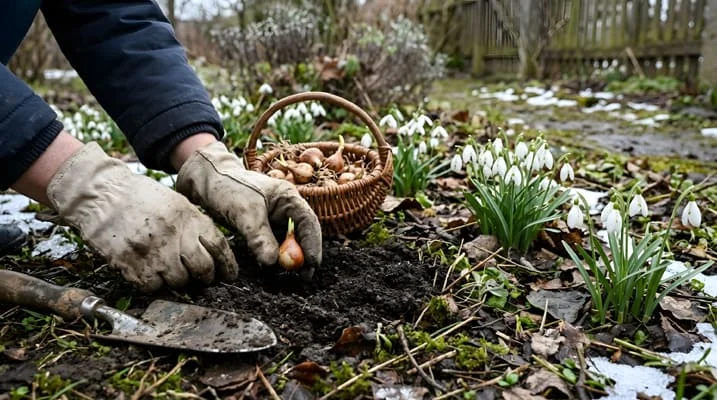
The best time to plant snowdrop bulbs is “in the green,” right after flowering while the leaves are still green. Dry bulbs can go in during autumn, but they are less reliable. Plant them in part shade, in moist, well-drained soil, and leave them alone so they spread.
Few plants announce the end of winter like snowdrops. They push through frost and cold soil while the rest of the garden sleeps. Yet many gardeners plant snowdrop bulbs in autumn, see them fail, and give up. The problem is rarely the plant. It is the timing and the type of bulb.
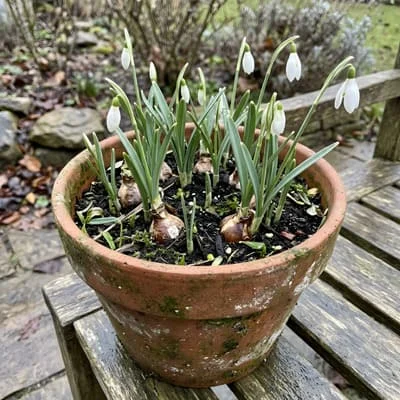
Snowdrops dry out very easily.
The Royal Horticultural Society advises planting freshly lifted bulbs when the foliage is just dying back in late spring, and says that buying “in the green” just after flowering is the next best method, according to the RHS growing guide.
Dry bulbs from a packet often shrivel before they ever reach your soil.
The reward for getting it right is large.
A few bulbs can become a carpet within a few years. This guide explains when to plant snowdrop bulbs, where they grow best, how to plant them, and how to help them spread into drifts.
When to Plant Snowdrop Bulbs: Dry Bulbs vs. “In the Green”
You can buy snowdrops in three forms. Each has its own best planting window.
| Form | When to Plant | Success Rate | Cost | Best For |
|---|---|---|---|---|
| In the green | Just after flowering (late winter to early spring) | High | Moderate | Fast, reliable drifts |
| Dry bulbs | Autumn, with daffodils | Variable | Low | Large, budget plantings |
| Potted plants | Spring, or when in leaf | High | Highest | Small spaces, quick display |
Snippet: “In the green” means planting snowdrops just after they flower, while the leaves are still green. The plant is lifted and replanted at once, so its roots never dry out.
Garden Illustrated notes that dry snowdrop bulbs can be planted in autumn, at the same time as daffodils, while bulbs “in the green” are best planted in late winter and spring, according to the Garden Illustrated planting guide.
Bulbs sold “in the green” are usually available from February by mail order. Plant them the day they arrive.
A note on hemispheres.
The months above suit the northern hemisphere.
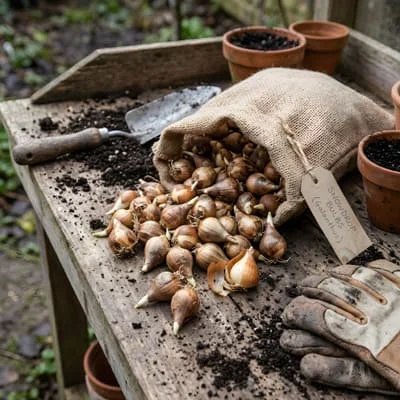
In the southern hemisphere, flip the calendar by six months. Snowdrops also need a cold winter. They struggle in mild, frost-free climates, so check your local conditions first.
Where to Plant Snowdrop Bulbs for the Best Results
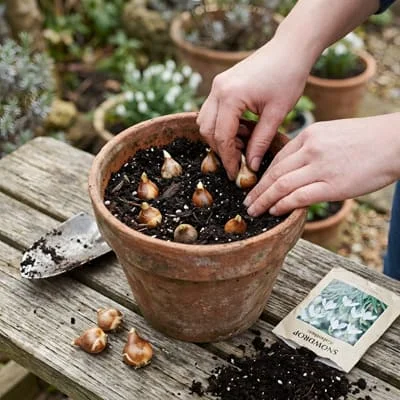
Location matters as much as timing. Snowdrops are woodland plants. They want bright light in late winter and cool shade in summer.
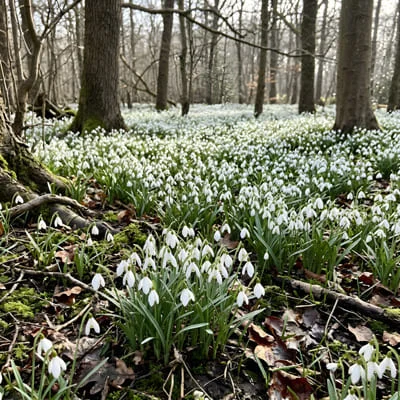
The ideal spot is under a deciduous tree or shrub. The bare branches let sun reach the bulbs in winter. The leaves then shade the soil in summer and stop it from baking.
The RHS recommends part shade and soil that is moist but well-drained, with leafmould worked in, and stresses that the soil must not dry out in summer.
Good places include:
- Under deciduous trees and large shrubs
- Along the edges of woodland borders
- Beside shaded paths and steps
- Around the base of roses
- In rough grass that you do not mow early
Avoid hot, dry beds and waterlogged corners. Heavy clay can rot bulbs, and dry sand can desiccate them. If your soil is poor, mix in leafmould or compost before planting.
Quick tip: Stand where you will see your snowdrops from a window. They bloom in the coldest weeks, and you will want to enjoy them from indoors.
How to Plant Snowdrop Bulbs Step by Step
Planting is simple. Follow this order for the best start.
- Choose healthy bulbs. They should feel firm. Buy from a reputable supplier.
- Plant quickly. If you cannot plant at once, keep them damp and cool.
- Prepare the soil. Loosen it and mix in leafmould or compost.
- Set the depth. For dry bulbs, plant about 10 cm deep with the pointed end up. For bulbs in the green, plant at the same depth as before. A white-to-green mark on the stem shows the old soil line.
- Space them well. Leave about 10 cm between bulbs, according to Ashridge Trees, which also suggests planting in drifts of about 25.
- Separate bundles. If your snowdrops arrive in clumps, tease them apart into single bulbs and stems.
- Water well. Good contact between roots and soil helps them settle.
Plant in irregular groups, not in rows. Nature never plants in straight lines, and a loose drift looks far more natural.
How to Get Snowdrop Bulbs to Spread
Snowdrops spread in two ways. They multiply underground, and they seed on the surface. Both take time, but you can help.
Let the bulbs multiply. Each bulb produces small offsets. Over a few years, a single bulb becomes a clump. Ashridge notes that the bulbs multiply rapidly underground and form clumps quickly.
Divide clumps. This is the fastest method I know. Wait until just after flowering, while the leaves are still green. Lift a crowded clump, split it into smaller pieces, and replant at once at the same depth. Hestercombe Gardens in the UK advises replanting new clumps straight away because the bulbs hate drying out, according to the Hestercombe planting guide. That garden planted more than 50,000 snowdrops in Rook Wood, and the swath through the trees now runs for a great distance.
Let them seed. Snowdrops drop seed after flowering, and ants often carry it to new spots. Do not deadhead. Leave the seed pods in place.
Protect the leaves. The leaves feed the bulb for next year. Never cut or tidy them early. If snowdrops grow in grass, do not mow until the leaves have died back, a few weeks after flowering.
Snippet: To make snowdrops spread, divide crowded clumps just after flowering while the leaves are green, replant them immediately at the same depth, and leave the foliage to die back naturally.
Specialist methods exist too. The RHS describes twin scaling and chipping, which split a bulb into pieces to produce more plants. These suit enthusiasts and collectors, not most home gardeners.
Snowdrop Care Through the Year
Snowdrops ask for little. A few habits keep them thriving.
- Late winter: Enjoy the flowers. Keep soil moist if the weather is dry.
- Spring: Lift and divide clumps after flowering. Let the leaves die back.
- Summer: Keep the soil from drying out. Mulch with leafmould if needed.
- Autumn: Plant dry bulbs if you choose that route. Add a light leaf mulch.
Watch for two problems. Squirrels may dig up dry bulbs planted in autumn, a risk the RHS highlights. Grey mould can also affect snowdrops, especially in mild winters. Remove affected leaves and improve air flow if you see it.
Common Mistakes with Snowdrop Bulbs
A few errors cause most failures.
- Buying dry bulbs and storing them for weeks, which lets them shrivel.
- Planting in hot, dry soil, where summer drought kills them.
- Cutting back the leaves too early, which starves the bulb.
- Planting too shallow or upside down, which weakens growth.
- Digging up wild snowdrops, which is illegal in many places. Hestercombe reminds gardeners that taking snowdrops from the wild is against the law.
- Ignoring toxicity, since snowdrop bulbs are poisonous if eaten. Keep them away from pets and children.
Growing a Carpet of Snowdrops
Success with snowdrop bulbs comes down to three things: plant them “in the green” when you can, give them part shade and soil that stays moist, and never cut their leaves early.
Divide clumps each spring and replant immediately, and your small start will grow into a drift.
Choose your spot this week and order bulbs for late winter. If you have a snowdrop drift, tell me in the comments how long it took to establish.
Important Notice: The information in this article is for informational and educational purposes only and is not a substitute for the evaluation or guidance of a healthcare professional. Always consult a doctor before making any decisions regarding your treatment or diagnosis. This content is also for informational purposes only and is not a substitute for consulting a veterinarian. Every animal is unique and requires professional evaluation.

Architect with extensive experience in residential and commercial design, including renovations and modular construction. Love to share information about Architecture, home and lifestyle in this blog.