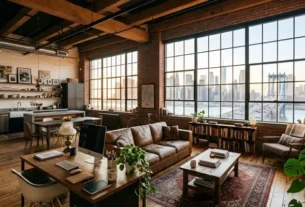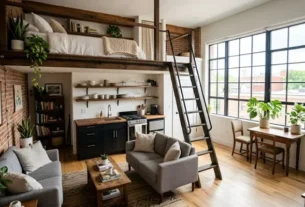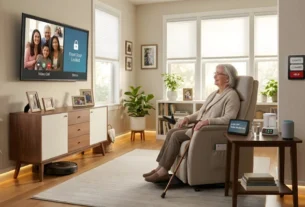
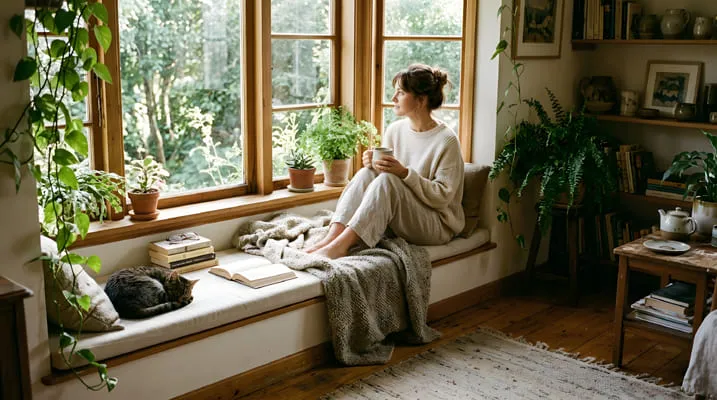
Slow living at home means designing your space so it supports a calmer pace. Reduce visual clutter, layer soft light, control noise, add nature, and create simple rituals. Focus on a few intentional choices instead of buying more. A calm home is built through everyday habits and thoughtful design, not through perfection.
You walk in after a long day and the house greets you with a pile of shoes, a buzzing phone, and a chair draped in laundry. The place meant for rest becomes one more thing to keep up with. Slow living starts by changing that, and it begins with the rooms themselves, not with a new morning routine.
Noise shows how much a home’s surroundings shape our pace. A World Health Organization fact sheet for Europe reports that more than 30 percent of people in EU countries are exposed to night-time road noise above 55 dB(A). That sheet dates from 2011, so check newer figures for your own country. The point holds: background pressure is part of daily life, and a thoughtful layout can soften it.
I am an architect, and I approach a calm home the way I approach any project. I read the space honestly, I look at how the parts work together as a system, and I respond to climate and to the people who live there. This guide is built on three pillars: calm, clarity, and connection. Calm is the sensory environment of light, sound, and color. Clarity is how you edit, store, and organize what you own. Connection is your bond with nature, with other people, and with simple daily rituals. Together they turn a busy house into a slower home.
What Slow Living at Home Really Means
What is slow living? Slow living is a way of organizing daily life around quality, attention, and an appropriate pace instead of constant speed. At home, it means designing spaces and routines that reduce rush, noise, and excess.
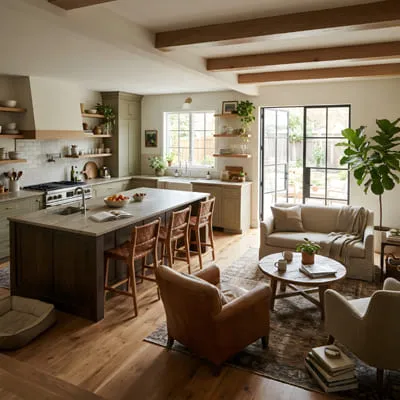
The idea has a clear history. The wider slow movement grew out of Slow Food, which began in 1986 as Carlo Petrini’s protest against a McDonald’s opening in Rome’s Piazza di Spagna.
Its key ideas include prioritizing quality over quantity, savoring the present moment, and fostering connections with people and the environment.
Carl Honoré’s 2004 book In Praise of Slow brought the philosophy into everyday life.
One detail often gets lost. The movement is about the right speed, not the slowest speed. You still cook fast on a Tuesday and run late sometimes. Slow living simply asks you to choose your tempo instead of letting speed run on autopilot.
Three Myths About Slow Living
The first myth says slow living means minimalism. It does not. A home with many books can feel deeply calm if each book is loved and has a place. Edit for meaning, not for a look.
The second myth says it is expensive. Many of the most effective changes cost nothing: moving a lamp, clearing a surface, closing a cabinet door. Spending comes later, and only where it earns its keep.
The third myth says you must change your job or your city. You do not. You can begin at the front door tonight.
Read Your Home Honestly Before You Change It
Architects begin every project with a site reading. We observe light, wind, views, and movement before we draw a line.
You can do the same in your own home, and it is the most useful step in this guide.
Walk through on an ordinary weekday evening. Notice where you rush, trip, or avoid. Those moments are information.
The table below translates common friction signals into design responses.
| Friction signal | What it often means | Design response |
|---|---|---|
| Keys, bags, and shoes land on the sofa | No landing zone at the entry | Add hooks, a shelf, and a bench by the door |
| You avoid a room after dark | Harsh or poorly placed light | Layer warm lamps and soften overhead glare |
| The phone sits within reach at dinner and in bed | No designated charging spot | Create a charging station outside the bedroom |
| Surfaces refill every day | Too little closed storage or no home for items | Add closed storage and give each object a place |
| Conversation and music feel harsh | Hard surfaces and background noise | Add rugs, curtains, and soft furnishings |
A Five-Step Home Audit
- Walk through when you are most tired. That is when friction shows.
- Photograph each room at eye level. Photos reveal clutter you have stopped seeing.
- Mark every friction point. Use sticky notes or a short list on your phone.
- Pick one zone. Choose the area you pass through most often.
- Change one thing and live with it for a week. Then decide what to do next.
This pace matters. Dramatic overhauls tend to fade within weeks. Small, tested changes tend to stay.
Let Your Climate Lead
Climate-responsive design is one of the oldest forms of calm. In a warm climate, shade, cross-ventilation, and light-colored surfaces keep afternoons livable without constant cooling. In a cold climate, draft sealing, thick curtains, and layered textiles create warmth you can feel.
Notice where afternoon sun overheats a room, where drafts creep in, and where air stands still. A home that fights its climate keeps you busy managing it. A home that works with it lets you rest.
Calm: Shape the Light, Sound, and Color of Slow Living
Calm is the first pillar, and it is mostly sensory. You feel light, sound, and color before you think about them. Small adjustments here change the mood of a room quickly.
Light That Softens the Evening
Overhead lighting flattens a room and tends to keep it feeling like an office. Use three layers instead: ambient light for general glow, task light for reading or cooking, and accent light for warmth. Lamps at different heights do most of the work.
In the evening, choose warm bulbs around 2700K and add dimmers where you can. Bright, blue-rich light late at night is widely linked to difficulty winding down, so warmer light supports the shift toward sleep. During the day, keep windows clear and let natural light move through the house.
Architect’s tip: Turn off the overhead light for a full evening and use only lamps. Most people notice within minutes how much quieter the room feels.
Sound: The Invisible Layer
Sound shapes pace more than most people realize. The WHO guidelines for community noise recommend less than 30 dB(A) in bedrooms at night for good-quality sleep. That is a very quiet room, and few homes reach it naturally. You can still move toward it.
Hard surfaces bounce sound, while soft materials absorb it. Heavy curtains, rugs, upholstered furniture, and bookshelves all help. Seal gaps around doors, place the bed on the quietest wall, and choose quieter appliances when you replace them. Turning off background television also reduces constant noise.
Color and Texture
Slow living palettes tend to be soft and low in contrast. Think warm whites, clay, sand, muted greens, and gentle grays. Limit the palette to two or three tones, then add interest through texture: linen, wool, wood, ceramics, and woven baskets.
The table below summarizes the three sensory layers.
| Sensory layer | Calming approach | Common mistake |
|---|---|---|
| Light | Layered warm lamps with dimmers | One bright overhead fixture |
| Sound | Soft materials, door seals, quiet appliances | Bare hard surfaces and constant background TV |
| Color | Two or three muted tones plus texture | Many high-contrast colors and busy patterns |
Clarity: Edit, Store, and Organize for an Easier Pace
Clarity is the second pillar. It is about reducing the number of small decisions your home asks of you each day. Fewer visible objects mean fewer things competing for attention.
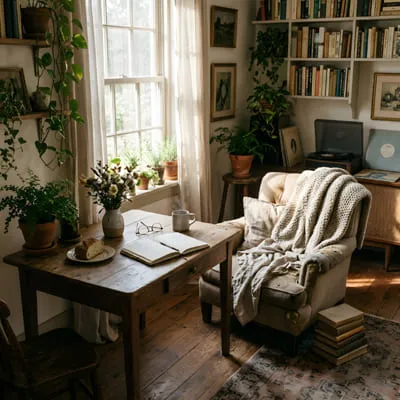
Research gives this idea some support, with limits. University of Kentucky Cooperative Extension notes a study of 32 families that found a link between higher cortisol, the stress hormone, in women and a high density of household objects.
The study was small and older, and it shows an association, not proof of cause. Still, it matches what many people feel: visual noise can add to tension.
Slow living does not demand an empty house. It asks for a home where the objects you see are the objects you use or love.
Edit by Use and Meaning
Pick one drawer, shelf, or surface. Hold each item and ask three questions. Do I use it? Do I love it? Does it belong here? An item that fails all three can leave. An item that passes one may stay, but in a better place.
Items with stories deserve respect. A chipped mug from a trip or a grandparent’s chair can be the most authentic thing in your home. Editing is about clarity, not about erasing your history.
Give Everything a Home
Clutter often means an object has no assigned place. Closed storage helps because it hides visual noise, while open shelves work best for a small number of beautiful things.
Try the one-surface rule. In each main room, keep one surface fully clear: the kitchen counter, the coffee table, or the bedside table. That clear surface gives your eye a place to rest. Architects use the same idea with empty wall planes and open floor areas.
Design the Entry
The entry sets the tone for the whole house. A bench, a row of hooks, a shelf for keys, and a small basket for mail catch the daily pile before it spreads. A mirror and a soft light turn the doorway into a pause.
Buy Less, Choose Better
Slow living extends to what you bring home. Choose durable, repairable items and favor quality over quantity. A simple habit helps: wait a few weeks before buying anything non-essential. That is my own rule of thumb, not a scientific standard, but it often shows which purchases you actually want.
A Gentle Five-Day Edit
- Day one: Clear the entry and set up hooks and a landing shelf.
- Day two: Clear kitchen counters and keep only daily-use items out.
- Day three: Clear bedroom surfaces and move devices out of reach of the bed.
- Day four: Edit the living room, starting with the coffee table and shelves.
- Day five: Review the week. Keep what works and adjust what does not.
Architect’s tip: Edit one small area at a time. A finished drawer teaches you more than a half-finished house.
Connection: Nature, Rituals, and Shared Space
Connection is the third pillar. It joins you to nature, to other people, and to the small rituals that make time feel full. A calm home gives these connections a physical place.
Bring Nature In, Thoughtfully
Plants are the most common answer, but they are only part of the story. Terrapin Bright Green notes that plants are one strategy for one biophilic pattern, a visual connection to nature, and that its framework describes 14 different ways of experiencing nature. Others include daylight that shifts through the day, natural materials, views, and airflow.
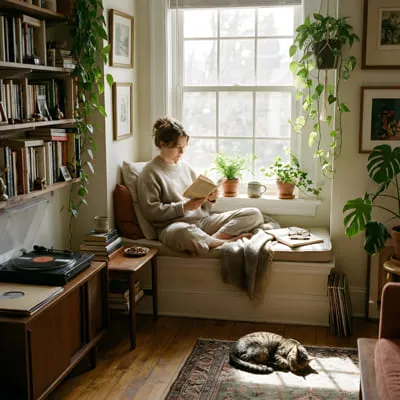
You can apply this without a big budget. Place a chair at your best window. Use wood, linen, stone, and wool. Open windows for fresh air when the climate allows. Add a few plants you can actually keep alive, since a struggling plant undermines the calm it was meant to bring.
Give Rituals a Place
Rituals work best when the space is ready for them. Small, repeatable setups make slow living easier because they remove the effort of starting.
- A morning coffee corner by the window with a favorite cup
- A reading chair with a warm lamp and a small side table
- A device dock outside the bedroom, so the phone sleeps elsewhere
- A cleared dining table that stays free for meals and conversation
- A slow shelf that holds a few objects you enjoy, rotated with the seasons
None of these requires special equipment. They require a spot, a little intention, and repetition.
Design for People
A home that connects people looks different from one built around a screen. Arrange seating so people face each other, not only the television. Keep the kitchen welcoming, since it is where many conversations happen. Leave a few seats open for guests.
Make room for solitude too. A corner with a chair and a lamp lets someone retreat without leaving the house. Slow living needs both togetherness and quiet.
Slow Living Room by Room
You do not have to change everything at once. The table below gives one priority and one simple starting change for each main space.
| Room | Slow living priority | Simple change to start |
|---|---|---|
| Entry | A calm landing zone | Add hooks, a bench, and a small shelf |
| Living room | Comfortable gathering | Use lamps instead of overhead light and clear the coffee table |
| Kitchen | Unhurried cooking | Clear counters except for daily essentials |
| Bedroom | Quiet and rest | Move the phone out, use warm bulbs, add heavy curtains |
| Bathroom | A small daily pause | Keep few products out and add a soft towel and plant |
| Workspace | Clear boundaries | Tidy the desk at the end of each day |
If you rent, focus on changes you can take with you: lamps, textiles, hooks, rugs, and portable storage. These deliver much of the benefit without touching the walls.
Start where friction is highest. For many households, that is the entry or the bedroom. A single improved space often builds the energy to continue.
Slow Living at Home, Built to Last
Slow living at home comes from three pillars working together. Calm shapes the light, sound, and color around you. Clarity edits what you own and gives everything a place. Connection brings in nature, rituals, and shared space.
Begin with an honest reading of your own home, then change one thing at a time. A lamp moved, a surface cleared, or a phone parked outside the bedroom can shift the whole evening.
Which small change will you try first? Share it in the comments, and explore more lifestyle guides on the blog for ideas on small homes and intentional daily routines.
Important Notice
The information in this article is for informational and educational purposes only and is not a substitute for the evaluation or guidance of a healthcare professional. Always consult a doctor before making any decisions regarding your treatment or diagnosis.

Architect with extensive experience in residential and commercial design, including renovations and modular construction. Love to share information about Architecture, home and lifestyle in this blog.