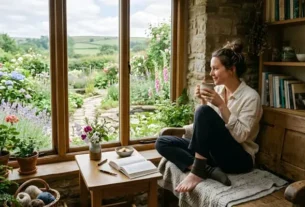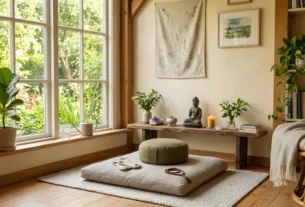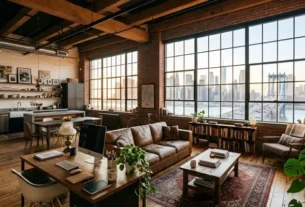
Biophilic living means shaping your daily home life around a connection to nature. Start with daylight, views, and a few well-placed plants. Then add natural materials, textures, fresh air, and natural sound. Small, steady changes work better than one large makeover.
Many of us spend most of our days indoors, surrounded by screens, hard surfaces, and artificial light. The home often feels functional but flat. Biophilic living offers a simple correction. It asks how your rooms look, feel, sound, and smell, and how closely they connect you to the natural world.
The idea rests on solid design research. The best-known framework, Terrapin Bright Green’s “14 Patterns of Biophilic Design,” groups its patterns into three categories: nature in the space, natural analogues, and nature of the space, according to Interface’s overview of biophilia. The framework draws on environmental psychology, neuroscience, and other fields.
You do not need a large budget or a garden to use it. A better window view, a moved chair, or a wooden bowl can all count. This guide explains what biophilic living means, how its three layers work, which changes give the biggest return, and how to plan a calm, natural home room by room.
What Biophilic Living Really Means
“Biophilia” describes the human tendency to seek connection with nature. Biophilic design turns that idea into building and interior choices. Biophilic living goes one step further. It treats the connection as a daily habit, not a one-time decoration.
Snippet: Biophilic design is the practice of bringing nature and natural patterns into buildings and interiors through light, views, plants, materials, and spatial form. Biophilic living applies the same ideas to everyday routines at home.
Research gives the idea weight. The Landscape Performance Series, which summarizes the evidence behind the 14 patterns, notes that views of nature can reduce stress, support more positive emotional functioning, and improve concentration, according to its biophilic design collection. It also says research on natural materials is still emerging.
I find this honest framing helpful. Biophilic living is not a cure for anything. It is a design approach with good evidence for comfort and attention, and with some benefits still being studied. It also asks for more than a plant on a shelf. A common misconception is that a few potted plants make a space biophilic, according to LearnArchitecture’s overview of biophilic principles. Real biophilic living combines several patterns.
The Three Layers of Biophilic Living at Home
The three categories in the Terrapin framework give you a practical map. Use them as a checklist for any room.
| Layer | What It Means | Everyday Examples at Home |
|---|---|---|
| Nature in the space | Direct contact with nature | Daylight, plants, views, fresh air, water, birdsong |
| Natural analogues | Representations of nature | Wood grain, stone, linen, botanical art, organic shapes |
| Nature of the space | Layouts that echo natural settings | Sheltered nooks, open views, gentle transitions, varied ceiling heights |
Nature in the Space
This layer is the most direct. It includes sun, plants, water, breezes, and sounds. If you only change one layer, start here.
Natural Analogues
This layer covers materials and patterns inspired by nature. It includes wood, stone, clay, cork, and wool. It also includes curved furniture and nature-inspired art. You get a natural feel even when real plants are not possible.
Nature of the Space
This layer concerns how a room is arranged. A reading corner with a protected back and an open view feels secure and calm. The Landscape Performance Series links this idea to “prospect” and “refuge,” where people prefer places to survey their surroundings while feeling sheltered.
Quick tip: Pick one change from each layer. For example, add a plant (nature in the space), a wooden tray (analogue), and a chair facing the window (nature of the space).
Light and Views: The Easiest Biophilic Living Upgrades
Light and views cost little and change a home fast. They also sit at the heart of the research on visual connection.
Daylight First
Start by watching how daylight moves through your home. Check each room at 8 a.m., noon, and 5 p.m. Notice where the sun lands, where it fades, and which windows go unused.
Simple changes help:
- Clear the windows. Move tall furniture and heavy curtains away from glass.
- Use light curtains. Sheer fabrics soften glare and still let daylight in.
- Add mirrors. Place a mirror opposite a window to carry light deeper into a room.
- Choose light finishes. Pale walls and floors reflect more daylight.
- Clean the glass. Dirty windows block more light than most people expect.
Dynamic, changing light is also one of the 14 patterns. A room that shifts through the day feels more alive than one with flat light from a single ceiling fixture. In the evening, switch to warm, low lamps instead of bright overhead light.
Frame the View
A view does not have to be a landscape. A tree, a patch of sky, a neighbor’s garden, or a window box can serve. Interface lists views to gardens and distant landscapes, along with potted plants, green walls, and nature art, as ways to satisfy visual connection.
Practical ideas include:
- Turn your desk, sofa, or dining table so that you face the window.
- Trim branches or shrubs that block a pleasant view.
- Install a window box or hang a planter outside the glass.
- Add a bird feeder where you can see it from your seat.
- Use a nature photograph if the view is poor.
Quick tip: In a small apartment, one chair placed by the brightest window can become your daily nature spot. Add a small table and a plant.
Plants, Materials, and Textures: Bringing Nature Indoors Without Clutter
Plants are the symbol of biophilic living, but they work best with other natural elements. Combine living plants with natural materials, and keep the display simple.
Choosing Easy Plants
Match the plant to the light you have. Check pet safety too. Some common houseplants can harm cats and dogs, so check the ASPCA’s list before you buy.
| Plant | Light Needs | Care Level | Pet Safety |
|---|---|---|---|
| Spider plant | Bright, indirect | Easy | Generally considered non-toxic |
| Boston fern | Bright, indirect; likes humidity | Moderate | Generally considered non-toxic |
| Snake plant | Low to bright | Very easy | Toxic if eaten |
| ZZ plant | Low to medium | Very easy | Toxic if eaten |
| Pothos | Low to medium | Very easy | Toxic if eaten |
| Peace lily | Low to medium | Easy | Toxic if eaten |
Snippet: For low-light rooms, choose tough plants such as snake plant, ZZ plant, or pothos. For homes with pets, spider plants and Boston ferns are generally considered safer, but always check a trusted pet-safety list.
Group plants in odd numbers and at different heights. A plant on the floor, one on a shelf, and one hanging near a window looks natural and uses little space. Leave room around each plant so the room does not feel crowded.
Using Natural Materials
Natural materials add texture, warmth, and variety. Research on physiological responses to natural materials is still emerging, according to the Landscape Performance Series, but many people simply find these surfaces more pleasant to touch and see. Examples include:
- Solid wood tables, shelves, and trays
- Stone or ceramic bowls and coasters
- Linen and cotton curtains and bedding
- Wool throws and rugs
- Cork boards or mats
- Rattan, jute, and bamboo baskets
- Clay pots and vases
Choose pieces that show their grain, weave, or irregular edges. Natural materials age and develop character. That variety is part of what makes them feel alive.
Using Natural Patterns
Biomorphic forms and patterns are another of the 14 patterns. Look for curves, leaf shapes, wave patterns, and organic lines. A round table, an arched mirror, or a botanical print can echo nature without adding more plants.
A 2014 study in the International Journal of Environmental Research and Public Health found that office workers with natural lighting, significant plants, and non-synthetic materials reported improved productivity, lower stress, and higher satisfaction, according to LearnArchitecture’s summary of the research. The study was done in workplaces, not homes. Still, it supports the idea that combining light, plants, and natural materials works better than any one element alone.
Sound, Air, and Water: The Overlooked Senses
Most home design focuses on how a room looks. Biophilic living also uses sound, air, scent, and touch.
Natural Sound
Open a window when outdoor noise is pleasant. Birdsong, rain, leaves, and distant water create a calming background. If you cannot open windows, use a small tabletop fountain or a recording of natural sound at low volume.
Fresh Air and Airflow
Moving air is part of nature. Open windows on opposite sides of a room for cross-ventilation. Use a ceiling fan to keep air moving. Check local air quality first. On days with heavy pollution or high pollen, keep windows shut.
Water
Water adds sound, light, and movement. A small fountain, a bowl of water with floating flowers, or a bird bath outside a window can serve. Keep water clean and change it regularly so it stays fresh.
Scent and Touch
Fresh herbs in the kitchen, such as basil, mint, or rosemary, add scent and can be used in cooking. A cedar box, a beeswax candle, or a bunch of dried lavender brings gentle natural scent. Walk barefoot on a wool or jute rug and feel the difference.
Gentle Variation
Nature is never perfectly uniform. Vary the light, temperature, and texture across your home. A cool, bright kitchen and a warm, dim bedroom feel different, and that difference is pleasant. Avoid keeping every room at the same level of light and sound.
A Room-by-Room Plan, Budget Tips, and Mistakes to Avoid
Apply the ideas room by room so the changes feel manageable.
Room-by-Room Ideas
| Room | Easy Biophilic Moves |
|---|---|
| Living room | Face seating toward the window; add a large plant, wool throw, and wooden coffee table |
| Bedroom | Use linen bedding, warm low lamps, and a plant by the window; keep the view clear |
| Kitchen | Grow herbs on the sill; use wood boards and ceramic bowls |
| Bathroom | Add a fern or bamboo, a stone tray, and a natural cotton mat |
| Home office | Place the desk by the window; add a plant and natural-material desk items |
| Entry | Hang a planter, add a wooden bench, and use natural fiber baskets |
A One-Week Starter Plan
- Day 1: Observe daylight in each room and note unused windows.
- Day 2: Clear windows and wash the glass.
- Day 3: Rearrange one seat or desk to face a view.
- Day 4: Add one easy plant matched to the light.
- Day 5: Swap one plastic item for a natural-material one.
- Day 6: Open windows for cross-ventilation if the air is clean.
- Day 7: Sit in your new nature spot for ten minutes and note how it feels.
Budget and Rental Tips
- Low cost: Cuttings from friends, secondhand wooden items, and window cleaning cost almost nothing.
- Renters: Use freestanding shelves, hanging plants on removable hooks, and portable lamps.
- No light: Use a full-spectrum grow light for plants in dark rooms.
- Small spaces: Use vertical planters, window shelves, and hanging baskets.
Common Mistakes
- Relying only on plants, which misses light, materials, and layout.
- Buying plants that do not suit your light, so they struggle and look sad.
- Overcrowding rooms, which makes the space feel cluttered, not calm.
- Choosing fake materials that mimic nature, which can feel flat and cheap.
- Ignoring pet safety, especially with toxic houseplants.
- Overwatering, the most common reason houseplants die.
- Skipping maintenance, since dead leaves and dusty surfaces undermine the effect.
- Trying to change everything at once, which makes the project feel heavy and hard to sustain.
If you have allergies, asthma, or other health conditions, ask your doctor before adding many plants or changing ventilation.
Building a Home That Feels Closer to Nature
Biophilic living is not a trend you buy. It is a way of arranging daily life so that light, views, plants, materials, air, and sound connect you with the natural world. Start with daylight and a view, add a few suitable plants and natural materials, and let the rest grow slowly. Choose one change this week and notice how the room feels afterward. If you have tried biophilic living at home, tell me in the comments which change you noticed most.
Important Notice: The information in this article is for informational and educational purposes only and is not a substitute for the evaluation or guidance of a healthcare professional. Always consult a doctor before making any decisions regarding your treatment or diagnosis. This content is also for informational purposes only and is not a substitute for consulting a veterinarian. Every animal is unique and requires professional evaluation.

Architect with extensive experience in residential and commercial design, including renovations and modular construction. Love to share information about Architecture, home and lifestyle in this blog.