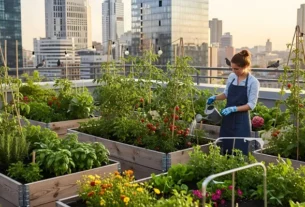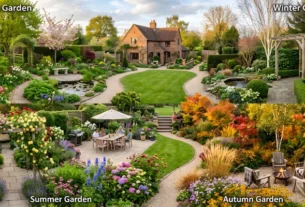
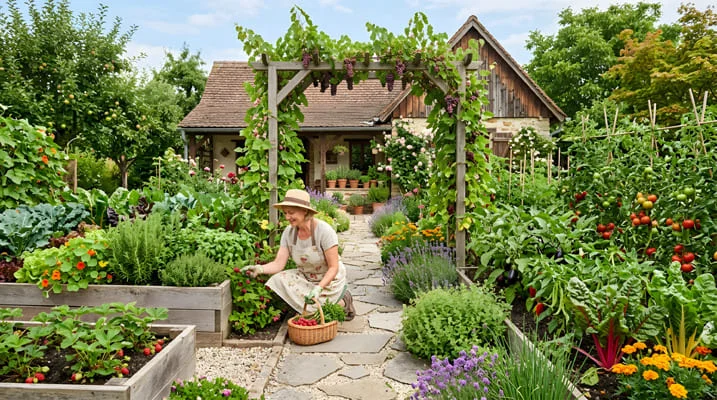
Edible landscaping is the practice of integrating fruiting plants, vegetables, and culinary herbs directly into a garden’s ornamental beds and layout, rather than confining food production to a separate utility plot. Done well, it uses the same layering, color, and structural principles as any well-designed garden — it just happens to be edible too.
Most gardeners still treat a vegetable patch as something separate from the “real” garden — tucked behind a fence, out of sightlines, often the least visually considered part of the whole property. That instinct is understandable, since traditional food gardening does tend to look more utilitarian than decorative.
But interest in growing food at home has climbed sharply in recent years: a 2023 survey by the National Gardening Association found that food gardening remains one of the fastest-growing segments of home horticulture in the United States, with a significant share of new gardeners citing both cost savings and a desire for fresher, more flavorful produce.
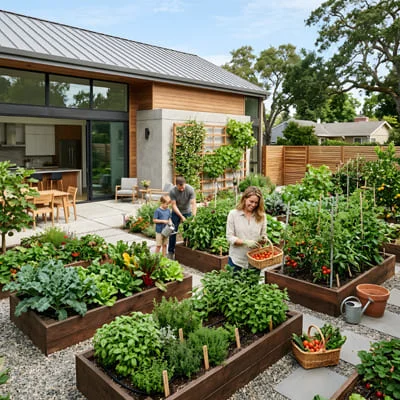
Edible landscaping solves the aesthetic half of that equation. Rather than choosing between a beautiful garden and a productive one, this approach treats fruit trees, herbs, and vegetables as legitimate design material — plants selected as much for form, color, and texture as for what ends up on the plate. This guide walks through how to actually integrate edible plants into an ornamental scheme, which species do double duty best, and the layout mistakes that most often undermine the attempt.
What Makes Edible Landscaping Different From a Vegetable Garden
A vegetable garden is organized primarily around yield and access — straight rows, open soil, easy harvesting. Edible landscaping is organized primarily around the same design logic as any ornamental bed: layering by height, considered sightlines, and a cohesive color and texture palette, with food production woven into that structure rather than sitting apart from it.
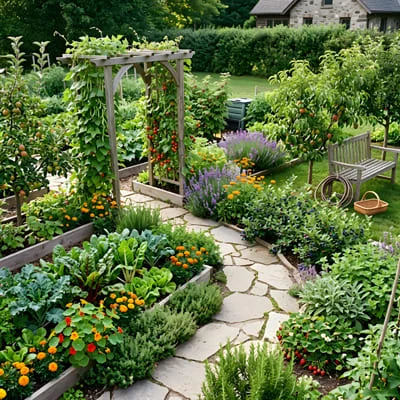
The distinction matters because it changes almost every decision that follows. In a vegetable garden, a tomato plant gets staked in a row next to other tomatoes.
In an edible landscape, that same tomato might be trained up a trellis positioned as a vertical accent within a mixed bed, chosen partly because its form works with the plants around it.
Snippet: Edible landscaping blends food-producing plants into a garden’s ornamental design, using the same layering and layout principles as any beautifully planted bed — rather than isolating vegetables and herbs in a separate utility plot.
Choosing Edible Plants That Genuinely Double as Ornamentals
Not every edible plant earns a place in a visible bed. Some genuinely carry their own decorative weight; others look distinctly utilitarian regardless of how they’re arranged, and are better suited to a dedicated growing zone instead.
| Plant | Ornamental Value | Best Role in the Layout | Sun Needs | Harvest Season |
|---|---|---|---|---|
| Rainbow chard | High — colorful stems | Mid-story color, borders | Full sun–part shade | Spring–fall |
| Espaliered apple/pear | High — architectural form | Vertical wall feature | Full sun | Late summer–fall |
| Artichoke | High — sculptural silver foliage | Structural focal point | Full sun | Summer |
| Rosemary | High — silvery, textured evergreen | Structure, edging | Full sun | Year-round (mild climates) |
| Nasturtium | High — bright edible flowers | Groundcover, trailing accent | Full sun–part shade | Summer–fall |
| Blueberry shrub | Moderate–High — fall color | Mid-story shrub layer | Full sun | Summer |
| Standard tomato | Low | Best in a dedicated bed | Full sun | Summer–fall |
| Standard cabbage | Low | Best in a dedicated bed | Full sun | Spring, fall |
Espaliered fruit trees deserve particular attention here. Training an apple or pear tree flat against a wall or fence — a technique with genuine centuries of horticultural precedent — turns a fruiting tree into a living architectural feature, useful in exactly the tight, wall-adjacent spaces where a full-sized tree wouldn’t otherwise fit. In my own project work, espaliered fruit has consistently been the single most effective way to add real edible yield to a small urban garden without sacrificing its considered, designed appearance.
Design Principles for Blending Fruit, Herbs, and Ornamentals
Successfully integrating edible plants into an ornamental scheme comes down to three design decisions, applied consistently across the whole garden rather than plant by plant.
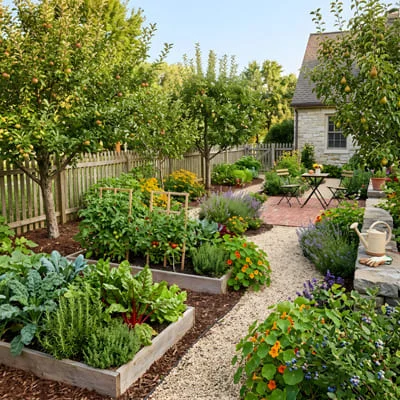
Zone deliberately, rather than scattering. The most successful edible-ornamental gardens I’ve worked on treat food-producing plants as their own distinct zone within the broader layout — not hidden away, but not randomly distributed either. A raised bed with a clean geometric edge reads as intentional hardscape even in the weeks when its planting is sparse or freshly sown, which solves the seasonal-bare-patch problem that makes most home vegetable plots look neglected for part of the year.
Layer by height, exactly as you would in a purely ornamental bed. Taller structural edibles like espaliered fruit or artichoke form the upper layer; mid-story herbs and shrubs like rosemary and blueberry fill the middle; low, spreading edibles like nasturtium or strawberry work as edible groundcover. This layering, covered extensively by landscape design resources such as the American Society of Landscape Architects, is what keeps a mixed bed looking complete across the growing season rather than bare in the gaps between edible plantings.
Match color and texture intentionally. Rainbow chard’s magenta stems, purple basil’s deep foliage, and nasturtium’s orange-red blooms can genuinely function as a garden’s seasonal color layer, doing the same visual job a purely ornamental annual would — while still ending up on a plate.
A Practical Layout for a Mixed Edible-Ornamental Bed
Here’s a sequence I use when planning a mixed bed for a client who wants genuine food production without sacrificing curb appeal:
- Establish the structural layer first — an espaliered fruit tree, a rosemary hedge, or an artichoke cluster positioned as the bed’s anchor.
- Add mid-story color and texture — chard, purple basil, or a blueberry shrub, spaced to complement the structural layer’s form.
- Fill the groundcover layer — nasturtium, strawberry, or low thyme, both suppressing weeds and softening the bed’s edges.
- Reserve a separate zone for high-maintenance annual vegetables — tomatoes, cabbage, and other plants with lower ornamental value — using raised beds to keep that zone visually contained.
- Sequence harvests across the season so the bed never has more than one layer looking spent or freshly cut back at any given time.
Quick tip: Position your most ornamentally valuable edibles — like an espaliered fruit tree or artichoke — within the sightlines you’d normally reserve for purely decorative focal points. If it’s beautiful enough to anchor a view, it deserves that spot regardless of whether it’s also edible.
Common Mistakes That Undermine Edible Landscaping
A handful of recurring issues explain most of the edible gardens that end up looking more chaotic than intended.
- Treating every edible plant as equally ornamental, when in practice only a subset genuinely carries visual weight on its own.
- Ignoring mature size, letting a vigorous squash vine or an unpruned fruit tree overwhelm a bed that was originally scaled for a mixed planting.
- Skipping the structural layer, relying entirely on annual vegetables that leave the bed looking bare for large stretches of the year.
- Placing high-maintenance annuals in highly visible zones, where their inevitable seasonal mess is most noticeable.
- Underestimating soil demands, since fruiting and vegetable plants are typically more nutrient-hungry than ornamentals and need genuinely richer, well-amended soil to perform in both categories — as food and as design.
Bringing Food and Beauty Into the Same Garden
Edible landscaping isn’t a compromise between a productive garden and a beautiful one — it’s a design approach that treats food-producing plants as genuine material for the same layering, zoning, and color decisions that shape any well-designed bed. Choose the plants that carry real ornamental weight, give them a structural role, and reserve a separate, contained zone for the higher-maintenance annuals that don’t. Start with one bed, one espaliered tree, or one border of rainbow chard, and you’ll see how naturally food and beauty share the same space once the design logic is right. If you’ve blended fruit, herbs, and ornamentals in your own garden, I’d love to hear which combination worked best for you.

Architect with extensive experience in residential and commercial design, including renovations and modular construction. Love to share information about Architecture, home and lifestyle in this blog.