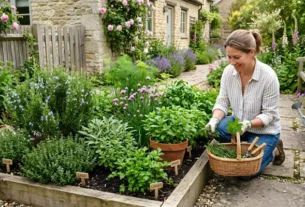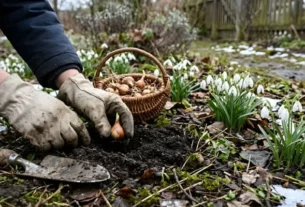

Colombian roses are long-stemmed cut roses grown mainly on the high-altitude Bogotá Savanna, where cool temperatures and about 12 hours of daylight year-round produce large, uniform blooms. Home gardeners cannot copy the altitude, but they can copy the practices: full sun, careful pruning, steady feeding, and clean cutting.
If you bought roses for Valentine’s Day, there is a good chance they came from Colombia. Few people think about the journey. A stem is cut on a high plateau near Bogotá, cooled within hours, flown north, and sitting in a vase a few days later.
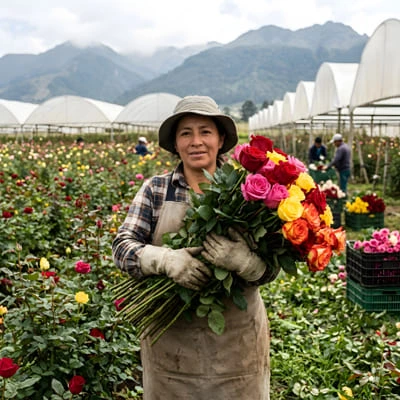
Colombian roses are among the most traded flowers in the world, and they set the standard for what a perfect cut rose looks like.
The scale is large. Nearly 1,700 cargo flights carrying about 59,000 tons of flowers left Bogotá ahead of Valentine’s Day in 2024, most of them headed to the United States, according to the Colombian exporters’ association Asocolflores as reported in a Washington Post feature.
Colombia holds about 60 percent of the US flower import market, according to Floral Daily’s report on Asocolflores data.
Behind those numbers sits real horticulture. The altitude, the light, and the daily routines of the growers all shape the flower you buy. This guide explains where Colombian roses come from, what makes them different, which growing secrets matter, and how you can use those lessons to grow better roses at home and keep cut roses fresh longer.
Why Colombian Roses Lead the World
Colombia is the world’s second-largest exporter of cut flowers, behind the Netherlands. In the first half of 2025, its flower exports reached about US$1.4 billion, up 10 percent from the same period in 2024, according to Floral Daily. The same report says roughly 80 percent of bouquets bought by American consumers contain Colombian stems.
Three advantages explain the lead.
- Altitude. Cooler air at high elevation slows growth and builds thick stems and large buds.
- Light. Equatorial daylight stays close to 12 hours all year, so plants do not slow down for winter.
- Cost and labor. Production costs are lower than in many competing regions, and farms can grow year-round.
The Washington Post summed up the combination as high altitude, generous sunlight, and low production costs. Together they let farms supply roses on a steady schedule, including the sharp peaks before Valentine’s Day and Mother’s Day.
Snippet: Colombian roses are cut roses grown mostly on the Bogotá Savanna at about 2,600 meters above sea level. High altitude, steady equatorial light, and cool nights produce long stems and large, uniform blooms.
I find this a useful reminder for any gardener. Great roses start with site conditions. Variety and technique matter, but the environment sets the ceiling.
Where Colombian Roses Come From: Regions and Growing Conditions
The industry is concentrated in a few places. The roughly 300 export flower farms in Colombia cluster in two main areas, according to Florists’ Review. Farms on the Bogotá Savanna produce about 73 percent of the country’s cut flowers. The Rionegro Valley near Medellín produces about 24 percent. The rest are scattered through the central and western regions.
| Region | Share of Cut Flowers | Altitude Character | Main Features |
|---|---|---|---|
| Bogotá Savanna | About 73% | High plateau, around 2,600 m | Cool, bright, stable temperatures |
| Rionegro Valley | About 24% | High valley near Medellín | Mild climate, good light |
| Other central and western areas | About 3% | Varies | Smaller operations |
The industry keeps growing. The cultivated area rose from 6,516 hectares in 2012 to 11,173 hectares in 2025, and export value climbed from about US$1.27 billion to US$2.4 billion over the same period, according to a 2026 market report compiled for India’s APEDA AgriExchange. The same report estimates about 300 export farms, split roughly evenly between operations of 20 to 50 hectares and those above 50 hectares.
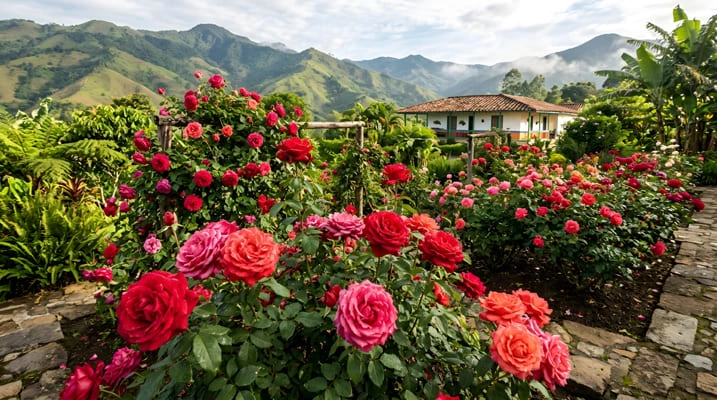
Why the Savanna Works
The Bogotá Savanna sits at roughly 2,600 meters. Days are bright, nights are cool, and temperatures stay stable across the year. Roses grow steadily in those conditions. Cool nights reduce stress, and strong daytime light drives photosynthesis. Many farms use simple plastic-covered greenhouses to protect blooms from rain and wind, not to heat the plants.
The Cold Chain
Growing is only half of the story. Roses are cut, sorted by stem length, and moved into refrigerated storage quickly. Automated lines grade and bundle them. Then they travel by cold chain to airports and on to wholesalers. Keeping the flowers cold from the farm to the vase is what protects their vase life.
What Makes Colombian Roses Different: Characteristics and Varieties
Colombian roses are known for four traits.
- Long, straight stems. Premium stems commonly run 50 to 70 cm, and long-stem roses over 60 cm make up a large share of output on the Savanna, according to trade reporting.
- Large, well-formed buds. Cool nights and high light help create full, tightly shaped heads.
- Uniform size and color. Careful grading means a bunch looks consistent.
- Long vase life. Cutting at the right stage and keeping stems cold helps blooms last.
Popular Varieties
Growers choose varieties for bloom size, stem strength, color, and how well they ship. Some widely grown cut-rose varieties include the following.
| Variety | Color | Typical Character |
|---|---|---|
| Freedom | Deep red | Large head, classic romantic rose |
| Explorer | Red | Full bloom, strong stem |
| Vendela | Cream-white | Soft color, popular for weddings |
| High & Magic | Pink and yellow bicolor | Eye-catching, bold pattern |
| Mondial | White | Large, clean bloom |
Variety lists change as breeders release new cultivars, and different farms grow different mixes. Treat the table as examples, not a complete list.
Snippet: Most Colombian roses are hybrid tea-type cut-flower varieties bred for long stems, large buds, and good shipping. Many are patented and grown under license, so they are rarely sold as garden plants.
This point matters for gardeners. The famous export varieties are bred for the flower farm, not the flower bed.
They need controlled conditions to reach their best form.
Some garden roses, including spray roses and fragrant garden varieties, are also grown in Colombia, but the stems that fill the supermarket buckets are mostly greenhouse cut types
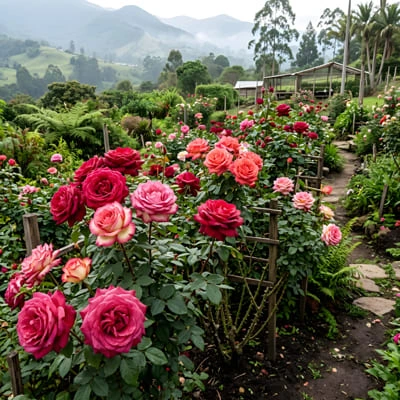
The Growing Secrets Behind Colombian Roses
The farms follow a set of practices that anyone can learn from. The environment is special, but the techniques are not secret. Here is what the farms do, why it works, and how you can use it at home.
| Farm Technique | Why It Works | How to Apply It at Home |
|---|---|---|
| Strong, steady light | Drives growth and bud size | Plant where roses get at least six hours of sun |
| Deep, well-drained beds | Roots grow strong; no waterlogging | Dig deep, add compost, ensure drainage |
| Careful pruning | Directs energy into fewer, stronger stems | Cut above outward-facing buds in late winter |
| Disbudding | One large bloom per stem | Remove side buds when small |
| Regular feeding | Supports constant flowering | Feed in spring and after the first flush |
| Even watering at the base | Reduces fungal disease | Water the soil, not the leaves |
| Pest monitoring | Catches problems early | Check leaves and buds weekly |
| Harvesting at bud stage | Longer vase life | Cut when the first petals start to open |
| Rapid cooling | Slows aging | Put cut stems in cool water at once |
Light and Air
Farms prize bright, even light and good air movement. In your garden, avoid crowding roses. Space plants so air can move through the canopy. Good airflow reduces mildew, a common problem.
Pruning and Disbudding
Roses reward decisive pruning. Remove dead, weak, and crossing stems. Cut the rest above an outward-facing bud. For large single blooms, pinch off the small side buds as soon as you can handle them. The plant then puts its energy into the main bud.
Feeding and Water
Roses are hungry plants. Use a balanced rose fertilizer or compost in spring, and feed again after the first flush of flowers. Water deeply but not often, and aim at the soil. Wet leaves invite fungal disease.
Pest and Disease Control
Growers watch for common problems such as powdery mildew, botrytis (grey mold), thrips, and spider mites. Many farms follow integrated pest management programs. For home gardens, start with prevention. Choose resistant varieties, keep leaves dry, remove diseased leaves, and check plants often. Use treatments only when needed and follow the label.
Quick tip: The single best habit I know is a weekly walk around your roses with a close look at leaf undersides. Most problems are small and easy to manage when caught early.
Growing Colombian-Style Roses at Home
You probably cannot buy the exact export varieties, and you cannot match a high plateau on the equator. You can still grow roses with similar qualities: long stems, large blooms, and good vase life.
Choose the Right Plants
Look for hybrid teas and floribundas bred for cutting. Ask your nursery for varieties known for strong stems and disease resistance. Bare-root roses planted in winter or early spring are economical. Container roses can go in at most times of year if you water them well.
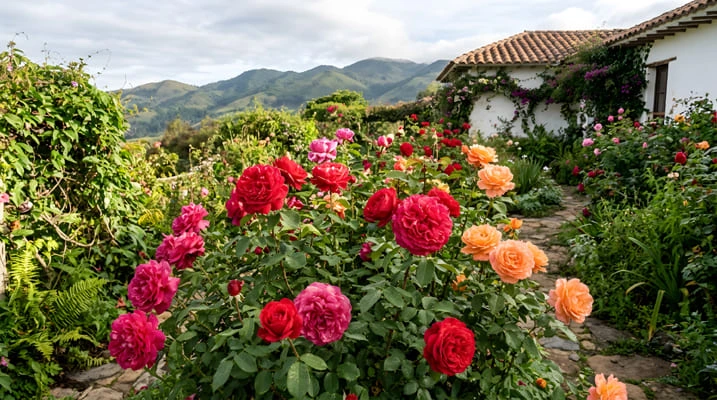
Plant Step by Step
- Pick a sunny site. Aim for at least six hours of direct sun.
- Prepare the soil. Loosen it deeply and mix in compost.
- Dig a wide hole. Make it large enough for roots to spread.
- Set the plant. Keep the graft union (the swollen knot near the base) at the level your local advice recommends.
- Backfill and firm. Press the soil down gently.
- Water well. Soak the root zone.
- Mulch. Add a layer of organic mulch, kept clear of the stem.
- Prune lightly. Trim damaged growth and shape the plant.
A Simple Care Calendar
| Season | Main Tasks |
|---|---|
| Late winter | Prune, clean beds, plant bare-root roses |
| Spring | Feed, mulch, begin pest checks |
| Summer | Water deeply, deadhead, cut stems for the house |
| Early autumn | Light feed, remove diseased leaves |
| Late autumn | Tidy beds, protect plants in cold areas |
Timing depends on your climate. Follow local guidance for pruning dates.
Common Mistakes
- Planting in shade, which gives weak stems and few flowers
- Overwatering or wetting leaves, which invites disease
- Pruning too lightly, which leaves crowded, weak growth
- Skipping feeding, which reduces blooms
- Ignoring early signs of mildew or pests
- Crowding plants, which blocks airflow
- Expecting export-farm results in a home garden, since conditions differ
Be realistic. A well-grown home rose can be spectacular. It will not copy a greenhouse stem in every detail, and that is fine.
How to Make Colombian Roses Last Longer in the Vase
Most Colombian roses reach you after a long journey, so good care at home matters. These steps help any cut rose, whether it came from a farm or your garden.
- Unwrap and inspect. Remove packaging as soon as you get home.
- Cut the stems. Trim about an inch off the bottom at an angle, using sharp, clean scissors.
- Strip lower leaves. Remove any foliage that would sit below the waterline.
- Use a clean vase. Wash it with soap and rinse well, since bacteria shorten vase life.
- Add flower food. Mix it with water as directed on the packet.
- Keep it cool. Place the vase away from direct sun, heaters, and ripening fruit.
- Refresh the water. Change it every two days and recut the stems.
- Remove spent blooms. Take out fading flowers promptly.
If the heads droop, a fresh cut and a warm-water soak can sometimes revive them.
A closed bud that never opens may have been cut too early or stressed in transit.
For roses cut from your own garden, pick in the cool of morning.
Choose buds with the first petals just opening, and place the stems in water immediately.
Bringing the Best of Colombian Roses Home
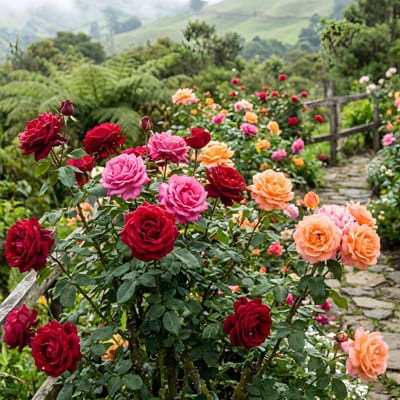
Colombian roses owe their fame to a rare combination of altitude, light, and careful production, plus a cold chain that moves them from farm to vase in days. You cannot copy the plateau, but you can borrow the practices: sun, strong pruning, steady feeding, clean watering, and gentle handling. Start with one well-chosen rose in a sunny bed, and give it the care the farms give theirs. If you have grown roses at home or have a favorite way to keep cut roses fresh, tell me about it in the comments.Garden:The Complete Guide to Planning, Planting, and Sustainable Landscaping for Every Space

Architect with extensive experience in residential and commercial design, including renovations and modular construction. Love to share information about Architecture, home and lifestyle in this blog.