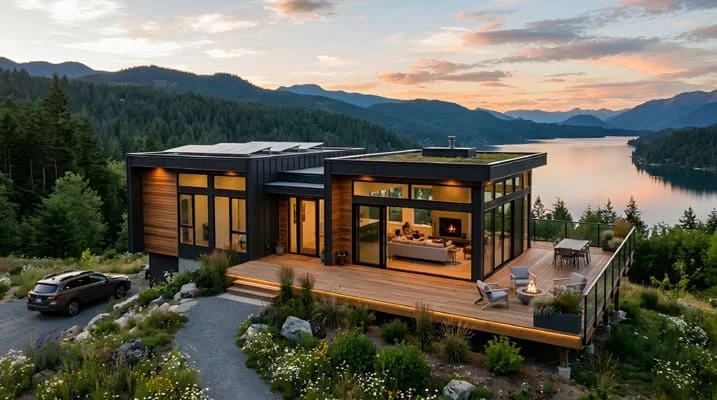
Prefab and modular construction builds a home’s structural components in a factory setting before assembling them on-site, cutting construction timelines, reducing material waste, and improving quality control compared to conventional stick-built methods. It’s rapidly moving from a niche alternative to a mainstream residential construction approach.
If you’ve assumed prefab housing still means the boxy, limited-design manufactured homes of decades past, that perception is genuinely out of date.
Prefab and modular construction has evolved into a sophisticated, architecturally flexible building method now used across residential, commercial, and institutional projects worldwide. The global modular and prefabricated construction market was valued at $171.1 billion in 2025 and is projected to grow to $180.3 billion in 2026, continuing toward $307.2 billion by 2035, according to market analysis from Global Market Insights.
This guide covers what actually distinguishes prefab from modular construction, why the industry is shifting toward off-site building at this pace, and what to genuinely weigh before choosing this approach for your own project.
What “Prefab” and “Modular” Actually Mean (and How They Differ)
These two terms get used almost interchangeably in casual conversation, but they describe genuinely distinct construction approaches worth understanding precisely before evaluating either one for a project.
Prefabricated (prefab) construction is the broader category, referring to any building components manufactured off-site and transported for on-site assembly — this can mean individual wall panels, roof trusses, or complete structural systems.
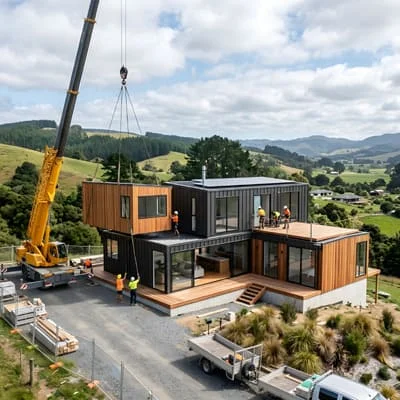
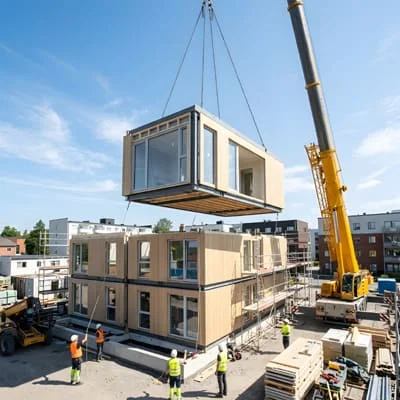
Modular construction is a specific type of prefab building in which entire three-dimensional room modules — complete with wiring, plumbing, and finishes already installed — are manufactured in a factory and then transported and stacked or connected on-site to form a complete structure.
Snippet: Prefab construction refers broadly to any building components made off-site and assembled on location, while modular construction specifically uses complete, finished room-sized units manufactured in a factory and joined together on-site — modular is a type of prefab, not a separate category.
Why Prefab and Modular Construction Is Becoming the New Standard
The shift toward off-site building addresses several genuine, persistent problems in conventional residential construction simultaneously, rather than solving a single narrow issue.
| Factor | Traditional Site-Built | Prefab/Modular Construction |
|---|---|---|
| Construction timeline | Longer, weather-dependent | Significantly faster, weather-independent for manufacturing |
| Quality control | Variable, site-dependent | Consistent, factory-controlled environment |
| Material waste | Higher, less standardized | Lower, optimized for repeated production |
| Cost predictability | More variable, subject to delays | More predictable, fewer weather-related overruns |
| Design flexibility | Highest (custom on-site) | Growing rapidly with modern systems |
Manufacturing components in a controlled factory environment removes weather delays from a large share of the construction process, since interior finishing, wiring, and plumbing installation can proceed regardless of on-site conditions.
This same controlled environment also improves consistency: factory production allows for the kind of repeated quality checks that a shifting on-site crew, working across variable conditions, often can’t match as reliably.
The Technology and Materials Driving This Shift
Several converging developments have pushed prefab and modular construction from a cost-driven alternative toward a genuinely mainstream building method.
AI-driven modular design tools are increasingly used to optimize panel and module layouts before manufacturing even begins, reducing waste and improving how efficiently a design translates into standardized factory production. Automated manufacturing lines have expanded the precision and speed of off-site fabrication considerably beyond what was possible even five years ago, and this automation is expected to remain one of the primary growth drivers for the industry through the next decade, according to market forecasting from The Business Research Company.
Material choice has evolved alongside the manufacturing technology. While concrete remains the dominant material in prefabricated construction overall, wood — including cross-laminated timber — has emerged as the fastest-growing material category specifically within modular and prefab systems, reflecting the same shift toward mass timber construction reshaping residential building more broadly.
Quick tip: If you’re evaluating a modular builder, ask specifically about their factory’s quality certification and how they handle module transport and on-site connection detailing. These joints between modules are where the majority of genuine construction defects in modular buildings tend to occur if not executed with real precision.
Where Prefab and Modular Construction Works Best
Not every project benefits equally from off-site construction, and understanding where it delivers the strongest advantage helps set realistic expectations.
- Single-family residential homes benefit from faster timelines and more predictable costs, particularly valuable in markets facing genuine housing supply pressure.
- Accessory dwelling units (ADUs) and garden studios are especially well suited to modular delivery, since their smaller scale means an entire structure can often arrive as one or two modules ready for rapid on-site connection.
- Multifamily and affordable housing projects benefit disproportionately from modular construction’s speed and cost predictability at scale, which is why government-backed modular housing programs have expanded significantly in regions facing housing shortages.
- Rapid-deployment and disaster-response housing relies almost entirely on prefab and modular methods, since speed of delivery is the primary requirement in these situations.
- Remote or difficult-access sites benefit from reduced on-site labor and construction time, since less work needs to happen under challenging site conditions.
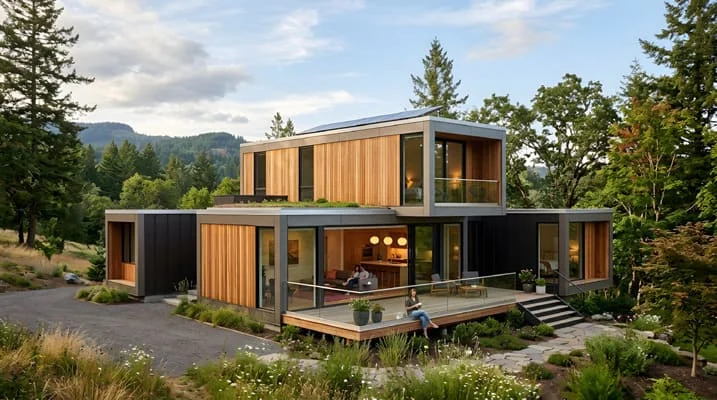
Residential construction currently holds the largest single share of the global prefabricated construction market by both unit volume and value, according to industry analysis from Meticulous Research, which specifically points to housing supply pressure in markets like the UK and Australia as a major driver of government-backed modular residential programs.
What to Consider Before Choosing Prefab or Modular Construction
Prefab and modular construction isn’t automatically the right choice for every project, and a few genuine trade-offs deserve honest consideration before committing.
Transportation logistics matter more here than in conventional construction, since module or panel size is constrained by what can be legally and practically transported to your site — a genuine limitation on remote or access-restricted properties. Design customization, while considerably more flexible than it was a decade ago, still generally works within a manufacturer’s established systems and module dimensions, which can constrain highly bespoke architectural ambitions compared to fully custom site-built construction. Local building department familiarity with modular permitting also varies by region, and confirming your municipality’s experience with modular approvals before committing to a timeline is worth doing early in the planning process.
Common Misconceptions About Prefab and Modular Homes
A handful of outdated assumptions continue to shape how people think about this construction method, often inaccurately given how far the industry has evolved.
The belief that prefab and modular homes look generic or lack architectural character reflects an older generation of manufactured housing rather than current modular systems, which increasingly support genuinely custom architectural design.
The assumption that off-site construction sacrifices structural quality also doesn’t hold up against the reality of factory-controlled manufacturing, which often delivers more consistent quality control than variable on-site conditions allow.
And the idea that modular construction is only suitable for temporary or low-cost housing overlooks its expanding use in permanent, high-quality residential, commercial, and institutional projects — the permanent modular segment, in fact, dominates the broader market and continues to grow faster than relocatable modular structures.
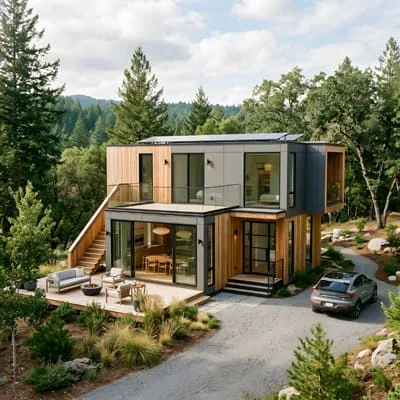
Building Smarter, Faster, and More Predictably
Prefab and modular construction has moved well past its reputation as a compromise choice, offering genuine advantages in timeline predictability, quality control, and material efficiency that conventional site-built construction increasingly struggles to match. Whether you’re planning a full single-family home, a garden studio, or an ADU, understanding the real distinction between prefab and modular approaches — and being honest about your site’s transportation and customization constraints — will help you evaluate whether this construction method genuinely fits your project. If you’ve built with prefab or modular methods, I’d love to hear how the timeline and quality compared to your expectations.

Architect with extensive experience in residential and commercial design, including renovations and modular construction. Love to share information about Architecture, home and lifestyle in this blog.