Last updated on October 15th, 2026 at 09:47 am
The best way to start a coffee cup collection is to pick a theme and a favorite cup material, such as porcelain, stoneware, or glass. Buy pieces you will actually use, display them where you can see and reach them, and let the collection grow slowly over time.
Most of us own cups that never match. A few came from gifts. Others came from trips, flea markets, or a long-gone set. Turning that pile into a collection takes one decision: what ties your cups together? Often the answer is cup material. Glaze, weight, and shape change how a cup looks on a shelf and how it feels in your hand.

The market shows how much people care about these details. Ceramic cups held the largest revenue share of the global cups and mugs market in 2025, and brands are now adding matte coatings, stoneware effects, and limited-edition designs, according to Grand View Research.
In other words, the cup on your shelf is a design object, not just a container.
This guide shows you how to start a coffee cup collection, where to find good pieces, and how to display and style them at home. It also covers one safety point about vintage cups that many collectors miss.
Why Cup Material Shapes Your Whole Collection
Cup material decides how a piece looks, how it holds heat, and how it ages. A porcelain cup feels thin and bright. A stoneware cup feels heavy and earthy. A glass cup shows the coffee itself. When you mix them without a plan, a shelf can look random.
Snippet: Stoneware is a dense, durable ceramic fired at high heat, often with a matte or earthy finish. Porcelain is fired even hotter and is smoother, thinner, and non-porous, which gives it a bright, refined look.
Here is how the common options compare.
| Cup Material | Look and Feel | Heat Retention | Durability | Display Character |
|---|---|---|---|---|
| Porcelain | Smooth, bright, thin walls | Moderate | Strong for its weight | Clean, classic |
| Bone china | Translucent, delicate | Moderate | Surprisingly chip-resistant | Elegant, formal |
| Stoneware | Heavy, matte or speckled | Good | Very durable | Earthy, handmade |
| Earthenware | Rustic, often colorful | Fair | Chips more easily | Warm, casual |
| Glass | Clear, shows the drink | Low–moderate | Varies by type | Light, modern |
| Enamel | Metal core, bold colors | Fair | Tough, but chips show metal | Retro, camp style |
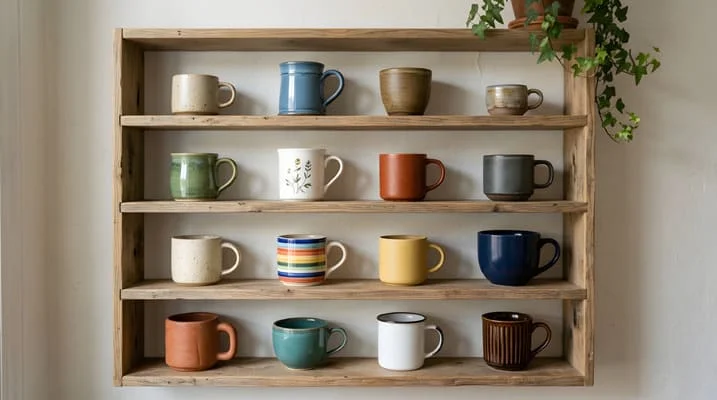
I suggest choosing one main cup material and one accent material. For example, build around speckled stoneware and add a few clear glass cups. The main material gives the shelf a calm base. The accent adds contrast.
Think about use as well as looks. Thick stoneware keeps coffee warm longer. Thin porcelain cools faster but feels lighter on the lip. Match the cup material to how you drink, and you will reach for your collection daily.
How to Start a Coffee Cup Collection
Start small. A collection grows best when each cup earns its place.
- Choose a theme. It can be a color, a maker, a region, a decade, or a cup material.
- Set a budget per piece. Decide your limit before you shop. This keeps impulse buys in check.
- Pick your first three cups. Choose ones you love to drink from. They become the anchor.
- Check size and shape. Mixed handles and heights are fine. Keep one element steady, such as glaze tone.
- Track what you own. A simple note on your phone avoids duplicates.
- Edit every season. Remove cups that no longer fit the theme.
Quick tip: Buy a cup only if you can picture drinking from it this week. A collection you use stays alive. A collection that sits untouched becomes clutter.
A theme can be loose. “Cups from places I have visited” works well. So does “cups in blue and cream.” What matters is that you can explain the link in one sentence.
Where to Find Cups Worth Collecting
Good cups turn up in many places. Each source has its own strengths.
- Local potters and craft fairs offer handmade stoneware with real character.
- Estate sales and flea markets give you vintage porcelain at low prices.
- Thrift shops reward patience and frequent visits.
- Online marketplaces let you search by maker, era, or cup material.
- Museum and gallery shops sell well-designed new pieces.
Brands are leaning into this variety. Modular cup collections with coordinated sizes are now common, according to the same Grand View Research report, which makes it easier to mix new and old pieces without a clash.
A Safety Note on Vintage and Handmade Cup Material
Here is the point many collectors miss. Some older or handmade ceramics have glazes that can contain lead or cadmium. The U.S. Food and Drug Administration tests ceramic food containers for these metals, and it advises caution with antique or handmade pieces, according to reporting by NPR. Many makers have since moved to lead-free glazes.
Age matters too. Before 1971, there were no limits on lead in dinnerware and ceramics, so older pieces carry a higher risk, according to the Center for Environmental Health
That group suggests using vintage pieces for decoration only unless they have been tested.
A simple rule works well. Display old and unknown cups. Drink from cups you know are food-safe. A home test kit can give a first check, but it is not a guarantee.
Chipped, crazed, or worn glazes deserve extra caution.
How to Display a Coffee Cup Collection
Display is where a collection becomes decor. The goal is to show the cups clearly without crowding them.
Open Shelves
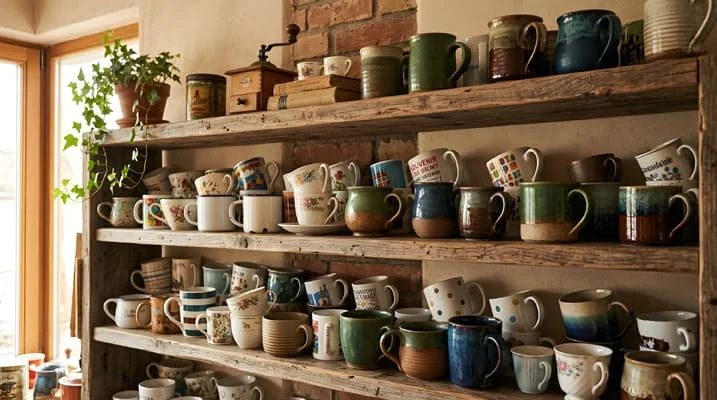
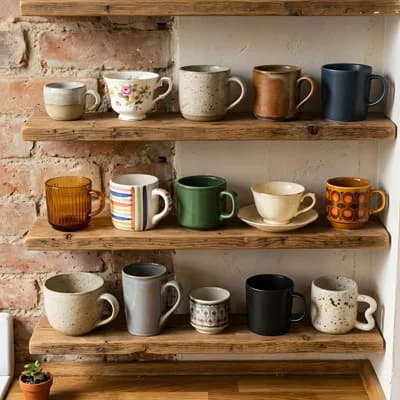
Open shelves are the most popular choice. They keep cups at hand and let the cup material show. Leave a finger of space between pieces. Group cups by color or glaze rather than by size. Add a plant or a stack of books to break up the rows.
Wall Rails and Hooks
Hanging cups saves counter space. A slim rail with small hooks works well in a kitchen or coffee corner. Hang cups by the handle at an even height. This style suits sturdy stoneware and enamel best.
Glass-Front Cabinets
A glass cabinet protects delicate bone china and keeps dust off. Light the inside with a small LED strip. The glow makes translucent porcelain look special.
Trays and Stands
A tray on a counter turns three or four cups into a vignette. A tiered stand adds height. Both are easy to rearrange, which helps when your collection changes.
Quick tip: Group cups in odd numbers. Designers often use groups of three or five because they feel more natural to the eye than pairs. Vary the height with a small stack or a cake stand.
How to Style Cups Beyond the Shelf
A collection looks best when it is part of daily life. Here are simple ways to bring cups into your decor.
- Create a coffee bar. Set a tray with a kettle, a canister, and a few chosen cups.
- Use cups as small vases. A single stem in a stoneware cup adds color to a side table.
- Swap with the seasons. Bring forward warm glazes in autumn and clear glass in summer.
- Pair with natural textures. Wood, linen, and woven baskets suit most cup materials.
- Serve guests from the collection. Let people pick a cup. It starts a conversation.
Keep the styling restrained. A few well-placed cups look better than a full wall. Leave empty space so each piece can be seen.
Common Mistakes to Avoid
A few habits weaken a coffee cup collection.
- Buying without a theme, which leads to a shelf with no clear logic.
- Mixing too many cup materials at once, which makes the display feel busy.
- Overcrowding shelves, which hides the details you love.
- Drinking from untested vintage cups, which carries a lead risk.
- Ignoring daily use, which turns a collection into dust-catching decoration.
- Storing delicate pieces in damp or hot spots, where glazes can craze over time.
Building a Collection You Will Use
A strong coffee cup collection starts with a clear theme and a thoughtful choice of cup material. Pick a main material, add one accent, and buy only pieces you can picture using.
Display them where light and air reach, and test any old or handmade pieces before you drink from them. Start with three cups and let the shelf grow slowly. If you have a favorite cup in your own collection, tell me about it in the comments.

Important Notice: The information in this article is for informational and educational purposes only and is not a substitute for the evaluation or guidance of a healthcare professional. Always consult a doctor before making any decisions regarding your treatment or diagnosis.

Architect with extensive experience in residential and commercial design, including renovations and modular construction. Love to share information about Architecture, home and lifestyle in this blog.