Helianthus annuus, the common sunflower, is a fast-growing annual that thrives in full sun and well-drained soil. Sow seeds about one inch deep once the soil reaches 50°F (10°C), space plants according to variety, and water deeply but infrequently.
Most varieties bloom within roughly two to three months and need little feeding.
Few garden plants repay a small effort as generously as Helianthus annuus.
You push a seed into warm soil, and weeks later a stem is taller than your fence.
Yet many gardeners lose their first crop to a cold snap, a hungry bird, or a stem that snaps in the wind.
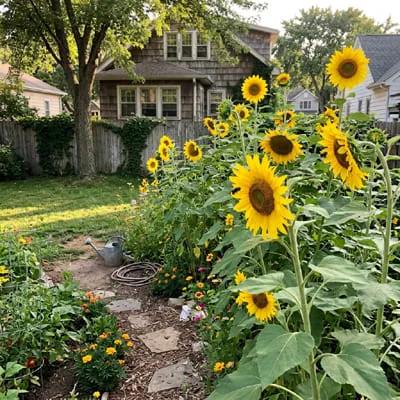
The plant also has more going on than its cheerful look suggests. In a 2016 study led by researchers at UC Davis and the University of Virginia, east-facing sunflowers attracted five times as many pollinators as flowers turned to face west. Orientation, warmth, and timing all shape how well your patch performs.
This guide gives you the full picture. You will find the botany behind the common sunflower, the main variety groups, and a clear planting schedule. You will also get a step-by-step growing method, fixes for common problems, and advice on harvesting flowers and seeds. It works for a pot on a balcony or a long row at the back of an allotment.
What Is Helianthus annuus?
Helianthus annuus is an annual plant in the daisy family (Asteraceae) with a large, daisy-like flower head. It is native to North America and has been grown for food, oil, medicine, and dye for centuries. Today it is both a garden ornamental and a major oilseed crop worldwide.
The Irish agriculture authority Teagasc describes the species in its sunflower factsheet as a North American native with a long history as a source of medicine, food, oil, and dye. That history explains the variety on offer today. Breeders have spent generations selecting for height, seed size, petal color, and branching.
The Flower Head Is Really Many Flowers
What looks like one big bloom is a composite head. The outer “petals” are ray florets, which are sterile and exist mainly to attract insects. The dark center is made of hundreds or even thousands of tiny disk florets. Each disk floret can develop into one seed.
The florets are arranged in spirals that follow Fibonacci numbers. This pattern packs the most seeds into the smallest space. It is also why a ripe head looks so orderly.
Why Sunflowers Follow the Sun
Young Helianthus annuus plants track the sun from east to west during the day. At night, they swing back to face east before dawn
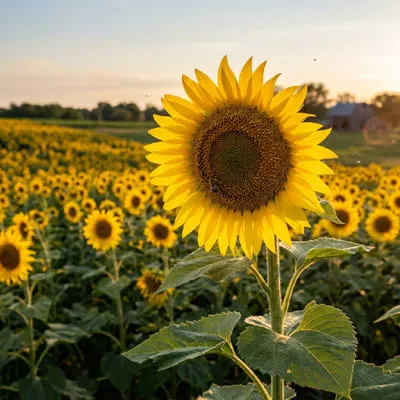
. Researchers traced this movement to differences in stem growth.
Cells on the east side of the stem elongate during the day, and cells on the west side elongate at night.
Mature plants behave differently. Once the flower opens fully, the stem stops moving and the head settles facing east.
East-facing heads warm up faster in the morning, and warm flowers draw more bees.
Snippet answer: Young sunflowers follow the sun using differential growth on each side of the stem, regulated by a circadian clock. Mature sunflowers stop moving and face east, which helps warm the flower and attract pollinators.
This matters in the garden. If you plant a row, an east-facing aspect gives the heads a warmer start each day. A bed shaded from the morning sun will produce fewer visitors.
Main Types of Helianthus annuus Varieties
Gardeners usually group Helianthus annuus varieties by use: giants for height and seeds, mid-size types for borders, dwarfs for containers, and pollen-free cultivars for cut flowers. Choosing by purpose matters more than choosing by color. A giant planted in a window box will struggle, and a dwarf planted for seeds will disappoint.
Giant and Seed Varieties
Giants such as ‘Mammoth Russian’ and ‘American Giant’ can reach well over ten feet. Seed catalogs list some strains at up to 16 feet. They produce huge heads with large seeds, which suit eating and bird feeding.
They need strong stems, deep soil, and room. Plant them at the north side of the garden so they do not shade other crops.
Mid-Size Garden Varieties
Varieties such as ‘Autumn Beauty’ and ‘Velvet Queen’ stay between four and seven feet. Many are branching, which means each plant produces several flowers over a longer period. Colors range from lemon yellow to bronze and deep red.
These are the workhorses of the ornamental border. They give height without needing heavy staking.
Dwarf and Container Varieties
Dwarfs such as ‘Teddy Bear’, ‘Sunspot’, and ‘Elf’ reach one to three feet. Some seed suppliers list very compact types that flower in about 60 days. They suit pots, window boxes, and front-of-border planting.
Pollen-Free Cut Flower Varieties
Cut-flower growers often choose pollen-free hybrids such as the ‘ProCut’ series. These do not drop yellow pollen on tablecloths, and the petals stay cleaner in a vase. They are usually single-stemmed, so you plant them in succession.
| Type | Typical Height | Best Use | Flowering Habit | Example Varieties |
|---|---|---|---|---|
| Giant | 8 to 16 ft | Seeds, bird feed, screens | Single large head | Mammoth Russian, American Giant |
| Mid-size | 4 to 7 ft | Borders, cut flowers | Often branching | Autumn Beauty, Velvet Queen |
| Dwarf | 1 to 3 ft | Pots, edges | Bushy, multiple heads | Teddy Bear, Sunspot |
| Pollen-free | 4 to 6 ft | Floral arrangements | Usually single stem | ProCut series |
Heights vary with soil, spacing, and climate, so treat these as typical ranges and read the seed packet for your chosen cultivar.
When to Plant Helianthus annuus
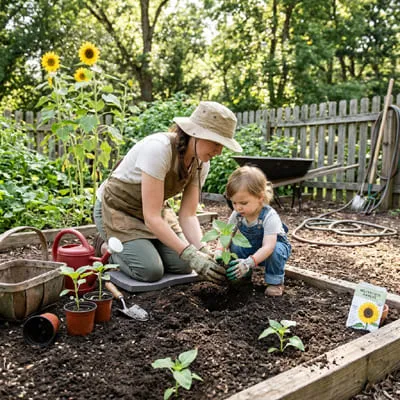
Plant Helianthus annuus outdoors after the last frost, once the soil temperature reaches at least 50°F (10°C). Seeds germinate poorly in cold ground and may rot before they sprout. Soil temperature, not air temperature, is the signal to watch.
Oklahoma State University Extension notes that sunflowers need soil at 50°F or above to germinate uniformly.
The same source cites research showing ideal germination between 59 and 77°F, with rates falling above 95°F.
That gives gardeners a practical window. Sow when the ground has warmed, and avoid planting in extreme summer heat without extra watering.
A cheap soil thermometer makes this easy. Push it two inches into the bed at mid-morning. If it reads 50°F or more for several days, you can sow.
Timing by Region
- Cool temperate climates (UK, Ireland, northern US, Canada): Sow from mid-spring, usually late April to May, once frost risk has passed.
- Warm temperate and subtropical climates (southern US, Australia): Sow in early spring for a summer crop. A second sowing in late summer can extend the season in mild areas.
- Short-season areas: Choose early-maturing varieties, and consider starting seeds in biodegradable pots indoors about two weeks before the last frost.
Pro tip: For continuous bloom, sow a new batch every two to three weeks until about ten weeks before your first expected autumn frost. This is the standard method for cut-flower growers, and it works just as well in a home garden.
Direct Sowing vs. Starting Indoors
Sunflowers have a long taproot and dislike root disturbance. Direct sowing is usually the best approach. If you start seeds indoors, use deep, biodegradable pots and plant them out while the seedlings are small.
How to Grow Helianthus annuus Step by Step
Growing Helianthus annuus well comes down to five basics: full sun, well-drained soil, correct depth and spacing, steady early watering, and support for tall types. Get these right and the plant does most of the work itself.
Step-by-Step Planting Method
- Choose a sunny site. Aim for at least six hours of direct sun. More is better for tall varieties.
- Prepare the soil. Loosen the bed to about 12 inches deep. Sunflowers send down a taproot and benefit from loose soil. Add compost if the ground is poor, but avoid heavy feeding.
- Check drainage. Water should not pool on the surface after rain. Raised beds help on heavy clay.
- Sow at the right depth. OSU Extension’s general advice is 1 to 2 inches deep, with planting deeper than 3 inches discouraged. Teagasc gives 2 to 5 cm, going deeper in dry soil.
- Space plants. Teagasc suggests 20 to 30 cm between standard cut-flower types. Giants need 18 to 24 inches or more, and dwarfs fit closer.
- Water gently. Keep the seedbed evenly moist until seedlings emerge. Seed suppliers typically give 7 to 14 days to germination.
- Thin seedlings. Keep the strongest plant at each position once seedlings have two sets of true leaves.
Soil and Feeding
Helianthus annuus tolerates a wide range of soils, but it performs best in well-drained, fertile ground with a near-neutral pH. Gardening references commonly cite a range of roughly 6.0 to 7.5.
Go light on fertilizer. Too much nitrogen produces tall, leafy plants with weak stems and fewer flowers. In average garden soil, a layer of compost before sowing is usually enough. Poor sandy soil may need a balanced feed once, when buds appear.
Watering
Water deeply but infrequently once plants are established. This encourages roots to grow downward, which makes the plant more drought tolerant and more stable. Shallow, frequent watering creates a shallow root system that topples easily.
Young plants need regular moisture. After they reach about two feet tall, water when the top few inches of soil are dry. Check more often in containers.
Supporting Tall Plants
Giants and top-heavy heads often need a stake. Push a sturdy bamboo cane or metal stake in at planting time, so you do not damage roots later. Tie the stem loosely with soft twine at two or three points.
Wind is the main danger. A site sheltered by a fence or hedge helps, but avoid planting right up against a wall that blocks air movement. Good airflow lowers the risk of fungal disease.
Growing Helianthus annuus in Containers
Dwarf varieties do well in pots at least 12 inches deep and wide. Use a quality potting mix with good drainage holes. Plant two or three seeds per pot and thin to the strongest.
Container plants dry out fast in summer. Water them whenever the top inch of soil is dry, and feed lightly every three or four weeks once buds form.
Common Problems with Helianthus annuus
The most common problems with Helianthus annuus are birds and squirrels eating seeds, deer browsing, sunflower moth larvae, fungal diseases in wet weather, and stems that fall over.
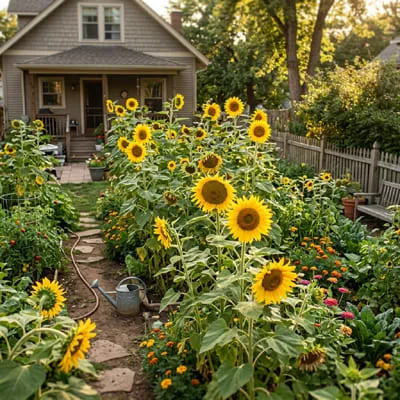
Most can be prevented with simple habits: good spacing, protection at sowing, and watering at the base of the plant.
The Old Farmer’s Almanac lists birds, squirrels, deer, and sunflower moths among the most common sunflower pests.
It also stresses full sun, proper spacing, good air circulation, and well-drained soil as the basics of plant health.
Birds and Squirrels
Birds peck newly sown seeds and nibble seedlings. Squirrels dig up seeds soon after planting. Cover the bed with fine netting or wire mesh until seedlings are a few inches tall.
At harvest time, the same animals go for ripe heads. Cover them with mesh bags or paper bags once the petals fall.
Deer and Other Browsers
Deer can strip young plants quickly. Fencing is the only reliable protection in heavy-pressure areas. Some seed suppliers list certain varieties as deer-resistant, but hungry deer eat most young plants.
Insects
Sunflower moth larvae feed on developing flower heads. Slugs and snails damage seedlings. Aphids cluster on stems and leaf undersides.
For small plantings, hand-picking slugs and spraying aphids with a strong jet of water often works. Encourage ladybirds and hoverflies by growing a mix of flowers nearby.
Fungal Diseases
Downy mildew, rust, and gray mold can appear in humid or wet conditions. Prevent them with wide spacing, morning watering at ground level, and crop rotation. Do not plant sunflowers in the same bed in consecutive years.
Remove badly affected leaves and dispose of them in the trash rather than the compost heap.
Stem Breakage and Lodging
Lodging means plants fall over. Causes include shallow roots, wind, heavy heads, and overfeeding. Stake tall varieties, water deeply, and avoid excess nitrogen.
Quick troubleshooting guide:
- Seedlings disappear overnight: slugs, birds, or squirrels.
- Leaves with white powder: mildew, often from crowding and humidity.
- Plant leans after rain: shallow roots, so stake and water deeply next time.
- Small flower heads: crowded plants or low sunlight.
Harvesting Helianthus annuus: Cut Flowers and Seeds
You can harvest Helianthus annuus in two ways. For cut flowers, pick when the petals begin to open. For seeds, wait until the back of the head turns brown and the seeds are plump and fully formed. Each harvest method needs a different timing.
Harvesting Cut Flowers
Cut stems in the early morning when plants are full of water. Choose flowers just as the petals start to unfurl. Use clean, sharp snips and place stems in water immediately.
Strip the lower leaves and change the vase water every day or two. Pollen-free varieties stay tidy, and most cut sunflowers last about a week.
Harvesting Seeds
Seeds are ready when the head droops, the back turns yellow-brown, and the petals have dropped. The seeds should be plump and striped on striped varieties.
- Protect the head. Cover it with a mesh bag or paper bag as it ripens.
- Cut the head. Leave about a foot of stem attached.
- Hang to dry. Choose a dry, airy spot for one to two weeks.
- Remove seeds. Rub the seeds free with your hands or a stiff brush.
- Dry and store. Spread seeds on a tray until fully dry, then store them in an airtight container in a cool place.
Seeds saved from open-pollinated varieties usually come true. Seeds from hybrids may produce plants unlike their parent, so check your seed packet before saving.
Using Spent Stalks
The plant’s stalks and heads can go to the compost bin once all seeds are removed. Chop thick stems into short lengths so they break down faster. Some gardeners leave a few heads standing for finches and chickadees in autumn.
Helianthus annuus and Pollinators
Helianthus annuus is a strong pollinator plant. Bees, hoverflies, and butterflies visit the flower heads for nectar and pollen. In late summer, when other flowers fade, sunflowers can be a valuable food source.
Note that pollen-free cultivars offer little to bees. If supporting pollinators is your goal, choose open-pollinated varieties or traditional types with pollen. A mix of heights and bloom times extends the season.
Planting east-facing rows also helps, which links back to the research on warm flower heads and bee visits. A bed that catches the morning sun will often see more insect activity early in the day.
Sunflower – Helianthus annus
Helianthus annuus rewards patience and a few good habits. Sow into warm soil, give the plants full sun, and choose a variety that matches your space. Stake tall types, water deeply, and protect seedlings from birds and slugs. Then decide whether you want cut flowers, seeds, or a pollinator patch, and harvest at the right moment.
Once you understand how the common sunflower grows, from its sun-tracking seedlings to its east-facing blooms, planting it becomes less guesswork and more design. Start with a small row or a few pots this season and adjust as you learn.
Have a favorite variety or a trick that worked in your garden? Share it in the comments, and browse more garden guides on the blog to plan the rest of your planting year.

Architect with extensive experience in residential and commercial design, including renovations and modular construction. Love to share information about Architecture, home and lifestyle in this blog.