
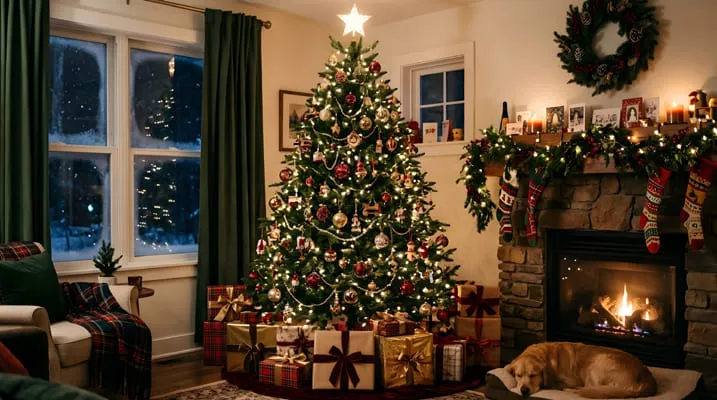
The most popular types of Christmas trees are Fraser fir, balsam fir, Douglas fir, Scotch pine, and blue spruce among real trees, plus artificial PVC and PE models. Fraser fir offers excellent needle retention, balsam fir has the strongest fragrance, and Scotch pine usually costs the least. Your best choice depends on budget, space, and upkeep time.
Every November the same debate starts at kitchen tables across the English-speaking world. Real or artificial? Fir or pine? Tall and slim, or wide and full? The choice matters more than it seems, because the tree sets the look of your living room for a month. It also decides how much sweeping, watering, and worrying you will do.
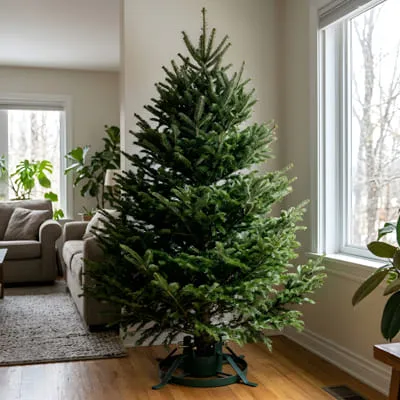
The market is large. According to the National Christmas Tree Association, about 25 to 30 million real Christmas trees are sold in the United States every year.
Close to 350 million more are growing on farms right now. That supply spans many species, each with its own needles, scent, and shape.
Artificial trees have also grown a large share of the market. A 2025 analysis by finder.com estimated that Americans would buy around 23.2 million real trees and 31.68 million artificial ones that year.
This guide covers each main variety in plain terms. You will see how the species compare, what artificial and living options offer, and how to match a tree to your home.
What Are the Main Types of Christmas Trees?
There are three broad types of Christmas trees: cut real trees, artificial trees, and living potted trees. Each suits a different budget, space, and level of commitment. Within the real category, species vary widely in scent, needle softness, and how long they stay fresh indoors.
Here is a quick breakdown of the three groups:
- Cut real trees are grown on farms, harvested in the weeks before Christmas, and displayed in a stand with water.
- Artificial trees are made from PVC or polyethylene and can be reused for many seasons.
- Living trees are sold with their root ball intact and can be planted outdoors after the holidays.
Snippet answer: A Christmas tree is an evergreen conifer, real or artificial, displayed indoors during the Christmas season. Real trees are usually firs, pines, or spruces. Artificial trees imitate those species using plastic materials.
The rest of this guide takes each group in turn, starting with real trees.
Most Popular Real Christmas Trees by Species
Real Christmas trees fall into three botanical families: firs, pines, and spruces. Firs tend to have soft, flat needles and better needle retention. Pines have longer, bundled needles and sturdy branches. Spruces have sharp, stiff needles and a classic pyramid shape. Knowing the family helps you predict how a tree will behave in your home.
Fraser Fir
The Fraser fir (Abies fraseri) is native to the high elevations of the southern Appalachian Mountains. Growers across the eastern United States plant it heavily. Needles are dark green on top and silvery underneath. Branches turn slightly upward, which makes them good at holding ornaments.
Its biggest selling point is needle retention. Cooperative extension guides rate it among the best of all species, and well-watered Fraser firs often stay fresh for up to six weeks. It also has a pleasant, spicy scent.
The trade-off is price. Fraser fir sits at the high end of the market. It also tolerates only a narrow range of growing conditions, which keeps supply tied to certain regions.
Balsam Fir
Balsam fir (Abies balsamea) is the tree many people picture when they think of a traditional Christmas. It is native to northern North America. The needles are short, flat, and dark green, and the scent is the strongest of the common species.
Branches are flexible. They hold lights and lightweight ornaments well, but heavy glass pieces may sag. Needle retention is good, though some extension guides note it runs slightly behind Fraser fir.
Douglas Fir
Despite the name, the Douglas fir (Pseudotsuga menziesii) is not a true fir. It belongs to its own genus. It is native to the western United States and Canada, and it is one of the most widely sold trees in the Pacific Northwest.
The shape is naturally full and symmetrical. Needles are soft, about an inch long, and blue-green to dark green. They release a sweet, slightly citrus scent when crushed. Penn State Extension notes that this natural symmetry and good needle retention make it a favorite choice.
Branches are moderate in strength. For very heavy ornaments, you may need to hang them close to the trunk.
Noble Fir
Noble fir (Abies procera) comes from the Pacific Northwest. Its stiff, widely spaced branches show off ornaments well, because each piece has room to hang. Needles are bluish-green and curve upward.
Noble fir is also valued for wreaths and garlands. The needles dry slowly, so cut branches keep their look for weeks. It tends to cost more than pines.
Nordmann Fir
Nordmann fir (Abies nordmanniana) is the leading Christmas tree across much of Europe and the United Kingdom. The needles are glossy, dark green, and soft. Branches are dense and evenly spaced.
Its main advantage is that it barely sheds. Horticulture writers often cite six weeks of freshness with proper care. The scent is mild, so it suits households where strong fragrance is unwelcome.
Scotch Pine
Scotch pine (Pinus sylvestris) is one of the most widely distributed pines in the world, with a native range stretching from Scotland to the Pacific coast of Asia. Needles are 1 to 3 inches long, bright to dark green, and quite sharp.
Strong, stiff branches make it excellent for heavy decorations. Needle retention is also very good, even when the tree dries slightly. The fragrance is a straightforward pine scent.
Cost is the main draw. A Purdue Extension guide notes that Scotch pine and white pine are usually the least expensive trees, while true firs cost the most.
Blue Spruce and Other Spruces
Colorado blue spruce (Picea pungens) is easy to recognize by its silvery-blue color. Needles are stiff and sharp, which means you should wear gloves while decorating. Branches are strong and hold heavy ornaments well.
Norway and white spruces are also sold, mainly in the northern United States and Canada. Spruces can lose needles faster than firs once they dry out, so keep the stand filled.
Eastern White Pine
Eastern white pine (Pinus strobus) has long, soft, flexible blue-green needles. It feels gentle in a home with small children. Needle retention is good.
Branches are slender and weaker than those of Scotch pine. Use light ornaments and plenty of tinsel instead of glass balls. Scent is subtle.
Concolor Fir and Canaan Fir
Concolor fir, also called white fir, has long, pale blue-green needles and a citrus-like scent. Some growers rate its needle retention as only moderate.
Canaan fir is a close relative of balsam fir with a similar scent and shape. Its needles are soft, and its needle retention is considered very good. It is a regional favorite in the Appalachians and the Northeast.
Experience note: Scent is the quality buyers most often underestimate. A tree that smells wonderful in an open-air lot can seem mild once it warms up indoors. If fragrance is your priority, choose balsam or Fraser fir instead of relying on the lot’s atmosphere.
Christmas Trees Comparison Table: Needle Retention, Scent, and Cost
Comparing Christmas trees side by side makes the trade-offs clear. The table below summarizes widely reported characteristics from extension guides and grower resources. Ratings are general guides, not guarantees, since freshness at harvest and care at home affect every tree.
| Species | Needle Retention | Fragrance | Branch Strength | Needle Feel | Typical Cost |
|---|---|---|---|---|---|
| Fraser fir | Excellent | Strong, spicy | Strong | Soft to firm | High |
| Balsam fir | Good | Excellent | Moderate | Soft | Mid to high |
| Douglas fir | Good | Sweet, citrus | Moderate | Soft | Mid to high |
| Noble fir | Very good | Mild to moderate | Very strong | Firm | High |
| Nordmann fir | Excellent | Mild | Strong | Soft | Mid to high |
| Scotch pine | Excellent | Mild pine | Very strong | Sharp | Low |
| Blue spruce | Good when fresh | Mild | Very strong | Sharp | Mid |
| Eastern white pine | Good | Subtle | Weak | Very soft | Low |
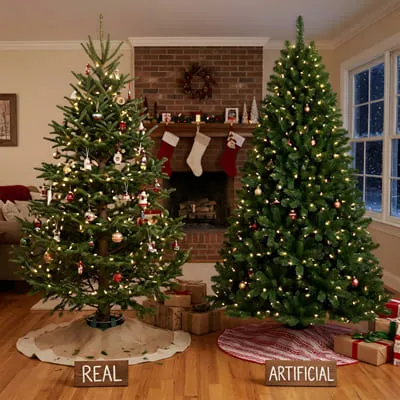
Two patterns stand out. First, the true firs lead for scent and retention but cost more.
Second, pines are cheaper and tougher, but their needles can be sharp or their branches limp.
Quick pick: For a first real tree, Fraser fir or Douglas fir is a safe starting point in most regions. If you need to save money, Scotch pine delivers the most durability per dollar.
How Long Does a Real Christmas Tree Take to Grow?
A farm-grown Christmas tree takes about seven years to reach six or seven feet, according to the National Christmas Tree Association. Larger trees take longer. That timeline explains why growers plan plantings years in advance and why a cold snap or drought can affect supply long after it happens.
The industry also replants. The Real Christmas Tree Board states that for every tree harvested, growers plant at least one new tree. Real trees are also recyclable, and the National Christmas Tree Association counts more than 4,000 local recycling programs across the United States.
For gardeners, that makes real trees a renewable crop. For buyers, it means a tree that costs more is often the result of a longer growing cycle and more careful shearing.
Artificial Christmas Trees: Main Types
Artificial Christmas trees are made mostly from PVC or polyethylene. They come in many shapes, from traditional full trees to slim pencil designs. They cost more upfront but last for years, and they need no watering. According to finder.com’s 2025 forecast, the average artificial tree costs about $126.20, compared with about $83.87 for a real tree. The gap closes after a few seasons of reuse.
PVC Trees
PVC trees use flat, strip-like needles attached to wire branches. They are the most affordable artificial option and the easiest to fold. They look uniform, which some people like and others find too neat.
PE (Polyethylene) Trees
PE needles are molded from real branch tips. They look more natural, with varied shapes and textures. Many premium trees mix PE tips on the outer branches with PVC filler inside. That balance keeps costs down while improving realism.
Pre-Lit Trees
Pre-lit trees come with lights built into the branches. They save time at setup. If a section fails, though, replacing it can be fiddly, so check the warranty and bulb type before buying.
Flocked and Colored Trees
Flocked trees imitate snow with a white coating. Colored options include white, silver, and pink. They work best as decor statements in rooms with matching themes.
Slim, Pencil, and Tabletop Trees
Slim and pencil trees fit apartments, hallways, and corners. Tabletop trees suit desks and shelves. For small spaces, these are practical, and many pre-lit slim models take only minutes to assemble.
Fiber Optic Trees
Fiber optic trees transmit light through the needle tips. They create a shimmering effect without separate light strings. They suit modern interiors but can look less traditional.
Practical tip: An artificial tree pays for itself only if you use it. Buyers who store trees poorly or replace them after two or three seasons often spend more than they would on real trees. Aim for at least five seasons of use before judging the value.
Living and Alternative Christmas Trees
Living Christmas trees are sold with their roots in a container or a burlap-wrapped ball. After the holidays, you can plant them in your garden. This option suits gardeners with space and the right climate, but it takes planning.
Keep a living tree indoors for no more than about ten days. Longer indoor stays warm the tree and can break its dormancy, which harms it when it returns outside. Move it to an unheated garage or porch first to help it adjust. Then plant it in a prepared hole.
Good candidates include:
- Colorado blue spruce
- Norway spruce
- Eastern white pine
- Scotch pine in suitable regions
Other alternatives include the Norfolk Island pine, a tropical houseplant that works well as a small tree. Some people use rosemary topiaries, which add scent and can be used in cooking. Cut branches arranged in a stand or a wall-mounted tree shape also work in small homes.
How to Choose the Right Christmas Tree for Your Home
The right tree depends on four things: space, budget, ornaments, and time. Work through them in order, and the decision becomes easier.
- Measure your space. Check ceiling height and width. Leave at least six inches at the top for a star or topper, and allow room for the stand.
- Set a budget. Real trees range widely by species and region. Decide whether you want an annual cost or a one-time purchase.
- Consider your ornaments. Heavy glass pieces need stiff branches. Scotch pine, noble fir, and blue spruce handle them best.
- Match scent and feel. Choose balsam or Fraser for scent. Choose Douglas fir, Nordmann, or white pine if soft needles matter.
- Plan the setup. Real trees need a water stand and regular checks. Artificial trees need storage space for the off-season.
Pro tip: Buy a tree stand with a water capacity of at least one quart per inch of trunk diameter. Fresh-cut trees can absorb a lot of water in the first days.
Local conditions matter too. In the Pacific Northwest, Douglas and noble firs are common. In the Appalachians and the East, Fraser fir dominates. In the United Kingdom and Europe, Nordmann fir is the standard. Choosing a locally grown species usually means a fresher tree and a lower price.
How to Care for a Real Christmas Tree
Fresh trees need proper care to last through the holidays. The basics are simple, and they protect both the tree and your home.
- Make a fresh cut. Remove about one inch from the base of the trunk before placing it in water. This reopens the pores that absorb water.
- Water right away. Fill the stand immediately and keep it filled. A dry stand can seal the trunk with sap, and the tree stops drinking.
- Choose the right spot. Keep the tree away from heaters, fireplaces, vents, and direct sunlight.
- Check the water daily. Large trees can use a surprising amount in the first week.
- Use cool lights. LED lights produce less heat than older incandescent bulbs.
- Remove it on time. When needles drop heavily or the branches become brittle, take the tree down.
Dry trees are a fire hazard. Fire safety groups recommend keeping the tree well watered and removing it once it dries out. When in doubt, follow the guidance of your local fire department.
After the holidays, check your local recycling options. Many communities collect trees for mulch, and some use them for habitat or erosion control.
Real vs. Artificial Christmas Trees: Which Should You Choose?
Neither option is better for everyone. Real Christmas trees offer scent, texture, and a seasonal ritual. Artificial trees offer convenience and predictable results. Your best choice depends on what you value most.
Choose a real tree if you enjoy the farm visit, want natural fragrance, or like supporting local growers. Choose an artificial tree if you have allergies, travel often, or want a consistent look with little work.
Consider the following points before deciding:
- Cost over time: Artificial trees cost more at first but spread the cost over years.
- Cleanup: Real trees drop needles. Artificial trees shed less but need storage.
- Environmental impact: Real trees are renewable and recyclable. Artificial trees reduce impact only if reused for many years.
- Allergies: Some people react to mold or pollen on real trees. Check how you feel before buying.
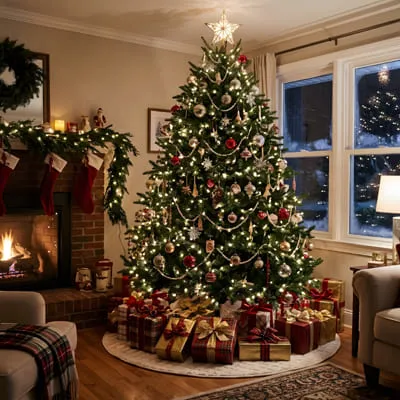
The evidence is mixed on which choice is greener, so treat any strong claim with caution. The deciding factor is usually how long you keep the tree and how you dispose of it.
Types od Christmas trees
Choosing among the many types of Christmas trees comes down to a few clear trade-offs.
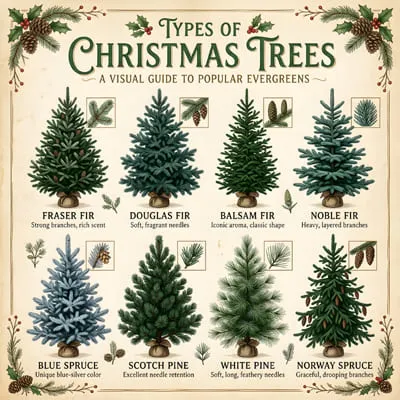
Fraser fir and Nordmann fir give you the longest freshness.
Balsam fir wins on scent. Scotch pine offers strength and a lower price.
Douglas fir delivers a full, soft look. Artificial trees reward you if you reuse them for years, and living trees suit gardeners with room to plant.
Match the tree to your space, your ornaments, and the time you can give it. If you have a favorite variety or a tip that worked for you, share it in the comments.
Then explore more garden guides on the blog for ideas that carry your seasonal planning into the rest of the year.Garden:The Complete Guide to Planning, Planting, and Sustainable Landscaping for Every SpaceGarden:The Complete Guide to Planning, Planting, and Sustainable Landscaping for Every Space

Architect with extensive experience in residential and commercial design, including renovations and modular construction. Love to share information about Architecture, home and lifestyle in this blog.