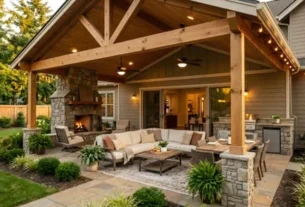
The three most popular outdoor furniture materials are teak, aluminum, and wicker. Teak is a dense hardwood that can last decades with modest care. Aluminum is lightweight, rustproof, and low maintenance. Synthetic wicker offers a soft, woven look at a lower price, but quality varies widely. Your climate and upkeep tolerance decide the best fit.
Shopping for patio furniture can feel like comparing three different promises. One seller says teak lasts a lifetime. Another says aluminum never needs attention. A third says all-weather wicker is built for any storm. Each claim holds some truth, and each leaves out the fine print.
The numbers tell the story. Published lifespan estimates for the same material can differ several times over. One hotel-furniture comparison lists PE wicker at only 3 to 5 years of service life, while aluminum is listed at 10 or more and teak at 15 to 25. A retailer guide, by contrast, puts all-weather wicker at 10 to 15 years or more, aluminum at 15 to 20 or more, and teak at 25 to 50 or more.
That gap is not a mistake. It reflects different quality grades, climates, and care routines. Most published figures also come from commercial sources, so treat them as rough ranges rather than guarantees.
This guide compares teak, aluminum, and wicker side by side. You will see how each performs, what upkeep it needs, how to match outdoor furniture materials to your climate, and where each one tends to fail.
How to Compare Outdoor Furniture Materials
To compare outdoor furniture materials fairly, judge them on five factors: durability, maintenance, weight, comfort, and total cost over time. Climate and exposure matter as much as the material itself. A set that thrives in a shaded, dry porch may struggle on a coastal deck in full sun.
Start by naming your situation. Where will the furniture sit, and for how many months a year? Will it face salt air, intense sun, heavy rain, or snow? Will you cover it in winter, or leave it out?
The Five Factors That Matter
- Durability: How well the material resists rot, rust, fading, and cracking.
- Maintenance: How much cleaning, oiling, or repair it needs each year.
- Weight: Heavy pieces resist wind but are harder to move. Light pieces move easily but can blow over.
- Comfort: Surfaces, heat retention, and cushion support affect daily use.
- Cost per year: Divide the purchase price by realistic years of use, not by the longest claim you read.
Snippet answer: Outdoor furniture materials are best compared on durability, maintenance, weight, comfort, and cost per year of use. Climate and exposure often matter as much as the material itself.
Why Frame and Finish Matter More Than the Label
Two pieces labeled “aluminum” can differ in wall thickness, joint quality, and powder-coat finish. Two pieces labeled “wicker” can differ in resin quality and the frame underneath. In practice, build quality often separates a ten-year set from a three-year set.
Look past the headline material. Ask about the frame, the finish, the fasteners, and the warranty.
Teak Outdoor Furniture
Teak is a dense tropical hardwood rich in natural oils. It resists rot, moisture, and insects, which makes it a long-standing favorite for outdoor furniture. It needs more care than aluminum if you want to keep its golden color, but it can last for decades.
Teak earns its reputation from its structure. The wood is dense and oily, so water does not easily penetrate it. Garden furniture makers have used it for generations, from ship decks to park benches.
Strengths of Teak
- Long service life: The retailer guide cited above estimates 25 to 50 years or more.
- Natural weather resistance: Oils and tight grain help repel moisture.
- Repairable: Scratches can be sanded, and loose joints can be reglued.
- Weight: Heavier pieces stay put in wind.
- Aesthetics: Warm grain suits traditional and modern spaces.
Weaknesses of Teak
- Higher upfront cost: Teak usually costs more than aluminum or synthetic wicker.
- Color change: Untreated teak turns silver-gray over time.
- Weight: The same density that resists wind makes it harder to rearrange.
- Sourcing concerns: Not all teak is harvested responsibly (see below).
Patina or Oil: Your Choice
Many buyers do not realize that teak does not need oiling to survive. Left alone, it develops a soft silver patina. Sealed or oiled annually, it keeps a honey-gold tone. Both options protect the structure. The difference is mostly appearance.
If you prefer the silver look, you can simply clean the furniture once or twice a year with mild soap and a soft brush. If you want the golden look, apply teak sealer or oil as the manufacturer directs. Follow label instructions for safe disposal of oily rags, since some oils can heat up as they dry.
Sourcing and Sustainability
Teak’s popularity has a cost. Teak Furniture HQ’s guide notes that old-growth trees often exceed 60 to 100 years, while plantation trees are usually harvested between 20 and 35 years. It adds that plantation operations can be certified, for example by the Forest Stewardship Council (FSC), and legality can be verified through Indonesia’s SVLK system.
Another source in the same industry highlights concerns about teak from Myanmar. When you shop, ask where the wood was grown, and look for FSC or equivalent certification. A clear supply chain is a good sign. A vague answer is not.
You can read more about the differences in a guide on plantation versus old-growth teak and certification options. Because the publisher sells teak, compare its claims with independent certification bodies.
Teak Grades
Quality varies by which part of the tree the wood comes from. Heartwood has more natural oil and generally performs better than sapwood. Some sellers market top-grade teak as Grade A. Treat grading terms as seller-defined and ask what they mean in practice.
Teak Care Basics
- Clean: Wash with mild soap, water, and a soft brush once or twice a year.
- Rinse: Remove all soap residue.
- Dry: Let the wood dry fully before covering or oiling.
- Finish if desired: Apply sealer or oil for a golden tone.
- Store or cover: Use breathable covers in winter, not plastic that traps moisture.
Aluminum Outdoor Furniture
Aluminum is a lightweight metal that does not rust. Powder-coated frames resist moisture and need only occasional washing. Aluminum suits people who want minimal upkeep, but its light weight can be a problem in wind, and cheap finishes can chip.
Aluminum has become the default for many modern patios. It is easy to move, easy to clean, and available in many styles and colors.
Strengths of Aluminum
- No rust: Pure aluminum does not rust, though it can oxidize on the surface.
- Low maintenance: Rinsing with water and mild soap is usually enough.
- Light weight: Easy to rearrange and store.
- Wide style range: From sleek modern frames to ornate cast designs.
- Cost: Often priced below teak at similar sizes.
Weaknesses of Aluminum
- Wind: A light chair can tip in a gust. A buying guide advises that windy areas call for heavier, reinforced aluminum frames or furniture with weighted bases.
- Finish damage: Powder coating can chip or chalk. Once exposed, bare metal may corrode, especially near salt air.
- Heat: Metal surfaces get hot in direct sun and cold in winter. Cushions help.
- Dents: Thin extruded tubing can bend under heavy stress.
Cast vs. Extruded Aluminum
Cast aluminum is poured into molds, so it is thicker and heavier, and it can carry ornate details. Extruded aluminum is formed into tubes and sheets. It is lighter, cleaner in line, and common in modern designs.
For windy sites or heavy use, cast frames tend to feel more stable. For lightweight, easy-to-move sets, extruded frames suit most homes.
What to Check Before Buying
- Powder-coat quality: Look for even coverage, with no thin spots at welds or edges.
- Weld quality: Smooth, continuous welds are a good sign.
- Hardware: Stainless steel or coated fasteners resist corrosion.
- Warranty: A longer finish warranty signals the maker’s confidence.
Aluminum Care Basics
- Wash: Use mild soap and water with a soft cloth.
- Rinse: Remove all residue.
- Touch up: Fix chips with matching touch-up paint to prevent corrosion.
- Wax (optional): A coat of car wax can help in sunny or coastal areas.
- Avoid abrasives: Harsh scrubbers can damage the coating.
Wicker Outdoor Furniture
Wicker is a weaving technique, not a single material. Outdoor wicker is usually synthetic resin, such as HDPE, woven over an aluminum or steel frame. Quality synthetic wicker resists moisture and UV when well made, but cheaper versions can crack, fade, or unravel.
The word “wicker” confuses many buyers. Natural wicker is woven from rattan, bamboo, or similar plant fibers. It looks warm and organic, but it suits covered porches and sunrooms because moisture and sun degrade it. For open-air use, synthetic resin is the standard choice.
Strengths of Wicker
- Comfort and look: Soft, layered style that pairs well with cushions.
- Light weight: Easier to move than teak.
- Moisture resistance: Quality resin does not rot.
- Price range: Many affordable options are available.
- Design variety: Many shapes, colors, and weave patterns.
Weaknesses of Wicker
- Quality gap: Lifespans range from a few seasons to well over ten years, depending on resin and frame.
- UV damage: Lower-grade fibers may fade, become brittle, or crack in strong sun.
- Cleaning crevices: Dust and debris collect in the weave.
- Frame matters: A weak frame can rust or fail, even if the weave looks fine.
HDPE vs. PVC Wicker
The source behind the Goldenteak guide notes that high-quality HDPE wicker may last 10 to 20 years, while PVC wicker rarely lasts more than 3 to 5 years. Because that guide comes from a teak seller, treat the numbers cautiously. Still, the general point is widely accepted: resin type matters. HDPE is more UV-resistant and flexible than PVC.
When you shop, ask what the resin is made of, whether it is UV-stabilized, and what frame supports it. A rust-proof aluminum frame is a better sign than steel.
Where Wicker Works Best
Wicker suits covered patios, pergolas, and partially shaded lounges. The weave dries quickly after rain, but constant direct sun accelerates aging. A Teak HQ comparison suggests reserving synthetic wicker for shaded lounges, since it can stretch or fade. That advice comes from a seller of competing materials, but it matches common sense about UV exposure.
Wicker Care Basics
- Vacuum or brush: Remove dust from the weave regularly.
- Wash: Use mild soap, water, and a soft brush.
- Rinse gently: Avoid high-pressure washers, which can damage fibers.
- Dry fully: Let the piece air-dry before covering.
- Cover or store: Protect it in winter or in extreme sun.
Outdoor Furniture Materials Compared Side by Side
This comparison table summarizes the main differences between teak, aluminum, and synthetic wicker. Lifespans come from published ranges and vary by quality, climate, and care. Treat them as estimates.
| Factor | Teak | Aluminum | Synthetic Wicker |
|---|---|---|---|
| Typical lifespan (published ranges) | 15 to 50+ years | 10 to 20+ years | 3 to 15+ years |
| Maintenance | Moderate (clean, optional oil) | Low (rinse, touch up) | Low to moderate (dust, brush) |
| Weight | Heavy | Light to medium | Light |
| Rust or rot risk | Low | Rust-free, but finish can chip | Frame may rust if steel |
| UV sensitivity | Fades to silver | Powder coat can chalk | Varies by resin |
| Wind stability | High | Low to medium | Low |
| Upfront cost | Higher | Lower to mid | Low to mid |
| Best for | Long-term investment | Low-effort, modern spaces | Shaded, cushioned lounges |
The wide lifespan ranges tell you something. Quality, exposure, and care shape the real number more than the material name. A well-built aluminum set may outlast a poorly sealed teak table. A thin resin wicker chair may crack before the cushions wear out.
Pro tip: Do not buy on the longest claim you find. Use the shorter end of a published range for your cost-per-year math. If the furniture lasts longer, you gain a bonus.
Cost Per Year: A Simple Method
You can estimate cost per year in three steps:
- Take the purchase price.
- Choose a realistic lifespan for your climate and quality level, using the low end of published ranges.
- Divide the price by the years.
A set that costs twice as much but lasts three times as long can be cheaper per year. A budget set can still make sense if you move often, or if you only need furniture for a few seasons. Your own plans should guide the math.
Choosing Outdoor Furniture Materials by Climate and Lifestyle
The best outdoor furniture materials depend on where you live and how you use your space. Salt air, intense sun, heavy rain, strong wind, and snow each favor different materials. Match the material to the main stress your furniture will face.
Coastal and Humid Climates
Salt air attacks metals and finishes. A Teak HQ article warns that aluminum powder coating can chip or chalk, exposing metal to pitting corrosion in coastal air. If you live near the sea, look for marine-grade finishes, stainless hardware, and regular rinsing with fresh water. Teak handles moisture well but still benefits from cleaning.
Hot, Sunny Climates
Strong UV light fades fabrics, finishes, and low-grade resin. Teak turns silver without losing strength. Aluminum can get hot to touch. Wicker needs UV-stable resin. In very sunny spots, shade structures or covers extend the life of any material.
Windy Sites
Heavy materials win in wind. Teak and cast aluminum stay put, while lightweight sets may need weights or tie-downs. Check that cushions have ties and that umbrellas have heavy bases.
Cold Winters and Snow
Freeze-thaw cycles can crack poor finishes and stress joints. Store cushions indoors. Cover furniture with breathable covers, or move it into a shed or garage. Make sure wood is dry before covering to avoid trapped moisture.
Rainy Climates
Choose materials that dry quickly. Aluminum and quality resin wicker shed water and dry fast. Teak handles rain well, but allow air circulation underneath covers to prevent mildew.
Families, Pets, and Heavy Use
Households with children or pets often prefer easy-to-clean surfaces. Aluminum and resin wicker wipe clean. Teak can handle scuffs, and sanding removes marks. Avoid fragile weaves where claws or toys may catch.
Mixing Materials
You do not need to choose just one. A teak dining table with aluminum chairs, or a wicker lounge set beside an aluminum side table, can look cohesive if colors and styles align. Mixed sets also let you place durable materials in harsher spots, and softer ones in covered areas.
When mixing, plan a cleaning method that works for everything. The gentlest method that suits each material is usually safest.
Quick Decision Guide
- Want the longest lifespan and can handle some upkeep? Consider teak.
- Want the least maintenance and a modern look? Consider aluminum.
- Want a soft, comfortable lounge in a covered area? Consider quality synthetic wicker.
- Live near the coast? Prioritize quality finishes, stainless hardware, and regular rinsing.
- Live in a windy spot? Choose heavier pieces or add weights.
Conclusion
Comparing outdoor furniture materials comes down to trade-offs you can see clearly. Teak offers decades of service and a natural look, with moderate upkeep and a higher price. Aluminum delivers low-maintenance convenience, though light frames can blow around and cheap finishes can chip. Synthetic wicker brings softness and style at a friendly price, but quality varies widely and sun exposure matters.
The material is only part of the answer. Frame construction, finish quality, and care often decide how long a set lasts. Start with your climate and your tolerance for upkeep, then judge each piece on build details and warranty.
What material are you leaning toward for your patio? Share your plans in the comments, and explore more outdoor living guides on the blog for help planning your space.

Architect with extensive experience in residential and commercial design, including renovations and modular construction. Love to share information about Architecture, home and lifestyle in this blog.