Last updated on October 16th, 2026 at 04:01 pm
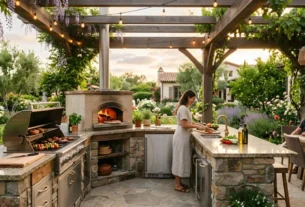
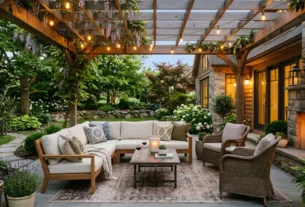
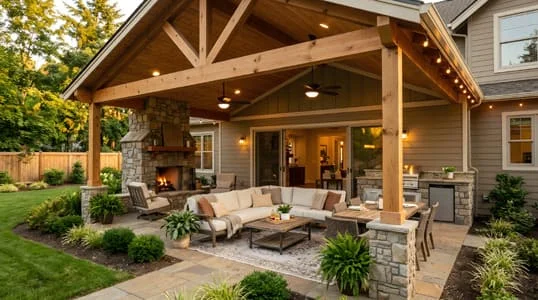
Covered patio design refers to the structural choices — solid roofs, louvered pergolas, retractable canopies, or screened enclosures — that protect an outdoor living space from sun, rain, and wind, extending how many days and hours of the year that space is genuinely usable. The right structure depends on your climate, budget, and how much light and airflow control you actually want.
An uncovered patio is only as good as the weather on any given day, and that’s a real constraint on a part of your home you’ve likely invested real design effort into. Outdoor living rooms have held the top spot for growing consumer interest among special-function rooms for six consecutive years, according to the American Institute of Architects’ Home Design Trends Survey, a signal that homeowners increasingly expect these spaces to function like genuine rooms — not just fair-weather bonuses.
Good covered patio design solves that problem structurally rather than reactively, giving you a space that holds up against direct sun, rain, and, depending on the structure, genuine cold. This guide compares the main covered patio and pergola enclosure types, walks through how to choose between them, and covers what to consider before committing to a permanent structure.
Why a Covered Patio Changes How Much You Actually Use Your Outdoor Space
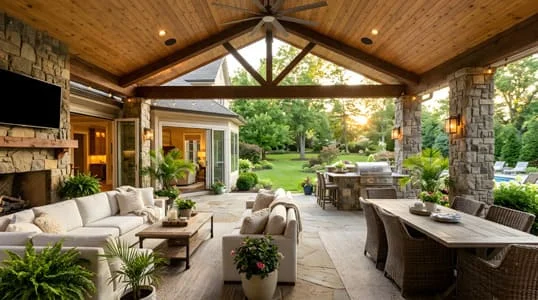
The gap between how much time a homeowner intends to spend outdoors and how much time they actually spend there usually comes down to comfort, not desire. An uncovered patio in direct summer sun becomes uncomfortable by midday; the same space in light rain becomes unusable entirely.
A covered structure closes that gap by controlling the two variables that matter most: sun exposure and precipitation. In my own project experience, clients who add even a partial cover to an existing patio consistently report using that space measurably more often across the year — not just during the narrow window of genuinely ideal weather.
Comparing Covered Patio and Pergola Enclosure Types
Structural options for covering a patio range from fully open to fully enclosed, and each comes with real trade-offs in cost, permitting complexity, and how much light and weather control it actually delivers.
| Structure Type | Weather Protection | Light Control | Typical Cost Tier | Permit Complexity | Best Climate |
|---|---|---|---|---|---|
| Solid roof patio cover | Full (sun and rain) | None (fixed shade) | Moderate–high | Higher (structural) | Hot, sunny climates |
| Louvered pergola | Full when closed, adjustable | High — motorized or manual louvers | High | Moderate–higher | Variable climates |
| Traditional open pergola | Partial (dappled shade only) | Low — fixed slat spacing | Low–moderate | Lower | Mild, dry climates |
| Retractable awning/canopy | Full when extended | High — fully retractable | Moderate | Lower | Climates needing flexibility |
| Screened porch conversion | Full (plus insect protection) | Moderate — screen mesh | High | Higher (structural) | Humid, insect-prone climates |
A solid roof patio cover offers the most consistent protection but sacrifices flexibility — once built, it provides the same fixed shade year-round, which can feel like too much cover during cooler months when a homeowner might actually want more direct sun.
A louvered pergola solves that trade-off directly: the same structure can open fully on a mild day and close to a solid roof during rain or intense heat, which explains why louvered systems have become one of the more consistently requested upgrades in recent outdoor living product demand, alongside outdoor kitchens and modular seating, according to industry tracking of top outdoor living product trends.
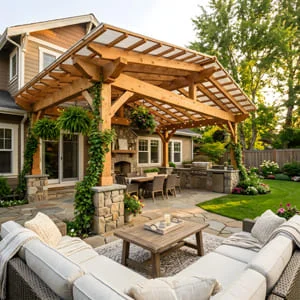
Snippet: A louvered pergola is a covered patio structure with an adjustable slatted roof that can be opened for full sun and airflow or closed to function as a solid, weatherproof roof — offering flexibility that a fixed solid roof or a traditional open pergola can’t match.
Choosing the Right Structure for Your Climate and Budget
Climate should drive this decision more than aesthetic preference alone. In a hot, consistently sunny climate, a solid roof or closed louvered pergola delivers genuine relief from direct sun exposure across most of the year. In a climate with real seasonal swings, a louvered pergola or retractable awning offers the flexibility to open the space up during mild weather and close it down during heat waves or rain, without committing to a single fixed condition year-round.
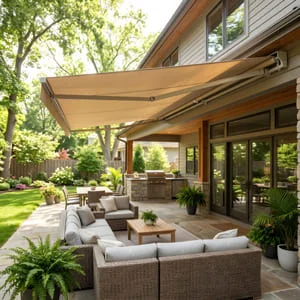
Budget matters just as directly. A traditional open pergola remains the most affordable entry point into covered patio design, though it only provides partial, dappled shade rather than genuine weather protection.
Retractable awnings sit in a useful middle tier — full protection when extended, at a lower structural cost and simpler permitting process than a fixed roof or louvered system, since they typically attach to an existing wall rather than requiring their own independent support structure.
Quick tip: If you’re not ready to commit to a permanent structure, a quality retractable awning lets you test how much genuine value a covered patio adds to your household’s outdoor use before investing in a more substantial, harder-to-reverse build.
Structural and Architectural Integration Considerations
A covered patio structure reads as a genuine architectural addition to your home, not just a piece of outdoor furniture, and it deserves the same material and proportion coherence as any other exterior element. A structure’s roofline, post spacing, and material palette should relate to the home’s existing architecture rather than reading as a disconnected add-on — a detail well documented in residential outdoor living case studies featured on Archdaily, where the most successful covered outdoor spaces consistently echo the proportions and materials of the house they extend from.
Structural considerations also matter beyond aesthetics. Any roofed structure, whether solid or louvered, needs to be engineered for your region’s snow load, wind exposure, and attachment method — whether it’s freestanding or attached directly to your home’s existing roofline.
This is precisely the kind of structural decision worth involving a qualified contractor or architect in, rather than treating it as a straightforward DIY carpentry project once the structure moves beyond a simple open pergola.
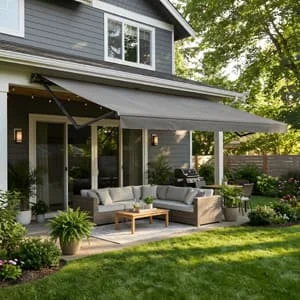
Common Mistakes in Covered Patio and Pergola Planning
- Choosing a fixed solid roof without considering seasonal light needs, then missing the direct sun that same space could offer during cooler months.
- Skipping local permit research, only discovering setback or structural requirements after a design is already finalized.
- Ignoring how the structure’s roofline relates to the home’s existing architecture, producing a covered patio that reads as visually disconnected from the house.
- Underestimating snow or wind load requirements for a region where these genuinely affect structural sizing and materials.
- Choosing a traditional open pergola expecting full weather protection, when its dappled shade structure was never designed to block rain.
Extending Your Outdoor Living Space Into Every Season
Thoughtful covered patio design turns an outdoor space that’s only reliably usable in ideal weather into one that holds up across most of the year, whether that means a fixed solid roof for consistent shade, a louvered pergola for genuine flexibility, or a retractable awning as a lower-commitment starting point. Match the structure to your climate and budget first, then make sure its materials and proportions genuinely relate to your home’s existing architecture rather than standing apart from it. If you’ve added a covered structure to your own patio, I’d love to hear which type has made the biggest difference in how often you actually use the space.

Architect with extensive experience in residential and commercial design, including renovations and modular construction. Love to share information about Architecture, home and lifestyle in this blog.