Last updated on September 14th, 2026 at 08:29 pm
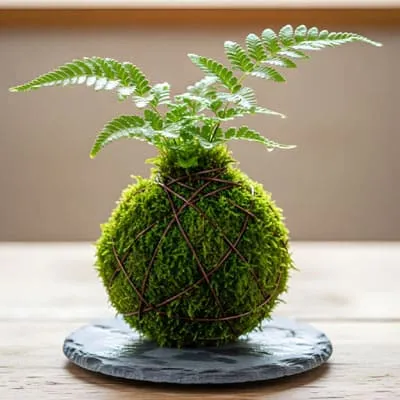
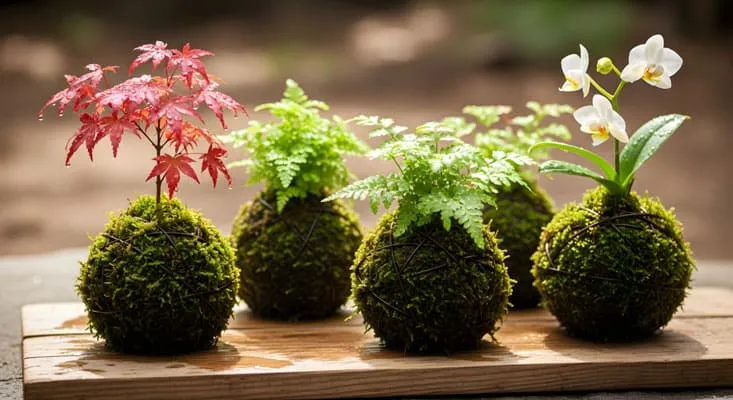
Kokedama, a traditional Japanese planting technique, has gained international attention as a unique living element in interior spaces. This method, which involves wrapping the roots of plants such as succulents, orchidaceae, and tropical plants in moss and soil, offers a calm and intentional way to incorporate greenery indoors. Understanding the size and care requirements of these plants is essential to successfully integrating kokedama into residential environments.
The increasing interest in biophilic design and climate-aware architecture creates an opportunity to explore kokedama beyond decoration. It is an architectural element that responds to human-centered living by blending nature with everyday life thoughtfully. However, challenges such as choosing the right plant species, ensuring proper moisture, and accommodating size constraints require careful consideration.
This article delves into how succulent, orchidaceae, and tropical plants in kokedama form can be optimized by size and placement. It offers a comprehensive guide for architects, designers, and homeowners seeking to enrich interior spaces with sustainable, slow-living greenery.
Understanding Succulent, Orchidaceae, and Tropical Plant Varieties
Characteristics of Succulent, Orchidaceae, and Tropical Plants
Succulents are known for their thick, fleshy leaves that store water, making them low-maintenance and ideal for indoor environments. Orchidaceae, or orchids, are prized for their delicate flowers and adaptability to various light conditions. Tropical plants often feature large, vibrant leaves and thrive in humid conditions, contributing to a lush interior atmosphere.
Each group presents unique characteristics that influence their selection for kokedama. Succulents tolerate drier environments, orchids require balanced humidity, and tropical plants often need consistent moisture and warmth. These traits affect size considerations, watering schedules, and placement within a space.
For architects and designers, understanding these botanical traits is crucial to integrating plants seamlessly into living spaces, ensuring they contribute both aesthetically and functionally.
Choosing Plants Based on Size and Growth Patterns
Plant size and growth habit are critical factors in kokedama design. Succulents generally grow compactly, making them suitable for smaller kokedamas. In contrast, orchids may develop longer roots and stems, requiring larger moss balls or support structures.
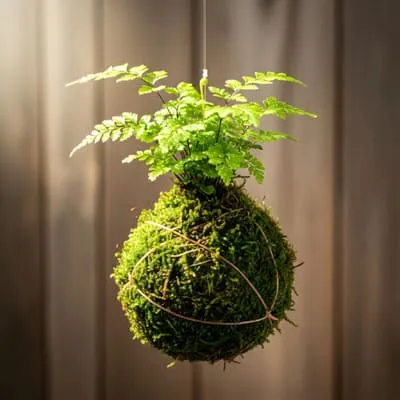
Tropical plants, with their expansive foliage, demand careful size management to prevent overwhelming interior proportions.
Assessing mature size helps avoid frequent repotting or pruning, maintaining the slow, intentional pace favored in thoughtful interior design. Growth rate also influences maintenance schedules, which align with the human-centered approach of kokedama care.
Understanding these patterns informs decisions about where to place kokedamas, ensuring they complement architectural elements without clutter or imbalance.
Environmental Requirements and Adaptability
- Light exposure: Succulents prefer bright, indirect light; orchids thrive in filtered light; tropical plants need moderate to high light.
- Humidity levels: Orchids and tropical plants require higher humidity than succulents.
- Watering frequency: Succulents need infrequent watering; orchids and tropical species require consistent moisture.
- Temperature tolerance: Tropical plants favor warm environments; orchids can tolerate a wider range.
- Air circulation: Essential for preventing mold and fungal issues, especially in kokedama.
Adapting kokedama care to these environmental needs ensures plant health and longevity within interior environments that vary internationally and climatically.
Optimizing Kokedama Size for Interior Architecture
Balancing Plant Size with Spatial Constraints
Kokedama size must be balanced carefully with available space in residential interiors. Large kokedamas with tropical plants can become statement pieces but may overwhelm smaller rooms. Conversely, smaller succulent kokedamas serve as subtle accents on shelves or desks.
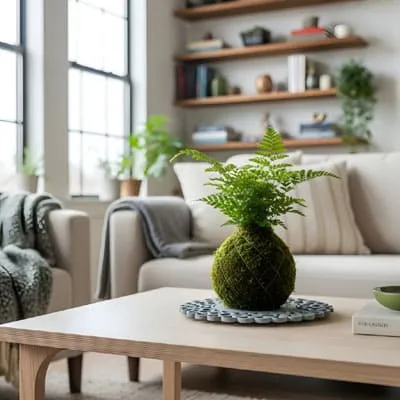
Architects should consider circulation paths, furniture scale, and natural light sources when determining kokedama placement and size.
Intentional sizing enables kokedama to function as architectural elements that enhance spatial harmony rather than mere decorations. This is particularly relevant in compact urban dwellings where every square foot counts. Thoughtful integration supports calm, slow living environments.
Moreover, kokedama size influences watering and maintenance routines, which must be manageable for residents to sustain long-term plant health.
Structural Considerations for Different Sizes
Structural stability is paramount for larger kokedamas, especially when using tropical plants with extensive root systems. The moss ball must be dense enough to support weight but porous to allow root respiration. Smaller kokedamas with succulents require less reinforcement but must still maintain moisture without waterlogging.
Architectural space planners must account for hanging or surface-mounted kokedamas, ensuring secure fixtures that accommodate weight and size variations. The interaction between plant size and structural elements defines the success of kokedama as living architecture.
Proper structural design also minimizes damage risks to interiors, such as water stains or falling plants, fostering sustainable integration.
Comparative Size Guide for Popular Kokedama Plants
| Plant Type | Average Mature Size | Recommended Kokedama Size |
|---|---|---|
| Succulent | 3-12 inches | 4-6 inches diameter |
| Orchidaceae | 12-24 inches | 6-8 inches diameter |
| Tropical Plants | 18-36 inches | 8-12 inches diameter |
This guide assists designers in selecting appropriately sized kokedamas that harmonize with interior dimensions and user needs.
Care and Maintenance for Sustainable Indoor Kokedama
Watering Techniques for Different Plant Types
- Succulents: Soak kokedama briefly every 2-3 weeks, allowing complete drying.
- Orchidaceae: Mist regularly and soak monthly, maintaining moderate moisture.
- Tropical plants: Soak weekly, ensuring consistent humidity.
- Drain excess water to prevent root rot.
- Adjust frequency based on ambient temperature and seasonality.
Adopting tailored watering routines preserves plant health and aligns with the slow, intentional lifestyle kokedama encourages.
Light and Placement Strategies
Proper light exposure is essential for kokedama vitality. Succulents thrive in bright but indirect light, making windowsills ideal.
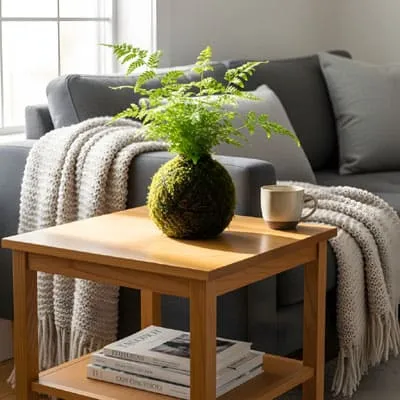
Orchids prefer filtered light away from direct sun, often benefiting from east or north-facing placements. Tropical plants require moderate to high light without harsh rays, suitable for bright rooms with sheer curtains.
Architects and residents must evaluate natural light conditions and adjust kokedama positioning seasonally. This dynamic approach enhances plant well-being while maintaining interior calmness and balance.
Artificial grow lights can supplement insufficient natural light, especially in urban apartments with limited window access.
Pruning and Root Management
Regular pruning supports kokedama plant health and prevents overgrowth that disrupts spatial harmony. Succulents require minimal pruning but benefit from removing dead leaves. Orchids may need spent flower stalks trimmed to encourage reblooming. Tropical plants need leaf shaping to control size and maintain balance.
Root management involves gently loosening roots during repotting or refreshing moss to sustain aeration and moisture retention. This slow and intentional care process reflects a human-centered approach to indoor planting.
Such maintenance routines contribute to the longevity of kokedama as a sustainable architectural feature.
Design Integration of Succulent, Orchidaceae, and Tropical Kokedama
Enhancing Residential Interiors with Kokedama
- Create focal points with large tropical kokedamas in living rooms.
- Use small succulent kokedamas for desktop or shelf accents.
- Hang orchid kokedamas near windows for natural display.
- Combine different plant types for textural contrast.
- Incorporate kokedama into minimalist or modern designs.
Kokedama adds layers of texture, color, and life, aligning with architectural intentions to create calm, balanced spaces.
Color and Texture Considerations
Succulents offer muted greens and blues with fleshy textures that complement stark architectural finishes. Orchidaceae bring vibrant floral colors and delicate forms, adding elegance and softness. Tropical plants contribute rich greens and broad leaves, injecting vitality and scale.
Selecting kokedama plants based on color palettes and textures enhances interior coherence and user experience. The moss ball itself contributes natural earthy tones and tactile interest, grounding the composition.
Designers should consider seasonal changes and lighting to maximize visual impact without overwhelming the senses.
Comparative Analysis of Kokedama Placement Options
| Placement | Ideal Plant Type | Architectural Benefit |
|---|---|---|
| Hanging | Orchidaceae, small tropical plants | Creates vertical interest, frees floor space |
| Tabletop | Succulents, small orchids | Offers intimate interaction, easy maintenance |
| Shelf or Niche | Succulents, medium tropical plants | Enhances architectural details, adds depth |
Choosing the right placement method maximizes the architectural and human-centered benefits of kokedama.
Climate Awareness and Environmental Impact
Adapting Kokedama to Regional Climates
Climate greatly influences kokedama success. Succulents thrive in dry, warm climates, requiring less frequent watering. Orchids and tropical plants prefer humid conditions and may need indoor humidifiers or misting in arid regions. Seasonal temperature fluctuations also affect plant vitality and moss moisture retention.
Designers must tailor kokedama species selection and care protocols to local climates, promoting resilient indoor ecosystems. This climate-aware approach supports sustainability and reduces resource waste.
Additionally, kokedama can improve indoor air quality and humidity regulation, contributing positively to microclimates within residences.
Eco-Friendly Materials and Practices
Using sustainably harvested moss and organic soil blends reduces environmental impact in kokedama production. Avoiding synthetic fertilizers and pesticides aligns with ecological responsibility.
Reusing kokedama components through moss refreshment and plant propagation supports circular living principles.
Architectural integration of kokedama can include designing irrigation systems or humidity control that optimize resource use. Choosing native or climate-adapted plants further enhances sustainability.
This conscientious process echoes the slow, intentional lifestyle kokedama embodies, fostering a deeper connection between residents and their environment.
Benefits of Indoor Tropical Plant Kokedama for Air Quality
- Improves oxygen levels through photosynthesis.
- Regulates indoor humidity, reducing dryness.
- Filters airborne toxins like formaldehyde and benzene.
Integrating tropical plant kokedama enhances healthy indoor environments, supporting occupant well-being and architectural vitality.
Size and Scale: Architectural Perspectives on Kokedama
Human Scale and Emotional Impact
Appropriate kokedama sizing engages human scale, fostering comfort and calm. Smaller kokedamas invite close interaction, encouraging mindfulness and care. Larger pieces can evoke awe and connection with nature, anchoring spaces emotionally. Balancing scale with function prevents sensory overload and supports slow living principles.
Architects must consider how kokedama size influences movement and sightlines, ensuring plants enhance rather than distract. This balance promotes a human-centered experience where nature and architecture coexist harmoniously.
Emotional responses to greenery also relate to perceived air quality, light, and texture, all informed by kokedama scale.
Proportional Relationships in Interior Design
Kokedama size should complement furniture, architectural features, and room dimensions. Oversized kokedamas may dominate small rooms, while undersized ones can be lost in large spaces. Proportionality supports visual equilibrium and intentional design statements.
Using modular kokedamas of varied sizes allows dynamic layering and adaptability. This flexibility aligns with international design trends that blend minimalism with natural elements.
Ultimately, proportional relationships contribute to slow, intentional spatial experiences that resonate with occupants.
Materiality and Visual Weight of Kokedama
| Component | Visual Weight | Architectural Role |
|---|---|---|
| Moss Ball | Light to medium | Acts as natural base, softens hard surfaces |
| Plant Foliage | Varies by species | Provides color, texture, and volume |
| Support Fixtures | Medium to heavy | Ensures stability, integrates with architecture |
Considering materiality and visual weight helps architects determine kokedama placement and integration with other interior elements.
Kokedama
Incorporating succulent, orchidaceae, and tropical plants through kokedama offers a unique architectural approach to interior greenery. Understanding plant characteristics, size, and care ensures kokedama enhances spatial harmony while supporting sustainable and climate-aware design principles. Thoughtful sizing and placement create calm, intentional environments that align with how people truly live.
As a living element, kokedama transcends decoration, becoming an integral part of residential architecture. Embracing this slow-living technique encourages deeper connections to nature and promotes well-being in diverse interior contexts. Consider kokedama as a design strategy for enriching your spaces with purposeful, sustainable greenery.
Frequently Asked Questions (FAQ)
What Types of Succulents Are Best for Kokedama?
Compact succulents such as Echeveria, Haworthia, and Sedum are ideal for kokedama due to their small size and low water needs. They adapt well to moss ball planting and require minimal maintenance, making them suitable for indoor environments.
How Often Should I Water Orchid Kokedama Indoors?
Orchid kokedamas generally need soaking every 2 to 4 weeks, depending on humidity and temperature. Misting between waterings helps maintain moisture levels. Avoid overwatering to prevent root rot, adjusting care based on your specific indoor climate.
Can Tropical Plants Survive in Small Kokedama Sizes?
While some small tropical plants can adapt to compact kokedama sizes, many require larger moss balls to support their root systems and foliage. Selecting slow-growing species and managing size through pruning can improve survival in smaller formats.
What Light Conditions Are Best for Succulent Kokedama?
Succulent kokedamas thrive in bright, indirect light. Direct sunlight can scorch leaves, while low light may cause etiolation. A spot near a south or east-facing window with filtered light is ideal for maintaining compact and healthy succulents.
Is Kokedama Suitable for Humid Climates?
Kokedama is well-suited for humid climates, especially when using tropical and orchid plants that prefer moisture. High humidity helps maintain moss moisture and plant health, but good air circulation is necessary to prevent mold and fungal growth.
References: Royal Horticultural Society, American Orchid Society, Houseplant 411

Architect with extensive experience in residential and commercial design, including renovations and modular construction. Love to share information about Architecture, home and lifestyle in this blog.