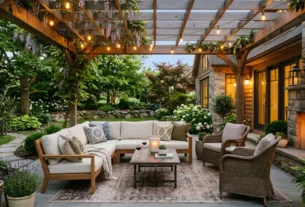
A garden fire pit extends the usable season of an outdoor space by providing genuine radiant heat and a natural gathering point, letting a patio, terrace, or garden corner stay comfortable well into autumn and winter. The right fire pit type, placement, and surrounding seating turn a seasonal outdoor space into a genuine year-round living area.
Most gardens go quiet the moment the temperature drops, even though the space itself hasn’t actually changed — only the comfort of sitting in it has. That’s a real loss, especially considering how much design and planting effort typically goes into a garden meant to be enjoyed, not just viewed from a warm kitchen window through October and November. Outdoor heating has become one of the most consistently requested additions in residential garden projects over the past several seasons, and fire features specifically remain a leading driver of that demand, according to trend tracking from the National Association of Landscape Professionals, which has flagged extended-season outdoor living as a defining priority in recent industry surveys.
A well-placed garden fire pit does more than provide warmth. It becomes the genuine focal point of a cozy garden corner, anchoring seating, lighting, and even planting around it in the same deliberate way any other structural garden feature would be positioned. This guide walks through the fire pit types worth considering, how to place one safely and effectively, and how to build a genuinely inviting cold-weather gathering space around it.
Why a Fire Pit Genuinely Extends Your Garden’s Usable Season
A garden’s usable months are determined almost entirely by comfort, not by whether the space itself still looks good. Once temperatures drop into a range most people find genuinely uncomfortable to sit in for any length of time, even a beautifully planted terrace goes unused.
A fire pit changes that equation directly, providing localized radiant heat that can make a seating area comfortable well below the threshold at which an unheated space would be abandoned. In my own project work, clients who add a fire feature to a patio or garden corner consistently report using that space through late autumn and into early winter — months it would otherwise have sat empty.
Snippet: A garden fire pit works by radiant heat, warming people and nearby surfaces directly rather than heating the surrounding air, which is why it remains effective even in open, breezy outdoor conditions where a space heater alone would struggle.
Choosing the Right Type of Fire Pit for Your Garden
Fire pits come in a few genuinely distinct types, each with real trade-offs in cost, maintenance, and how they fit into a garden’s existing design.
| Fire Pit Type | Fuel Source | Ambiance | Maintenance | Typical Cost Range |
|---|---|---|---|---|
| Wood-burning | Firewood | High — crackling, authentic flame | High (ash cleanup, wood storage) | Low–moderate |
| Gas (propane) | Propane tank | Moderate–high — clean flame | Low | Moderate |
| Gas (natural line) | Piped natural gas | Moderate–high — clean flame | Low (after install) | Moderate–high (installation) |
| Fire table | Propane or natural gas | High — doubles as furniture | Low | Moderate–high |
| Portable/tabletop | Gel fuel or bioethanol | Low–moderate — smaller flame | Very low | Low |
Wood-burning fire pits deliver the most authentic experience — genuine crackle, scent, and flame movement — but demand real ongoing maintenance and a reliable, dry wood supply. Gas fire pits trade some of that atmosphere for genuine convenience: instant start, no ash, and considerably easier integration into a smaller or more design-conscious space where wood storage isn’t practical. Fire tables, increasingly popular in residential garden design, solve a real layout problem by combining the heat source with the furniture piece itself, reducing how much additional seating and surface area a garden corner actually needs.
Placement and Safety Considerations Before You Install
Getting placement right matters more than any other decision in this project, both for genuine safety and for how well the finished feature actually integrates into your garden’s layout.
- Check local regulations first. Many municipalities regulate open-flame fire pits specifically, including required clearance distances and, in some regions, seasonal burn restrictions — rules that don’t apply the same way to enclosed gas features.
- Maintain genuine clearance from structures and overhanging branches. The National Fire Protection Association recommends keeping open flame sources well clear of structures, fences, and low vegetation, with clearance distances that vary by fire pit size and local code.
- Choose a stable, non-combustible base, such as pavers, gravel, or poured concrete, rather than placing a fire pit directly on a wood deck or dry lawn.
- Position away from prevailing wind direction relative to seating, so smoke — for wood-burning types — doesn’t consistently blow across where people actually sit.
- Keep a genuine water source or extinguishing tool within reach for any wood-burning installation.
Quick tip: If your garden includes a wood deck or a covered pergola, a gas fire table is usually the safer, more practical choice over an open wood-burning pit — the enclosed flame and absence of embers significantly reduce fire risk near combustible structures.
Designing a Cozy Garden Corner Around Your Fire Pit
Once placement and fuel type are settled, the fire pit becomes the genuine anchor for the rest of the seating area — the same role a specimen tree or water feature plays as a focal point elsewhere in a garden.
Seating should be arranged in a genuine circle or broad arc around the fire pit, close enough to feel the radiant heat but with adequate clearance from the recommended safety distance. Durable, weather-resistant materials matter here more than almost anywhere else in the garden, since this seating area will genuinely see use through the coldest, wettest months your climate offers — teak, powder-coated aluminum, and all-weather wicker all hold up considerably better than untreated wood or fabric-heavy furniture left exposed through winter.
Layered textiles — weatherproof cushions, a stack of blankets kept in a nearby waterproof storage bench — extend genuine comfort further into cold weather than the fire’s heat alone can manage. Evergreen structural planting around the perimeter of this zone, discussed at length in seasonal garden planning, keeps the space feeling enclosed and intentional even in the depths of winter when most of a garden’s other planting has gone dormant.
Lighting and Atmosphere for Cold-Weather Evenings
A fire pit provides warmth and a natural light source, but it shouldn’t be the only lighting in the space once darkness falls earlier in autumn and winter. Layering in low, warm-toned path lighting and subtle accent lighting around the seating perimeter — echoing the layered lighting approach used throughout well-designed gardens — keeps the space feeling genuinely inviting rather than leaving guests to navigate a dark garden beyond the fire’s immediate glow.
Landscape lighting guidance from the American Society of Landscape Architects consistently emphasizes warmer color temperatures for residential outdoor spaces specifically because they read as considerably more comfortable and inviting after dark than cooler, more clinical lighting — a principle that matters even more in a space specifically designed for cold-weather gathering.
Bringing Your Garden Into Every Season
A well-chosen, thoughtfully placed garden fire pit does more than provide heat — it becomes the reason a garden gets used through months it would otherwise sit empty. Choose the fuel type that suits your maintenance tolerance and design, respect genuine clearance and local regulations, and build a seating zone around it with materials that can actually handle the cold-weather use you’re designing for. Start with placement and safety, then let the rest of the corner — seating, lighting, planting — take shape around that anchor. If you’ve built a fire pit gathering space in your own garden, I’d love to hear what’s kept you coming back to it through the colder months.

Architect with extensive experience in residential and commercial design, including renovations and modular construction. Love to share information about Architecture, home and lifestyle in this blog.