A drought-tolerant garden combines regionally adapted plants, deep-rooted perennials, and a hardscape-forward layout to thrive on significantly less water than a conventional lawn-based landscape. The best results come from matching plant selection to your actual site conditions rather than following a generic plant list, and from treating soil and layout as seriously as the plants themselves.
If you’ve watched a lawn brown out by midsummer or watched your water bill climb every June, you’re not alone. Outdoor irrigation accounts for a striking share of residential water use in many regions, and a poorly matched planting scheme is usually the reason a garden needs so much of it in the first place. Outdoor water use can account for as much as 30 percent of total household consumption nationally, and that figure climbs above 50 percent in hot, dry climates, according to the U.S. Environmental Protection Agency’s WaterSense program.
The good news is that a genuinely drought-tolerant garden doesn’t have to look sparse, sunburnt, or purely gravel-and-cactus. When plant choice, soil preparation, and layout are handled together, a water-wise landscape can be layered, textural, and genuinely beautiful across most of the year — while asking considerably less of your irrigation system. This guide walks through what actually makes a garden drought-tolerant, which plants perform best heading into 2026, and how to design and transition into one without losing everything you’ve already planted.
What Actually Makes a Garden “Drought-Tolerant” (Not Just Low-Water)
A garden doesn’t become drought-tolerant simply because a few succulents were added to an existing bed. Xeriscaping is a landscaping approach that reduces or eliminates the need for supplemental irrigation by matching plant choices, soil preparation, and layout to a site’s natural water availability — it’s a system, not a plant list.
That system rests on three factors working together. First, plants genuinely suited to your regional rainfall and soil, rather than water-loving species kept alive through constant intervention. Second, soil that actually retains what moisture does fall, rather than shedding it through poor structure or excessive compaction. Third, a layout that reduces evaporative water loss — shade, mulch, and a sensible ratio of hardscape to planting.
Skip any one of these three, and the garden still ends up thirstier than it needs to be, even with “drought-tolerant” plants in the ground. In practice, I’ve seen more failed water-wise gardens caused by poor soil prep than by the wrong plant choice.
The Best Drought-Tolerant Plants for a Climate-Resilient Garden in 2026
Plant breeders and landscape designers have made real progress in the last few seasons on cultivars that hold color and structure through longer dry spells without looking stressed. The table below covers ten reliable performers across a range of climates, all genuinely low-water once established (typically after their first full growing season).
| Plant | Sun Needs | Water Needs (Established) | USDA Zone | Mature Height | Best For |
|---|---|---|---|---|---|
| Lavender | Full sun | Low | 5–9 | 1.5–3 ft | Borders, fragrance |
| Rosemary | Full sun | Low | 7–10 | 2–4 ft | Structure, edible use |
| Russian Sage | Full sun | Low | 4–9 | 3–4 ft | Mid-story color |
| Yarrow | Full sun | Very low | 3–9 | 1–3 ft | Pollinators, groundcover |
| Sedum (Stonecrop) | Full sun–part shade | Very low | 3–9 | 4 in–2 ft | Groundcover, green roofs |
| Agave | Full sun | Very low | 8–11 | 1–6 ft | Sculptural focal point |
| Red Yucca | Full sun | Very low | 5–11 | 3–5 ft | Vertical structure |
| Salvia | Full sun | Low | 5–10 | 1–4 ft | Season-long bloom |
| Blue Fescue | Full sun–part shade | Low | 4–8 | 8–12 in | Texture, edging |
| California Poppy | Full sun | Very low | 6–10 | 1–2 ft | Seasonal color, native |
A few of these deserve a closer look. Yarrow and California Poppy are genuinely native across large parts of North America, which means they support local pollinators considerably more effectively than non-native alternatives with similar water needs — a distinction worth caring about beyond pure drought tolerance. Agave and Red Yucca function as structural, focal-point plants, carrying real visual weight even outside their bloom period, which makes them useful anchors in a naturalistic layout rather than incidental filler.
Quick tip: Group plants by water need into distinct zones, a technique called hydrozoning, so a single irrigation schedule doesn’t over-water your most drought-tolerant species while under-watering thirstier ones planted nearby.
Design Principles for a Truly Water-Wise, Climate-Resilient Layout
Plant selection only gets you halfway there. The layout decisions around those plants determine how much water the whole garden actually needs.
Hardscape-to-planting ratio matters more than most first-time gardeners expect. A higher proportion of gravel, stone, or permeable paving relative to lawn and thirsty planting directly reduces a site’s total irrigation demand, and in hot climates it also reduces the heat-driven evaporation that pulls moisture out of nearby beds. The American Society of Landscape Architects has documented water-wise site design as one of the most consistently effective sustainability interventions available at the residential scale, precisely because it addresses water loss at the layout level rather than relying on plant choice alone.
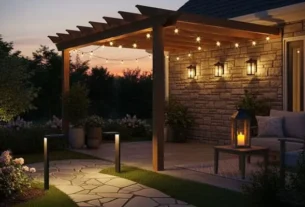
Shade placement is the second lever. A large deciduous tree or a pergola positioned to shade a bed during peak afternoon sun measurably reduces soil moisture loss in that zone, extending the useful range of plants that can survive there without supplemental water. Grouping plants by both water need and microclimate — not just water need alone — is what separates a genuinely resilient layout from one that simply hopes every plant behaves identically.
Finally, mulch deserves more credit than it usually gets. A properly applied mulch layer, 5 to 8 centimeters deep, can reduce evaporative water loss from soil by a substantial margin during hot, dry weather, while also suppressing the weeds that would otherwise compete with your drought-tolerant plants for whatever moisture remains.
Soil and Irrigation Strategies That Support a Drought-Tolerant Garden
Soil structure decides how much of the water your garden receives — whether from rainfall or irrigation — actually gets used by plant roots rather than running off or draining away too fast to be absorbed.
Sandy soils drain quickly and need organic matter worked in to improve their water-holding capacity; heavy clay soils hold water longer but often need structural amendment to prevent the compaction that suffocates roots and encourages runoff instead of absorption. Testing your own soil’s drainage rate before amending it — rather than guessing — takes fifteen minutes and saves considerable trial and error later.
Where supplemental irrigation is still genuinely needed, drip irrigation delivers water directly to a plant’s root zone rather than broadcasting it across the surrounding surface, cutting water waste dramatically compared to overhead spray systems. This single change, more than any other equipment upgrade, is usually where I see the biggest measurable water savings on residential projects.
Hydrozoning, mentioned earlier, pairs naturally with drip irrigation: dividing a garden into zones by water need lets a controller deliver exactly what each zone requires on its own schedule, rather than defaulting to one uniform watering pattern that never quite fits every plant in the bed.
Common Mistakes That Undermine Drought-Tolerant Gardens
A handful of recurring mistakes account for most of the disappointing results I see in gardens that were genuinely intended to be water-wise.
- Overwatering newly planted specimens for too long. Most drought-tolerant plants need regular water for their first full growing season while roots establish, but continuing that same watering schedule for years afterward defeats the entire purpose of choosing them.
- Ignoring microclimate variation within a single yard. A bed against a heat-absorbing south wall behaves nothing like a shaded northeast corner, even a few meters away.
- Choosing plants by appearance alone, without checking their actual regional suitability, mature size, and true water needs once established.
- Skipping soil preparation and assuming “low-water” plants will tolerate poor soil structure just as easily as poor water availability.
- Applying too little mulch, or none at all, and losing much of the moisture-retention benefit a properly mulched bed would otherwise provide.
Avoiding these five mistakes consistently matters more than any single plant choice on the list above.
How to Transition an Existing Garden Into a Drought-Tolerant One
You don’t need to remove everything and start over. The most successful transitions I’ve been part of happen in phases, starting with the highest-water areas of a yard — typically lawn — and converting them first to hardscape, drought-tolerant groundcover, or a native meadow mix.
Structural, long-lived plants (trees, large shrubs) generally stay in place if they’re already reasonably suited to your climate, since removing healthy, established specimens rarely makes water-use sense on its own. Focus the conversion instead on the thirstiest, most replaceable layer: turf, annual bedding, and any water-loving perennials clearly struggling in their current spot.
Give new plantings their establishment period — typically one full growing season of regular water — before cutting back irrigation to their true long-term drought-tolerant level. Rushing this step is one of the most common reasons a newly converted bed underperforms in its first year, even when every plant on the list was genuinely the right choice.
Building a Garden That Works With Your Climate, Not Against It
A genuinely resilient, water-wise landscape comes down to three things working together: plants matched honestly to your regional conditions, soil prepared to hold the moisture it actually receives, and a layout — shade, hardscape ratio, mulch — that reduces water loss before a single drop of irrigation is even applied. Get those three right, and a drought-tolerant garden stops being a compromise and starts looking like the intentional, climate-resilient design choice it actually is. Start with one bed, one zone, or one converted lawn strip if a full redesign feels like too much at once — and if you’ve made the switch already, I’d genuinely like to hear which plants have held up best in your own climate.
METADATA FOR WORDPRESS
META DESCRIPTION: Discover the best drought-tolerant plants and design strategies for a climate-resilient garden in 2026, plus a water-wise layout that truly thrives outdoors.
SLUG: drought-tolerant-garden-design
TAGS: drought-tolerant garden, climate-resilient garden, water-wise landscaping, xeriscaping, garden design 2026, sustainable gardening
CATEGORY: Garden

Architect with extensive experience in residential and commercial design, including renovations and modular construction. Love to share information about Architecture, home and lifestyle in this blog.