Winter is actually the ideal season for winterizing your patio and tackling broader garden hardscaping projects, because contractors have far more scheduling availability, materials get the full cure time they need before spring planting begins, and ground and drainage issues surface clearly in cold, wet conditions rather than hiding until they cause real damage later.
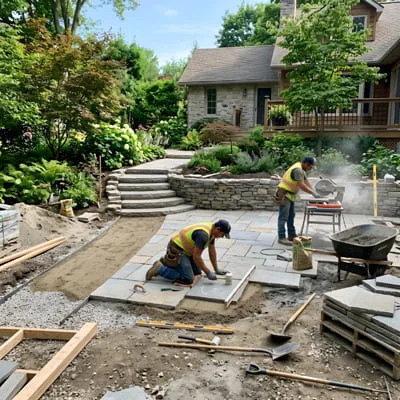
If you’ve ever tried to book a landscaper in April, you already know the problem: everyone else had the same idea. Spring is when garden hardscaping demand peaks, project timelines stretch, and material and labor costs tend to climb along with the demand. Concrete, in particular, needs sustained curing time above a minimum temperature before it can reliably withstand freeze-thaw stress, and rushing that process to meet a spring deadline is one of the more common reasons a brand-new patio starts cracking within its first year, according to guidance from the Portland Cement Association on cold-weather curing requirements.
Winter flips that timeline in your favor. Planning and, in many climates, executing hardscaping work during the colder months means your patio, path, or retaining wall is fully cured, settled, and genuinely ready to use by the time spring planting season actually arrives — rather than still drying out while you’re trying to plant around it. This guide walks through why winter timing works, what winterizing a patio actually involves, which materials handle cold weather best, and how to plan the whole project without common seasonal mistakes.
Why Winter Is Actually the Best Season for Hardscaping Projects
Most homeowners assume hardscaping is a spring or summer job, but that assumption is exactly why spring booking calendars fill up so fast. Contractors with genuine experience in cold-climate construction are considerably easier to schedule in the off-season, and material suppliers frequently offer better pricing when demand eases.
There’s a technical advantage too. Ground that’s been through a full freeze-thaw cycle reveals drainage weaknesses, soil settling, and frost-heave risk far more honestly than dry summer soil does. Building a base and foundation during or right after this cycle, rather than before it, means you’re designing around real conditions instead of guessing at them.
Cold weather also forces a slower pace, which — in my experience managing renovation timelines — tends to produce more careful work. There’s less pressure to rush a project through before a client wants to start planting, which is precisely the pressure that leads to shortcuts in base preparation.
Winterizing Your Patio: What It Actually Involves Before You Build or Repair
Winterizing a patio means preparing an existing or planned hardscape surface to withstand freeze-thaw cycling, moisture infiltration, and ground movement without cracking, heaving, or shifting out of level.
For an existing patio, that starts with a genuine inspection: checking for standing water, hairline cracks that will widen once they fill with freezing moisture, and any sections where pavers or stone have already begun to shift.
Sealing porous materials like natural stone or unsealed concrete before the first hard freeze reduces how much water actually penetrates the surface, which directly reduces freeze-thaw damage over the season.
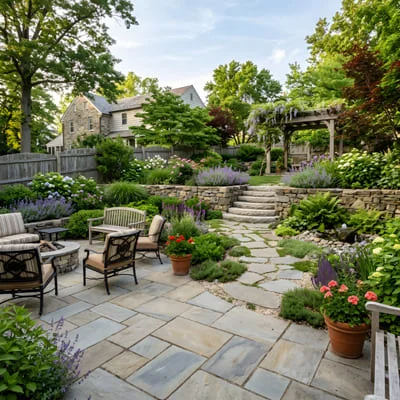
For a new patio being planned during winter, winterizing really means designing the base correctly from the start: adequate depth below the frost line, proper compaction, and drainage that actively moves water away from the structure rather than letting it pool and freeze beneath it.
Quick tip: Check your local frost depth before finalizing any base excavation. A base that doesn’t extend below your region’s typical frost line is one of the most common causes of long-term heaving and cracking, regardless of how good the surface material looks on day one.
Choosing Materials That Handle Freeze-Thaw Cycles
Not every hardscape material performs equally once winter arrives. Some genuinely benefit from cold-weather installation timing; others need more careful handling or a delayed start.
| Material | Freeze-Thaw Resistance | Ideal Install Temperature | Maintenance Needs | Best Use |
|---|---|---|---|---|
| Natural stone (granite, bluestone) | Excellent | Above 4°C (40°F) | Low | Patios, paths |
| Poured concrete | Moderate–Good | Above 10°C (50°F) | Moderate | Slabs, driveways |
| Concrete pavers | Good | Above 4°C (40°F) | Low | Patios, walkways |
| Brick | Good | Above 4°C (40°F) | Low–Moderate | Paths, borders |
| Composite decking | Excellent | Any (installed dry) | Very low | Raised decks |
| Untreated wood | Poor–Moderate | Above 4°C (40°F) | High | Temporary structures |
Natural stone and quality concrete pavers consistently perform best in genuinely cold climates, largely because they don’t rely on a single continuous pour that needs uninterrupted curing time the way poured concrete does. If poured concrete is genuinely the right choice for your project, plan the pour for a stretch of weather that stays reliably above the minimum curing temperature for at least 48 hours, rather than pouring right before an incoming cold front.
Planning a Winter Hardscaping Project Step by Step
A winter hardscaping project benefits from a more deliberate sequence than a warm-weather build, mainly because weather windows are narrower and less forgiving of delay.
- Assess frost depth and drainage first. Confirm your region’s frost line and check how water currently moves across the site during wet, cold weather.
- Book contractors early, ideally before the season’s first hard freeze, since availability is better but weather-dependent scheduling still applies.
- Excavate and prepare the base below the frost line, compacting thoroughly before any freeze sets in.
- Choose materials suited to cold installation, referencing the comparison above rather than defaulting to whatever’s cheapest.
- Install during a stable weather window, avoiding pours or sets immediately before an incoming freeze.
- Seal porous surfaces before the coldest part of the season to limit moisture infiltration.
- Plan spring planting around the completed hardscape, rather than the reverse, so beds and borders are designed against a finished, settled structure.
Common Mistakes When Building or Repairing Hardscape in Cold Weather
A few recurring errors account for most cold-weather hardscaping failures I’ve seen in renovation work.
- Pouring concrete too close to a hard freeze, without the sustained cure time it needs above minimum temperature.
- Skipping proper base depth, assuming frost heave won’t affect a small residential patio.
- Ignoring drainage slope, letting water pool and freeze directly against the structure instead of away from it.
- Sealing surfaces too late in the season, after moisture has already had a chance to penetrate.
- Rushing the project to beat spring, which is the exact pressure winter timing is meant to relieve in the first place.
Site design guidance from the American Society of Landscape Architects consistently points to proper drainage and material selection — not just aesthetics — as the two factors most responsible for a hardscape’s long-term performance, and cold-climate projects make that guidance considerably less forgiving to ignore.
Getting Your Garden Ready for Spring Planting After Winter Hardscape Work
A well-executed cold-season build gives your garden a genuine head start. By the time soil is workable again in spring, a fully cured, properly drained patio or path is already settled and ready to plant around, rather than competing with your planting schedule for the contractor’s time and your own attention.
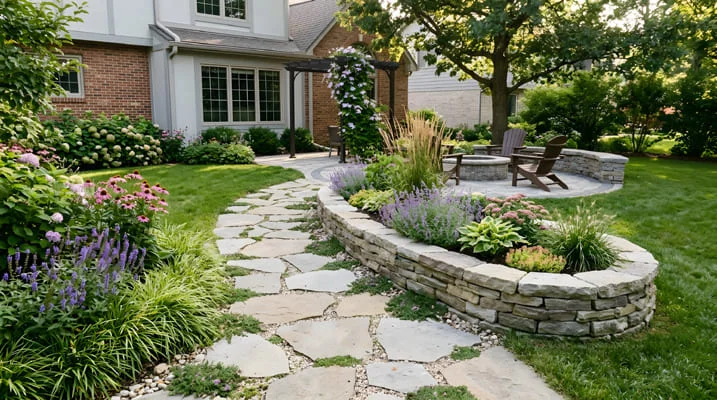
This is also a good moment to plan planting beds around the new hardscape’s actual proportions and sightlines, something well-documented in climate-responsive residential landscape examples on Archdaily, rather than designing the hardscape and the planting scheme as two disconnected projects finished months apart.
Plan Now, Enjoy It Sooner
Winterizing your patio and tackling broader garden hardscaping during the colder months isn’t a compromise — it’s genuinely the better sequence. You get more contractor availability, materials that cure properly instead of racing a spring deadline, and a finished structure that’s already settled by the time planting season begins. Start with an honest inspection of your existing patio or a frost-depth check for a new build, and you’ll be working with your garden’s timeline instead of against it. If you’ve winterized a patio yourself, I’d love to hear what worked in your climate.

Architect with extensive experience in residential and commercial design, including renovations and modular construction. Love to share information about Architecture, home and lifestyle in this blog.