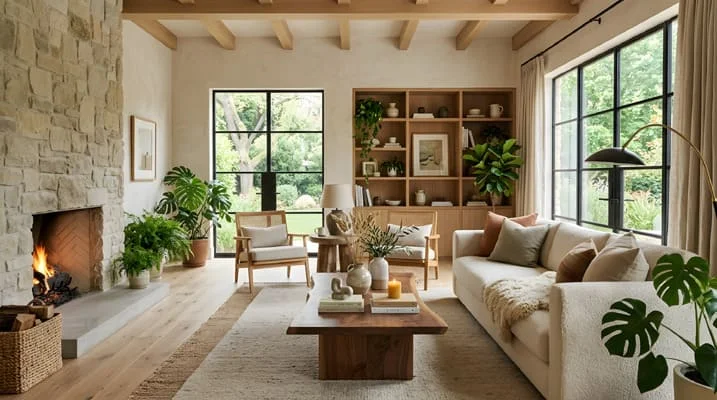
Organic modern decor blends the clean lines and uncluttered layouts of minimalism with the warmth of natural materials — wood, stone, linen, and clay — softening modern design’s sharper edges without sacrificing its simplicity. The result is a home that feels calm and grounded rather than cold or stark.
If minimalism has ever left your home feeling a little too sparse, a little too clinical, you’re responding to a real limitation of the style, not a personal failure to “get it right.” Interior design experts consistently point to a genuine shift away from cold minimalism this year, with natural materials — wood, stone, linen, and handcrafted ceramics — becoming one of the defining directions in residential interiors, according to design trend reporting from The Everygirl, which surveyed multiple working designers on where 2026 interiors are actually headed.
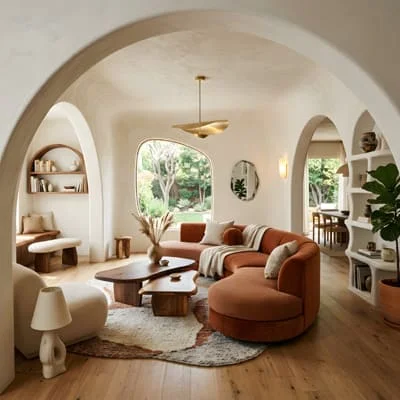
Organic modern decor is the direct answer to that shift: it keeps minimalism’s discipline — restraint, quality over quantity, uncluttered layouts — while replacing the coldness that discipline can sometimes produce with genuine tactile warmth. This guide walks through the materials, colors, and layout principles that define the style, and how to bring it into your own home without a full renovation.
What Organic Modern Decor Actually Means
Organic modern decor sits precisely between two styles that used to feel like opposites: sleek modern minimalism and the raw, textured character of natural materials. From modern design, it keeps uncluttered layouts, clean lines, and a restrained color story. From nature, it borrows texture, imperfection, and warmth.
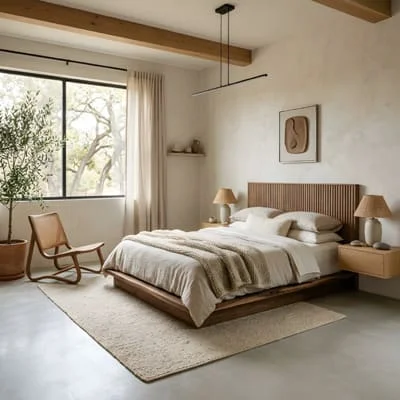
Organic modern decor pairs the clean lines and restraint of modern minimalism with natural, tactile materials like unfinished wood, stone, and woven fiber — creating a calm, grounded space rather than the starker, colder feel of pure minimalism.
The style isn’t about adding more objects to a minimalist room — that would undermine the discipline that makes it work in the first place. It’s about choosing the right materials and textures for the pieces you already have, so a room reads as warm and considered rather than sparse and unfinished.
The Materials That Define Organic Modern Style
Material choice is where organic modern decor is won or lost. A room can have perfectly restrained, minimalist proportions and still feel cold if every surface is smooth, synthetic, or uniformly matte.
| Material | Where It Works Best | Texture Contribution |
|---|---|---|
| Light oak or walnut | Flooring, furniture, exposed beams | Warm grain, natural variation |
| Natural stone (travertine, marble) | Countertops, side tables, accents | Weight, cool-to-warm contrast |
| Unglazed clay and ceramic | Vases, planters, tableware | Handmade, imperfect texture |
| Linen and wool | Upholstery, throws, drapery | Softness, tactile warmth |
| Rattan and jute | Baskets, rugs, light fixtures | Natural fiber, lightness |
| Bouclé | Accent chairs, cushions | Chunky texture, cozy contrast |
Layering matters more than any single material choice. A smooth plaster wall paired with a chunky wool throw, or a polished stone surface set against grainy raw-edge wood, creates the visual depth that makes a neutral room read as rich rather than empty — a technique designers refer to as textural contrast, and one of the most consistently cited principles in 2026 interior material forecasting from Forbo Flooring’s Beyond the Surface trend report, which highlights wood and stone specifically as materials being reimagined for their tactile, aging character rather than pure function.
Building a Warm-Neutral Color Palette
Organic modern decor relies on a genuinely different color logic than stark, cool-toned minimalism.
Instead of pure white and gray, the palette leans warm: creamy whites, oatmeal, sand, and soft taupe form the base, with muted greens and earthy browns layered on top for depth.
This warmer palette does real work beyond aesthetics — it’s what keeps a restrained, minimal room from reading as sterile.
A pure white wall paired with gray furniture can feel clinical regardless of how well-proportioned the room is; the same layout in warm oatmeal and sand tones feels calm and inviting instead, even with an identical amount of furniture and negative space.
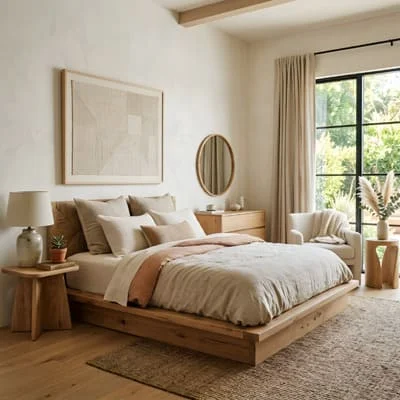
Quick tip: If you’re transitioning an existing minimalist room toward organic modern, start with your largest neutral surface — walls or a rug — and shift it toward a warmer undertone before changing any furniture. This single change does more to soften a room’s feel than adding new pieces.
Shapes and Silhouettes: Softening Modern’s Sharp Edges
Beyond material and color, organic modern decor introduces soft, sculptural silhouettes that offset the straight lines typical of modern architecture and furniture. Curved sofas, rounded arches, organic-edge tables, and asymmetrical forms replace the rigid geometry that can make a purely modern room feel severe.
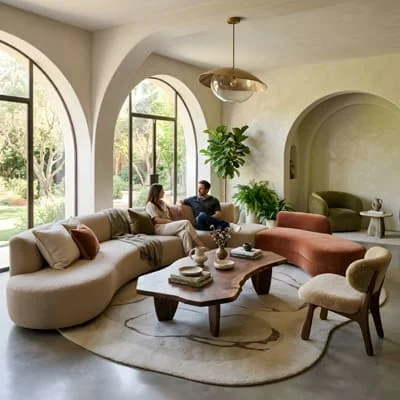
This shift toward curves and rounded shapes reflects a broader move in residential design away from sharp lines altogether, with designers increasingly embracing gentler forms specifically to create a sense of calm and connection to nature within a space, according to design trend commentary from Tom Raffield’s 2026 design outlook, a UK-based studio known for handcrafted, natural-material lighting and furniture.
A practical way to apply this without replacing every piece of furniture: introduce one or two curved elements — a rounded coffee table, an arched mirror, a sculptural pendant light — into an otherwise angular room. You don’t need to soften every line at once for the effect to register.
How to Transition an Existing Minimalist Room
You don’t need a full redesign to bring organic modern principles into a space you’ve already built around minimalism. A staged approach tends to work better in practice, and it’s considerably more affordable.
- Audit your current materials. Identify surfaces that are smooth, synthetic, or purely functional — these are your highest-impact opportunities for texture.
- Introduce one natural material per zone. A raw-edge wood coffee table in the living room, a linen throw on the bed, a stone vase on a shelf — small, deliberate additions rather than a wholesale furniture swap.
- Warm your base palette gradually. Repaint or re-cover the single largest neutral surface in a room before adding anything new.
- Add one sculptural or curved piece per room. This single element does more to soften a space than several smaller decorative changes combined.
- Keep the minimalist discipline intact. Resist the urge to add volume — organic modern still depends on restraint; it just replaces cold surfaces with warm, textured ones.
Common Mistakes That Undermine the Style
A handful of habits consistently pull a room away from genuine organic modern decor and toward either cluttered maximalism on one side or cold minimalism on the other.
- Adding too many natural materials at once, which can tip a restrained room into visual clutter rather than layered warmth.
- Choosing synthetic imitations of natural texture — faux wood grain, printed stone patterns — which read as considerably less authentic than the real material, even at a glance.
- Ignoring color temperature, keeping a cool gray or stark white base while adding warm materials on top, which creates visual conflict rather than harmony.
- Skipping the minimalist discipline entirely, treating “organic” as permission to add volume rather than texture.
- Using only one type of natural material, missing the textural contrast — smooth against rough, matte against grain — that makes the style feel genuinely layered.
Bringing Warmth Back Into a Minimalist Home
Organic modern decor solves a genuine problem with pure minimalism: it keeps the discipline and restraint that make a space feel calm and uncluttered, while replacing cold, uniform surfaces with the warmth and imperfection of real natural materials. Start with one material, one warmer surface, and one curved silhouette rather than overhauling a room all at once, and the transition will feel considered rather than abrupt. If you’ve brought organic modern touches into your own space, I’d love to hear which material made the biggest difference for you.

Architect with extensive experience in residential and commercial design, including renovations and modular construction. Love to share information about Architecture, home and lifestyle in this blog.