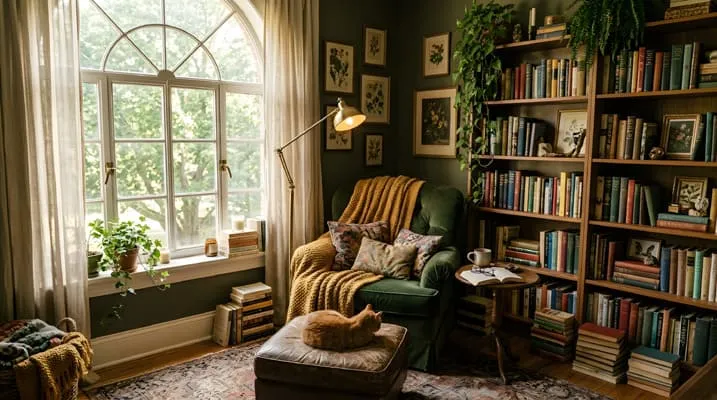
Effective reading nook ideas share three features: a supportive seat, good light, and a sense of retreat. Choose a quiet corner, window alcove, or unused landing. Add a comfortable chair, a lamp beside your shoulder, a small side table, and a soft throw. Keep the spot for reading.
Most of us own books we mean to read and a chair we never quite sit in.
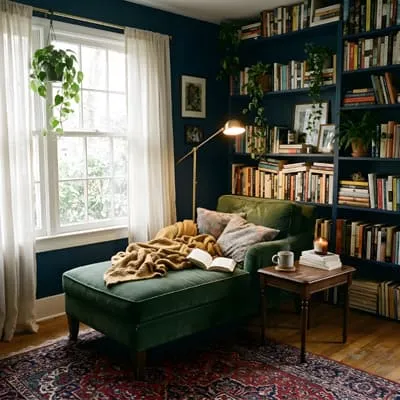
The pile grows on the nightstand, the sofa is too slouchy, and the phone wins by default.
Good reading nook ideas start with a simple fix: give reading its own place, designed for the job.
The habit is worth protecting. A YouGov survey found that 59 percent of Americans read at least one book in 2025, and the median reader finished two.
Roughly 40 percent read none. Many people want to read more than they do, and the environment often gets in the way.
I am an architect, and I treat a nook as the smallest room in the house. It still needs a plan, a lighting design, and a clear purpose. This guide is built on three pillars: comfort, light, and retreat. Comfort is the seat, posture, and textures that let you stay for an hour. Light is daylight and lamps that protect your eyes. Retreat is the sound, privacy, and rituals that make the spot feel set apart. Get these three right and even a one-square-meter corner can become the favorite place in your home.
What Makes a Reading Nook Work
What is a reading nook? A reading nook is a small, dedicated spot in a home arranged for comfortable, uninterrupted reading. It usually includes a supportive seat, good light, and a surface for a book or a cup.
Nooks have a long architectural history. Alcoves, inglenooks, and window seats all give people a place to withdraw while staying part of the room.
Architect Christopher Alexander describes window places and alcoves in A Pattern Language as small spaces that let people pull back from the crowd without leaving it.
That balance of shelter and connection is the idea behind a good nook.
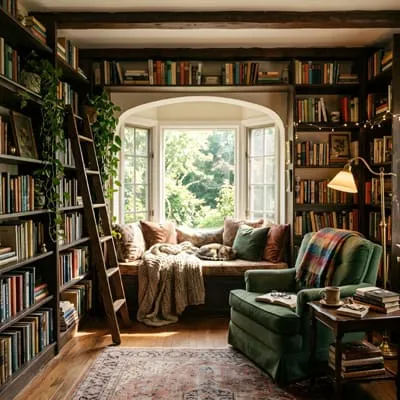
Why a Dedicated Spot Helps
A dedicated place cues your mind. When you sit in the same chair with the same lamp, the setting starts to signal that it is time to read. Over time, you spend less effort getting settled.
Reading may also help you unwind. Mindlab International at the University of Sussex reported that reading reduced stress measures by as much as 68 percent after six minutes. The study dates from 2009, it was small, and it was commissioned by a consumer brand, so treat it as suggestive, not definitive. It still matches what many readers feel.
Paper, Screens, or Both
Print remains the most common format. Pew Research Center’s October 2025 survey found that more Americans read print books than digital ones, though 31 percent had read an e-book in the past year. A well-planned nook handles both. Give it a shelf or basket for paper books and a discreet charging spot for an e-reader.
Three Myths About Reading Nooks
The first myth says you need a big room. You do not. A chair, a small table, and a lamp fit in about 1 meter by 1.2 meters (3 by 4 feet) of floor space, which is my planning guide for most homes.
The second myth says you need expensive furniture. A thrifted armchair with a good cushion and a simple lamp can outperform a costly piece that does not fit your body.
The third myth says a nook must look like a magazine photo. It only needs to work. A slightly worn chair you love beats a perfect one you avoid.
Reading Nook Ideas by Location
The best location is often a spot you already use. Notice where you read now, then improve it. If you have no habit yet, the table below compares common choices.
| Location | Why it works | Watch for |
|---|---|---|
| Window alcove or bay | Daylight and a view | Glare on the page, heat or cold near the glass |
| Under the stairs | Natural enclosure and a cozy feel | Low headroom, poor ventilation, needs added light |
| Bedroom corner | Quiet and close to your reading-before-sleep routine | Screens creeping in, blurred boundary with the bed |
| Living room corner | Turns unused space into a feature | Household traffic and noise |
| Landing or hallway end | Often wasted space | Drafts, and exits that must stay clear |
| Closet or wardrobe conversion | Instant privacy | Needs ventilation, light, and a reversible design for renters |
| Attic eaves | Built-in sloped-ceiling coziness | Headroom and temperature swings |
| Balcony or porch | Fresh air | Weather, and sunlight that fades book covers |
The Window Alcove
A window alcove combines daylight, a view, and a sense of enclosure. A built-in window seat works well, with storage drawers underneath. If you cannot build one, place a chair or a cushioned bench in front of the window and add curtains for privacy.
Sit with the window beside you, not in front or behind. Light from the side reduces glare on the page and keeps your head from casting a shadow over it.
Under the Stairs
The space beneath a staircase has a natural sheltered feel. Check headroom first, because low spots suit lounging better than upright seating. Add a floor cushion or a low daybed and a small lamp. Make sure the space has ventilation, and keep fabrics a safe distance from any bulb.
The Closet Nook
Remove the doors from a shallow closet, paint the interior a soft color, and add a cushion, a lamp, and a few shelves. It works well in a small apartment because it needs almost no floor space. For renters, store the doors and restore them when you move.
A Corner of an Existing Room
Many homes already have a corner that attracts clutter. An armchair, a floor lamp, and a side table turn it into a nook. Angle the chair slightly toward the room with its back to a wall. That position gives you both shelter and awareness of the space around you.
Architect’s tip: Keep exits clear. Do not place a nook where it blocks a door, a window used for escape, or a radiator. Safety comes before coziness.
Comfort: Choose the Seat, Posture, and Textures
Comfort is the first pillar, and the seat is its center. A poor chair ends the reading session early. Test seats the way you will use them, which means sitting for at least ten minutes.
| Seat type | Support | Space needed | Best for |
|---|---|---|---|
| Armchair with ottoman | High, with lumbar and arm support | Moderate | Long sessions |
| Chaise or daybed | Medium, supports reclined reading | Large | Lounging and naps |
| Built-in window seat | Depends on cushion depth | Uses wall depth only | Small rooms and views |
| Floor cushions and poufs | Low | Small | Short sessions and children |
| Glider or rocking chair | Medium | Moderate | Relaxed, rhythmic reading |
Posture Basics
General ergonomic guidance applies here. Your feet should rest flat on the floor or on an ottoman. Your lower back should feel supported. Your arms should rest at a comfortable height, and you should hold the book near chest level instead of down in your lap, which tilts your head forward.
Change position now and then, and stand up between chapters. If you have pain, a chair that fits your body matters more than appearance.
The Side Table
A small table within arm’s reach makes the nook usable. Match its height to the chair arm, so setting down a cup does not require stretching. Leave room for a lamp, a book, and a drink. A tray keeps small items together and makes cleanup easy.
Textures That Invite You to Stay
Layer soft materials. A wool or cotton throw, a linen cushion, and a small rug add warmth and absorb sound. Choose natural fibers you enjoy touching. Keep a throw within reach so you can adjust to temperature without leaving the chair.
Light: Daylight, Lamps, and Glare
Light is the second pillar. Poor lighting tires your eyes and shortens reading time. Good lighting makes the page easy to see and the room restful.
Start With Daylight
Daylight is free, and it helps you see color and detail. Place the seat so light comes from the side. Use sheer curtains to diffuse harsh sun, which also protects books, because direct sunlight can fade covers and spines over time.
Add a Task Lamp
For evenings and gray days, a task lamp is essential. Commonly cited guidance suggests about 300 to 500 lux on the page, and many lighting suppliers suggest roughly 450 to 800 lumens from a task lamp. Check the packaging, because products vary.
Place the lamp behind and slightly to the side of your shoulder. That position lights the page without casting your own shadow. Choose a shade that hides the bare bulb, since glare from a bright bulb tires the eyes.
Warm or Neutral?
For evening reading, choose warm light between 2700K and 3000K. It feels relaxed and fits the shift toward sleep. For daytime study or small print, a more neutral light around 3500K to 4000K can feel crisper. A lamp with adjustable color temperature covers both. Look for a high color rendering index so print and book covers look natural.
| Light layer | Role | Practical tip |
|---|---|---|
| Daylight | Ambient light and mood | Sit with the window beside you and add sheer curtains |
| Task lamp | Lights the page | Use an adjustable arm and a shade, with warm bulbs for evening |
| Soft accent light | Reduces contrast with dark surroundings | Add a small dimmable lamp or an LED strip behind a shelf |
Contrast matters. A bright page in a dark room tires the eyes, so a gentle accent light behind or beside you softens the difference.
Architect’s tip: Add a dimmer to the lamp. Being able to lower the light as the evening goes on turns a functional nook into a calm one.
Retreat: Sound, Privacy, and Rituals
Retreat is the third pillar and the one that makes a nook feel like a place of its own. It is about feeling sheltered, quiet, and unhurried.
Shelter Without Isolation
Architects often talk about prospect and refuge: the comfort of seeing out while feeling protected. Apply it by placing your seat with its back to a wall and a view toward the room or window. A high-backed chair, a curtain, a folding screen, or a tall bookcase can enclose the space without closing it off.
Soften the Sound
Hard surfaces bounce noise, and soft ones absorb it. A rug, heavy curtains, and upholstered furniture all help. Place the nook away from the television and the kitchen if you can. Noise-cancelling headphones are a good backup in a busy household.
Bring in Nature
A view of trees, sky, or a garden adds to the sense of calm. Terrapin Bright Green points out that plants are only one strategy among 14 patterns of biophilic design, which also include natural materials and visual connections to nature. Wood, linen, wool, and stone can do as much as a plant. If you add a plant, choose one that suits your light so it thrives.
Set Boundaries With Devices
Keep the phone out of reach. A charging spot in another room removes the temptation. If you read on an e-reader, use airplane mode and keep it in the nook so it stays a reading tool.
Rituals That Anchor the Habit
Small rituals make the nook inviting. A tea tray, a favorite mug, a timer set for twenty minutes, or a warm lamp switched on can all signal that reading time has begun. In a shared home, a lit lamp can tell others that you are reading and prefer not to be interrupted.
Keep Books Within Reach
Keep a small, curated selection nearby, not your entire library. A shelf or basket with five to ten books you actually want to read lowers the barrier to starting. Face a few covers out, since seeing a cover invites you to pick it up. Rotate the selection with the seasons.
If children will use the nook, place their books on low shelves with covers facing out, add floor cushions, and keep lamp cords out of reach.
Build Your Reading Nook Step by Step
You can set up a nook in an afternoon. A clear sequence keeps the process simple and avoids buying things you do not need.
- Observe where you already read. Notice your habits for a week and choose the spot you naturally gravitate toward.
- Measure the space. Mark a 1 by 1.2 meter (3 by 4 foot) area with tape and check that it does not block a path or an exit.
- Choose the seat first. Test chairs for at least ten minutes before buying.
- Plan the light. Locate the nearest outlet, position the lamp behind your shoulder, and manage cords so they do not trip anyone.
- Add a surface and storage. Place a side table at arm height and a small shelf or basket for books.
- Layer textiles and sound. Add a throw, a cushion, and a rug.
- Test it for a week. Read in the nook every day, then adjust what bothers you.
Budget does not have to limit you. The tiers below show what to add as you go.
| Tier | What to add | Notes |
|---|---|---|
| Free | Rearrange a chair, borrow a lamp, use an existing blanket | Test the location before spending |
| Small | Task lamp, cushion, throw, small side table | Covers most comfort and light needs |
| Medium | Quality armchair, shelving, rug, curtains | Improves comfort and sound |
| Investment | Built-in window seat, custom joinery, dimmable wiring | Best once you know how you use the space |
Architect’s tip: Spend last on what you are unsure about. Live with a temporary setup for a few weeks, then invest in the pieces you actually use.
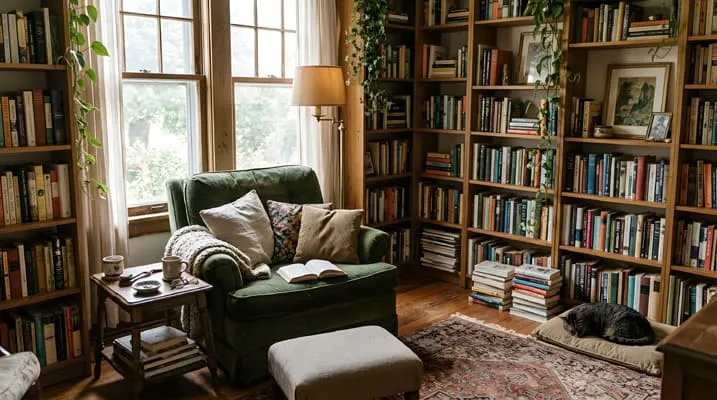
Reading Nook Ideas, Made Your Own
The strongest reading nook ideas come back to three pillars. Comfort gives you a seat and textures you want to stay in.
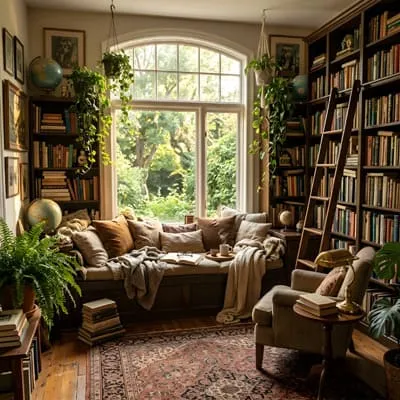
Light protects your eyes and sets the mood. Retreat adds the sound, shelter, and rituals that make the spot feel like yours.
Start small. Pick a corner, test a chair, and place a lamp behind your shoulder.
Read there for a week and adjust. You do not need a large room or a large budget, only a deliberate spot and a little patience.
What does your ideal reading nook look like? Share your ideas in the comments, and explore more lifestyle guides on the blog for ways to make your home calmer and more comfortable.
Important Notice
The information in this article is for informational and educational purposes only and is not a substitute for the evaluation or guidance of a healthcare professional. Always consult a doctor before making any decisions regarding your treatment or diagnosis.

Architect with extensive experience in residential and commercial design, including renovations and modular construction. Love to share information about Architecture, home and lifestyle in this blog.