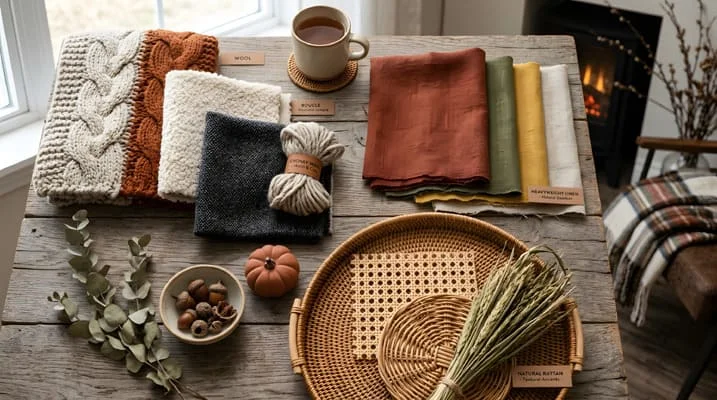
Cozy home textures work by combining materials with different tactile qualities — nubby wool, smooth linen, woven rattan — rather than relying on a single soft fabric throughout a room. This contrast between rough and smooth, heavy and light, is what creates genuine warmth and depth as the weather turns colder.
If your living room already has soft cushions and a throw blanket but still feels somehow flat once the temperature drops, the missing ingredient is usually contrast, not more softness.
Cozy home textures depend on variety, and interior designers are increasingly explicit about this: layering textiles is one of the most effective ways to prepare a home for the cooler months, and the trick is combining fundamentally different materials — nubby wool against smooth linen, a vintage quilt over crisp cotton, aged timber beside upholstery — rather than simply adding more of the same soft fabric, according to seasonal styling guidance reported by Homes & Gardens.
This guide walks through the specific materials that define genuinely cozy texture layering — wool, linen, and rattan chief among them — how to apply the technique room by room, and the contrast principle that keeps a heavily layered space from feeling one-dimensional.
Why Texture Matters More Than Color for Cozy Home Design
Color gets most of the attention in seasonal decorating advice, but texture is what actually determines whether a room feels genuinely warm and inviting once you’re sitting in it rather than just looking at it. A room painted in warm, autumnal tones can still feel cold and uninviting if every surface in it is smooth, hard, or uniformly finished.
Snippet: Cozy home textures rely on tactile contrast — pairing rough materials like wool or bouclé against smooth ones like linen or polished wood — rather than color alone, which is what gives a room genuine warmth you can feel, not just see.
This shift toward texture-first seasonal styling isn’t a minor trend detail. Designers styling high-profile homes for the current season have specifically highlighted combining materials that “shouldn’t go together” — velvet, brass, marble, linen, bouclé, and slubby cotton — as the source of a room’s visual interest, with this layered, textured approach continuing to grow in popularity through autumn and winter 2026, according to design coverage from Homes & Gardens.
The Core Materials: Wool, Linen, and Rattan Explained
Each of these three materials brings a genuinely distinct tactile quality to a room, and understanding what each one contributes helps you layer them deliberately rather than by accident.
| Material | Tactile Quality | Warmth Level | Best Rooms | Care Notes |
|---|---|---|---|---|
| Wool | Nubby, dense | High | Living room, bedroom | Occasional airing, gentle cleaning |
| Linen | Smooth, crisp drape | Moderate (breathable) | Bedroom, dining room | Machine washable, wrinkles naturally |
| Rattan | Woven, structured | Low (visual warmth) | Living room, dining room | Wipe clean, avoid excess moisture |
| Bouclé | Looped, textured | High | Living room, accent chairs | Spot clean, avoid soaking |
| Velvet | Plush, directional pile | High | Living room, dining chairs | Steam to refresh pile, avoid direct sun |
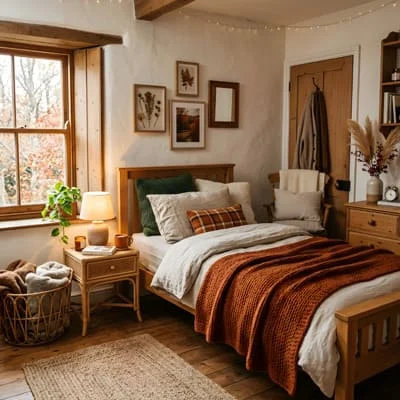
Linen deserves particular attention here, since it’s often assumed to be a purely warm-weather fabric. Its hollow fibers actually function as natural insulators, trapping warmth while still allowing airflow — which is why linen bedding layered beneath a heavier wool or knit throw has become a genuine winter textile upgrade in premium homes this season, rather than staying confined to summer use.
How to Layer Textures Room by Room
Texture layering benefits from a room-specific approach, since each space calls for a different balance of warmth, refinement, and durability.
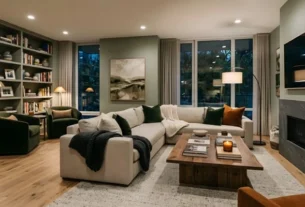
In the living room, combine a wool or bouclé throw over a smoother linen or leather sofa, add a jute or wool rug underfoot, and balance soft textiles with something structured and reflective — a polished metal floor lamp or a wood coffee table with visible grain. This mix of soft-against-hard is what keeps a heavily textured living room from feeling overstuffed.
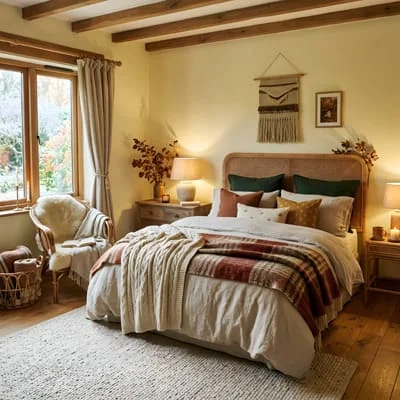
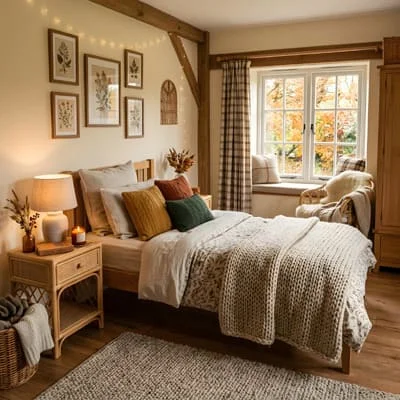
In the bedroom, start with a linen duvet cover for breathable warmth, then layer a mohair or wool throw at the foot of the bed. Mix pillow textiles — cotton, linen, and a touch of embroidered detail — rather than using a single matched set, and add one grounding element, like a vintage wooden nightstand, to keep the softness from feeling excessive.
In the dining room, linen or cotton tablecloths paired with rattan or woven placemats create texture without overwhelming a functional surface, while velvet or upholstered dining chairs introduce softness against an otherwise hard wooden table. A centerpiece in antique glass or ceramic adds one more textural note without competing for attention.
Quick tip: If you’re only making one seasonal textile change this year, start with your bedroom throw. Swapping a flat, single-texture blanket for a chunky knit or bouclé throw layered over existing linen bedding delivers a disproportionately large cozy effect for a relatively small investment.
Creating Contrast: Why Softness Everywhere Falls Flat
The instinct when chasing a cozy look is often to add more of the same — more blankets, more soft cushions, more plush textures throughout. But a room built entirely from soft materials actually reads as flat rather than luxurious, because there’s nothing for the eye or hand to register as different.
Genuine texture layering depends on deliberate contrast: pairing a chunky wool throw against a smooth linen sofa, or setting a soft bouclé chair beside a structured rattan side table. Rich, tactile materials — velvet, mohair, bouclé, wool, and linen — are consistently identified as the defining seasonal fabrics for exactly this reason, but their impact depends on being combined with contrasting textures and finishes rather than layered uniformly across a room, according to seasonal decor trend coverage from Global News.
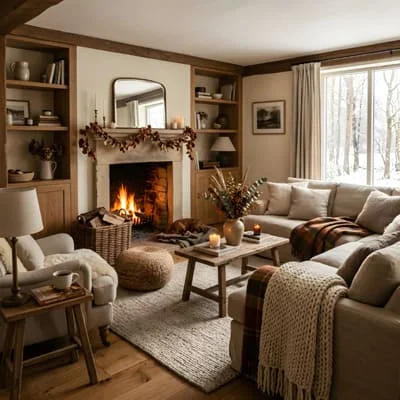
Mixing in darker wood tones — through furniture, frames, or antique pieces — adds another layer of contrast against softer textiles, providing exactly the warmth and visual weight that a room built purely from fabric alone tends to lack.
Common Mistakes When Layering Textures
A handful of habits consistently undermine an otherwise well-intentioned attempt at cozy texture layering.
- Using only one type of soft texture throughout a room, producing a flat effect despite genuine warmth in each individual piece.
- Skipping structured or hard materials entirely, leaving no contrast to make the soft textiles register as luxurious rather than simply present.
- Over-layering a single surface, like a bed piled with so many textiles that none of the individual textures are actually visible or distinct.
- Ignoring care requirements, particularly for wool and velvet, which can lose their tactile quality quickly without proper handling.
- Treating texture as a one-room project, rather than carrying a consistent, though varied, textural language through connected spaces.
Bringing Genuine Warmth Into Your Home This Season
Genuine cozy home textures come down to contrast, not accumulation — pairing wool, linen, rattan, and other tactile materials against each other rather than layering endless soft fabric in a single direction. Start with one room, focus on combining at least two genuinely different textures rather than adding more of the same, and let materials like linen work harder than their warm-weather reputation suggests. If you’ve found a texture combination that’s transformed a room in your own home this season, I’d love to hear about it.

Architect with extensive experience in residential and commercial design, including renovations and modular construction. Love to share information about Architecture, home and lifestyle in this blog.