Last updated on September 14th, 2026 at 05:28 pm
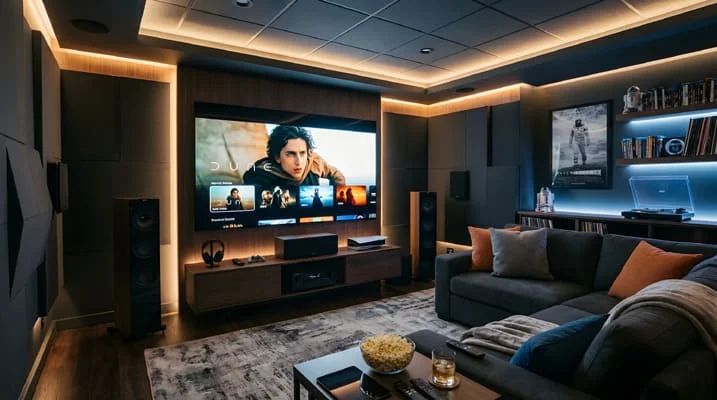
Media rooms have evolved beyond simple home theaters into carefully crafted environments where lighting, acoustics, and spatial layout come together to enhance how we experience audio-visual content. These dedicated spaces respond to the way people actually live—blending comfort, technology, and architectural precision to create immersive, climate-conscious settings. Understanding the nuanced interplay of design elements in modern media rooms helps homeowners and architects deliver spaces that truly elevate entertainment while respecting environmental and human factors.
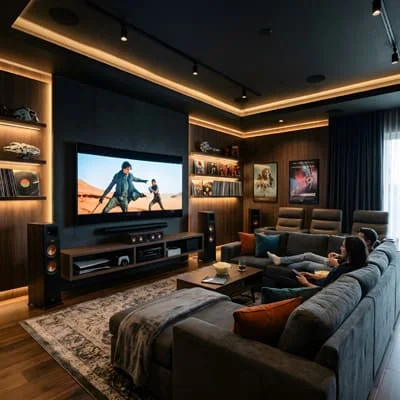
In this article, we explore how thoughtful control of lighting, acoustics, and layout shapes media rooms that are both functional and inviting.
The focus lies on residential applications where architectural intent meets practical living, revealing expert strategies to optimize these spaces without resorting to superficial decoration.
This approach ensures the media room supports prolonged use, ambient comfort, and sound quality, reflecting real-world experience and cutting-edge best practices.
The Core Insights
- Effective media rooms balance natural and artificial lighting to prevent glare and eye strain while maintaining an inviting atmosphere.
- Acoustic treatments tailored to room geometry and materiality significantly enhance sound clarity and minimize unwanted reflections or echoes.
- Spatial layout must accommodate sightlines, speaker placement, and user comfort, integrating circulation without compromising media performance.
- Climate-aware design, including ventilation and thermal control, plays a crucial role in sustaining comfort during extended viewing sessions.
- Modern media rooms require a synthesis of architectural expertise, technology integration, and human-centered design to fully realize their potential.
How Lighting Shapes the Experience in Media Rooms
Lighting in media rooms is not merely functional—it defines the mood, reduces visual fatigue, and influences how content is perceived. Technically, achieving optimal lighting involves layering ambient, task, and accent sources while avoiding direct light on screens. This reduces glare and preserves image contrast. In practice, dimmable LED fixtures with warm color temperature (around 2700K to 3000K) are preferred to create a calm atmosphere that does not compete with screen brightness.
Natural light poses challenges in media rooms, as sunlight introduces uncontrolled glare and reflections.
Architectural strategies such as deep window recesses, blackout curtains, or motorized shades help manage daylight without making the space feel closed off.
From my experience designing residential media rooms, the best results come from combining controlled natural light with carefully positioned artificial lighting that can adapt to different uses, such as casual viewing versus cinematic immersion.
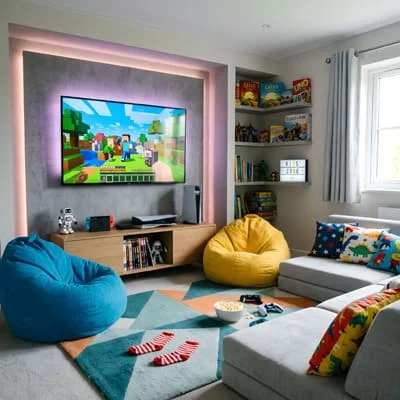
“Lighting in dedicated media rooms must be dynamic—supporting visibility when needed and fading into the background during viewing to prevent distraction and eye strain.”
Sources like the Illuminating Engineering Society emphasize the importance of uniform, indirect lighting to minimize contrast between the screen and surrounding surfaces, which aligns with findings from audiovisual consultants such as AVIXA (AVIXA Standards).
Acoustics and Material Choices for Superior Sound Quality
Acoustics is the cornerstone of any media room, where sound clarity, bass response, and echo control determine viewer immersion. Formally, room acoustics involves managing sound reflections, absorption, diffusion, and isolation to reduce reverberation time (RT60) to optimal levels—usually between 0.3 to 0.5 seconds for home theaters.
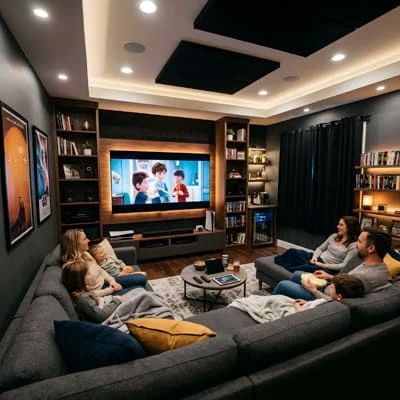
Common acoustic challenges include flutter echoes in parallel walls and bass buildup in corners.
Acoustic panels, bass traps, and diffusers strategically placed according to the room’s geometry address these issues.
Materials like dense fiberglass or mineral wool offer effective absorption without compromising aesthetics. In practice, integration of acoustic treatments behind fabric panels or custom cabinetry balances function with design.
One practical lesson from installations is that untreated hard surfaces, such as glass or bare drywall, can degrade sound quality quickly. Incorporating multi-layered wall constructions and decoupled ceilings enhances sound isolation, preventing noise leakage and external disturbances. The Acoustical Society of America provides technical guidelines supporting these approaches (ASA Resources).
“The difference between a good media room and a great one often lies in invisible acoustic details that stop sound from bouncing unpredictably.”
Layout Considerations: Aligning Comfort and Performance
A well-planned spatial layout is critical for media rooms to function as intended. This means positioning seating with clear sightlines to the screen, arranging speakers for balanced audio coverage, and allowing comfortable movement without disrupting the experience.
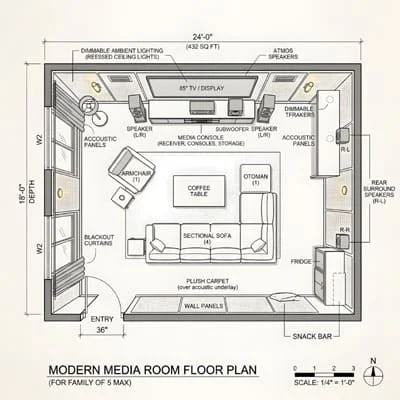
The room’s shape and dimensions influence speaker placement and can either mitigate or exacerbate acoustic issues.
From a human-centered perspective, seating ergonomics and distance from the screen directly affect engagement and fatigue. The Society of Motion Picture and Television Engineers (SMPTE) recommends sitting at a distance approximately 1.5 to 3 times the screen height for optimal viewing. Additionally, providing varied seating options, such as tiered levels or recliners, can accommodate different uses and users.
Circulation paths must avoid crossing sightlines or obstructing speakers. In a few residential projects I’ve reviewed, poor layout decisions compromised sound fields or forced viewers into uncomfortable positions. Integrating storage and equipment access within the layout preserves neatness and usability without clutter.
Climate Awareness and Environmental Control in Media Rooms
Climate control is often overlooked but crucial for media rooms, where prolonged sessions generate heat from equipment and occupants. Maintaining thermal comfort without noise intrusion requires carefully designed HVAC (Heating, Ventilation, and Air Conditioning) systems that are quiet, efficient, and discreet.
Passive design strategies—such as insulation, airtight construction, and moisture control—reduce HVAC loads and improve indoor air quality. Mechanical ventilation with sound attenuators prevents external noise from seeping in. Additionally, equipment racks should be ventilated or cooled separately to avoid overheating.
In practice, media rooms that neglect climate control can become uncomfortable quickly, discouraging use. The U.S. Department of Energy’s guidelines on residential ventilation (DOE Ventilation) emphasize balancing air exchange rates with noise reduction, which aligns with best practices in media room design.
“A media room’s usability is directly tied to its thermal and acoustic environment—ignoring climate control compromises both comfort and performance.”
Frequently Asked Questions (FAQ)
What Defines a Media Room Compared to a Traditional Home Theater?
A media room is a versatile space designed for various audio-visual activities beyond just watching movies, such as gaming, streaming, or casual TV viewing. Unlike traditional home theaters, which prioritize cinema-level sound and image quality often in dedicated darkened rooms, media rooms balance entertainment with everyday usability, incorporating flexible lighting, seating, and acoustics that adapt to multiple functions.
How Can I Control Natural Light in a Media Room Without Making It Feel Closed Off?
Effective control of natural light involves using architectural elements like deep window recesses, motorized blackout shades, or layered curtains that allow adjustment depending on the time of day. Incorporating translucent window films can reduce glare while maintaining some daylight. The goal is to preserve a connection to the outside without sacrificing screen visibility or introducing unwanted reflections.
Which Acoustic Treatments Are Most Effective for a Small Residential Media Room?
For smaller spaces, combining broadband absorbers (such as fiberglass panels) on walls and ceilings with bass traps in corners addresses common acoustic problems. Diffusers can scatter sound to prevent dead spots, improving clarity. Treatments should be placed at first reflection points, directly behind speakers, and where flutter echoes occur. Custom treatments wrapped in fabric help integrate these solutions aesthetically.
How Important is Seating Arrangement in Media Room Design?
Seating arrangement is critical because it affects sightlines, audio quality, and user comfort. Seating should be positioned at an ideal distance from the screen—generally 1.5 to 3 times the screen height—and aligned with speaker layouts for balanced sound. Including tiered seating or adjustable chairs can enhance the experience for multiple users, ensuring everyone has an unobstructed view and comfortable posture.
What Role Does HVAC Play in Maintaining a Media Room’s Comfort?
HVAC systems regulate temperature, humidity, and air quality, directly impacting comfort and equipment performance. Quiet, efficient ventilation prevents overheating from electronics and minimizes noise that could interfere with audio experiences. Proper insulation and airtight construction reduce energy use and external noise infiltration, making climate control an essential component of a functional media room.

Architect with extensive experience in residential and commercial design, including renovations and modular construction. Love to share information about Architecture, home and lifestyle in this blog.