A pet-friendly garden combines non-toxic plant choices, durable and paw-safe surfaces, and a layout that gives animals room to move without damaging beds or borders. Getting all three right lets your garden stay genuinely beautiful and genuinely usable by the animals actually living in it, rather than choosing between the two.
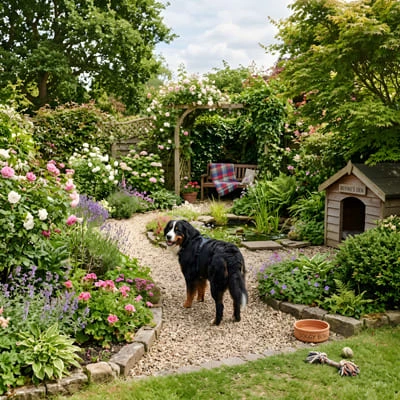
If you’ve ever come home to a shredded flower bed, a dog-sized trench through your mulch, or a worried search for whether a plant your cat just chewed is actually dangerous, you already know the tension. Gardens and pets don’t always coexist gracefully by accident — it takes deliberate design.
Pet ownership has grown substantially in recent years, and the American Veterinary Medical Association estimates that dogs and cats now live in a majority of American households, which means a meaningful share of every residential garden project now has to account for an animal that will actually use the space, not just admire it.
A genuinely pet-friendly garden isn’t a scaled-back or less attractive version of a normal garden. It’s one where plant selection, surface material, and layout have all been chosen with an honest understanding of how a dog or cat actually moves through and interacts with outdoor space. This guide walks through which plants are safe, which surfaces hold up to real daily use, and how to lay out a garden that protects both your planting and your pet.
Why Pet-Friendly Design Requires More Than “Avoiding Toxic Plants”
Most pet-friendly garden advice stops at a list of plants to avoid. That’s an important starting point, but it addresses only one part of the actual problem.
A truly pet-friendly garden also accounts for physical durability — surfaces that hold up to digging, running, and repeated foot traffic — and layout decisions that reduce the temptation or opportunity for an animal to damage the parts of the garden that genuinely can’t take that wear. Toxicity is a safety issue; durability and layout are design issues, and a garden that only solves the first while ignoring the second still ends up damaged within a season.
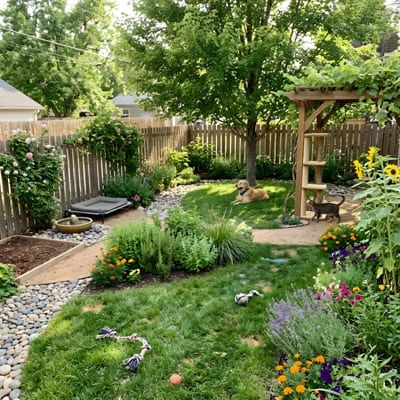
Pet-Safe vs. Toxic Plants: What to Know Before You Plant
Plant toxicity to pets varies considerably by species, and even within a single plant, different parts can carry different levels of risk. The comparison below covers common garden plants worth knowing about before finalizing a planting plan.
| Plant | Toxicity to Dogs/Cats | Common Symptoms if Ingested | Safe Alternative |
|---|---|---|---|
| Lily (true lilies) | Highly toxic to cats | Kidney failure (cats) | Snapdragon, marigold |
| Sago palm | Highly toxic | Liver failure, vomiting | Areca palm |
| Oleander | Highly toxic | Cardiac issues | Camellia |
| Tulip bulbs | Moderately toxic | Vomiting, drooling | Non-bulb spring annuals |
| Rosemary | Non-toxic | — | Already pet-safe |
| Marigold | Non-toxic (mildly irritating) | Mild stomach upset if eaten in quantity | Already pet-safe |
| Sunflower | Non-toxic | — | Already pet-safe |
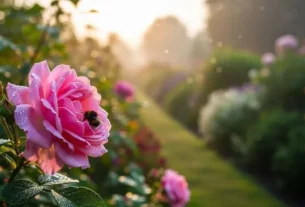
| Roses | Non-toxic (thorns are the real risk) | Physical injury from thorns | Already pet-safe |
Quick tip: Always check a plant against the ASPCA Animal Poison Control Center’s toxic and non-toxic plant lists before adding it to a garden your pet has regular access to — toxicity varies by species, and cats in particular react far more severely to certain plants, like true lilies, than dogs do.
Beyond the plants themselves, physical hazards matter just as much. Thorny roses, sharp ornamental grasses, and low-hanging branches at nose or eye height can cause real injury even when the plant itself isn’t toxic — something worth factoring into placement, not just species selection.
Choosing Durable, Paw-Safe Surfaces
Surface material determines how well a garden’s hardscape holds up to daily pet traffic, and how comfortable that surface actually is on paws in both hot and cold weather.
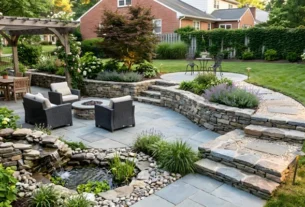
Natural stone and concrete pavers tend to perform well, since they’re durable against digging and claws and, in lighter colors, don’t retain the intense heat that darker stone or unsealed concrete can hold on a sunny afternoon — a real consideration for paw comfort in summer.
Mulch works well in planting beds but should be chosen carefully: cocoa mulch is genuinely toxic to dogs if ingested, while pine or cedar mulch is a safer, widely recommended alternative. Artificial turf and well-maintained natural grass both tolerate moderate pet use, though grass in high-traffic zones — along fence lines, near gates — often thins out faster than expected and may need reseeding or a hardier grass variety.
Loose gravel deserves a specific caution: while excellent for drainage and low maintenance in a purely ornamental context, sharp or angular gravel can be uncomfortable and occasionally injurious to paw pads, so rounded pea gravel is generally the safer choice in any zone your pet actually walks through regularly.
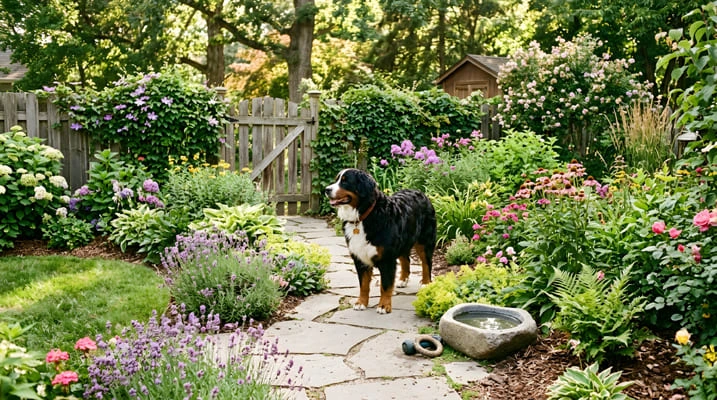
Layout Strategies That Protect Both Your Garden and Your Pet
Layout is where most of the genuine, lasting durability problems get solved — or created — long before a single plant goes into the ground.
- Establish clear pathways that match your pet’s actual, established routes through the yard, rather than fighting an existing worn path with new planting that will simply get trampled again.
- Raise vulnerable beds using low retaining edges or raised planters, physically separating delicate plants from ground-level traffic.
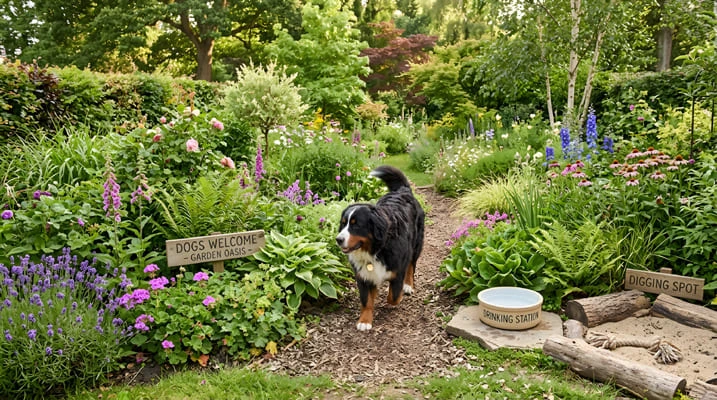
- Designate a genuine open zone for running and play, sized generously enough that your pet doesn’t need to cut through planted areas to get adequate space.
- Use physical barriers thoughtfully — low fencing or dense, sturdy shrub borders — around beds that need real protection, rather than relying on a pet simply learning to avoid them.
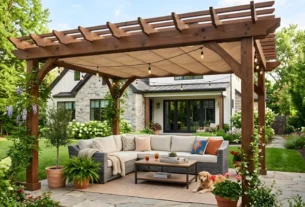
- Provide shade and a water source within the usable zone, since a pet without a comfortable resting spot is more likely to dig one, often directly into a planting bed.
Landscape design guidance from the American Society of Landscape Architects consistently identifies zoning — dividing outdoor space into clearly defined functional areas — as one of the most effective tools for reconciling competing uses within a single yard, and a pet-friendly garden is a direct application of that same principle.
Common Mistakes When Designing a Pet-Friendly Garden
A handful of recurring issues account for most of the pet-and-garden conflicts I see in residential projects.
- Choosing plants purely for appearance, without checking toxicity against the specific pet species actually living in the home.
- Ignoring an existing worn path, planting directly over a route your pet will keep using regardless of what’s there.
- Using cocoa mulch, a genuinely toxic material for dogs despite being widely sold as a garden mulch.
- Skipping shade and rest areas, which increases digging behavior born out of a pet trying to create its own cool, comfortable spot.
- Assuming one barrier type works everywhere, when a small, energetic dog and a calm senior cat need very different levels of physical containment around vulnerable beds.
A Garden That Works for Everyone in the Household
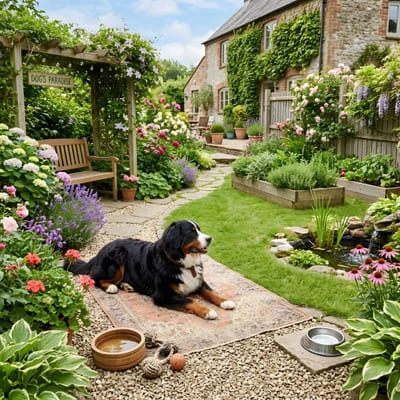
A genuinely pet-friendly garden isn’t a smaller or less ambitious version of a normal one — it’s a garden designed with an honest understanding of how an animal actually experiences and moves through outdoor space.
Choose plants that are safe for your specific pet, pick surfaces that hold up to real daily wear, and lay out the yard around your pet’s actual habits rather than fighting them.
Start with a plant-by-plant toxicity check and one clearly defined open play zone, and the rest of the design tends to fall into place. If you’ve solved a specific pet-and-garden challenge in your own yard, I’d love to hear how you approached it.
Important Notice: This content is for informational purposes only and is not a substitute for consulting a veterinarian. Every animal is unique and requires professional evaluation, particularly regarding plant toxicity and any symptoms of ingestion.

Architect with extensive experience in residential and commercial design, including renovations and modular construction. Love to share information about Architecture, home and lifestyle in this blog.