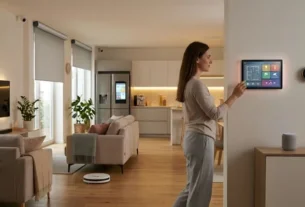
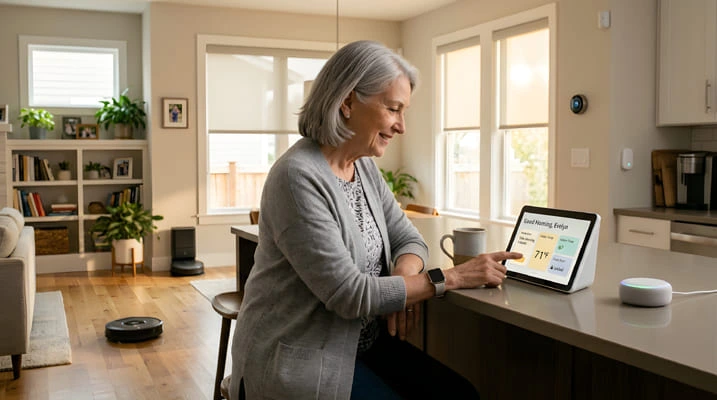
Integrating a smart home into daily life is no longer a futuristic concept but a practical reality that enhances comfort, security, and efficiency. A smart home refers to a residence equipped with interconnected devices and systems that allow for automation and remote control, often via smartphones or voice commands. Understanding what a smart home entails and why it matters can transform how individuals interact with their living spaces.
This article explores the foundational aspects of a smart home, its design considerations—especially for senior-friendly environments—key technologies involved, and the real-world benefits and limitations. Whether you’re considering implementing smart technologies or just curious about their impact, this guide offers a clear, expert-driven overview to navigate the complexities of smart living.
The Essentials of Smart Home Living
- A smart home integrates devices such as lighting, climate control, security, and entertainment into a unified, automated system accessible remotely or through AI assistants.
- Senior-friendly smart homes focus on accessibility, safety, and simplicity, adapting technology to support aging in place with minimal barriers.
- Practical applications of smart homes include energy savings, enhanced security, and improved quality of life through customization and proactive monitoring.
- Despite broad benefits, smart home adoption faces challenges such as privacy concerns, interoperability issues, and upfront costs that must be weighed carefully.
- Leading institutions like the National Institute on Aging and research from MIT emphasize that successful smart home design balances technology with human factors, especially for seniors.
How Smart Home Technology Transforms Living Environments
Smart home technology encompasses a variety of devices and systems connected through networks to automate and control household functions. These include smart thermostats, lighting controls, security cameras, door locks, and voice-activated assistants like Amazon Alexa or Google Assistant. The integration enables seamless communication between devices, often managed via centralized hubs or smartphone applications.
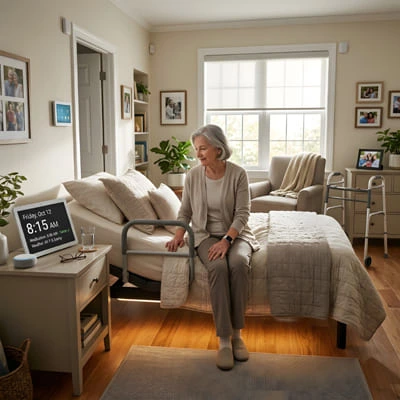
At its core, a smart home improves convenience, energy efficiency, and security.
For example, smart thermostats adjust heating or cooling based on occupancy patterns, reducing energy consumption while maintaining comfort.
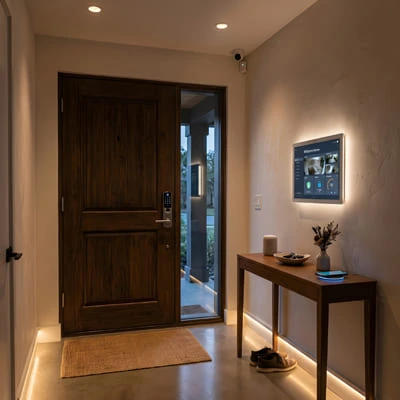
Smart locks provide keyless entry, with remote monitoring to detect unauthorized access. These systems collect data in real time, allowing predictive adjustments and personalized experiences.
“A smart home is not just about technology; it’s about creating a living space that adapts intelligently to human needs and preferences, enhancing autonomy and safety without imposing complexity.”
Technologies like Zigbee, Z-Wave, and Wi-Fi form the backbone of device connectivity, while cloud computing and AI algorithms enable learning and automation.
This technological foundation allows smart homes to evolve continuously as they gather usage data.
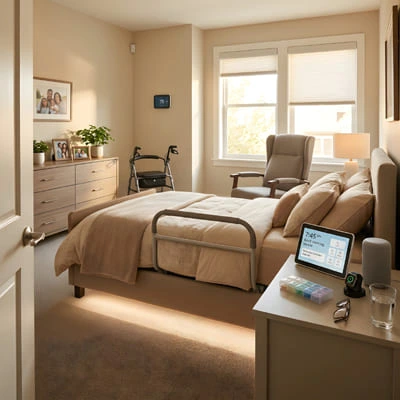
Senior-Friendly Architecture and Smart Home Design Features in Retirement Homes
Designing smart homes for seniors requires more than installing smart gadgets—it demands thoughtful architectural and technological integration that prioritizes accessibility and safety. Retirement homes equipped with smart technologies can significantly improve seniors’ independence while reducing caregiver burdens.
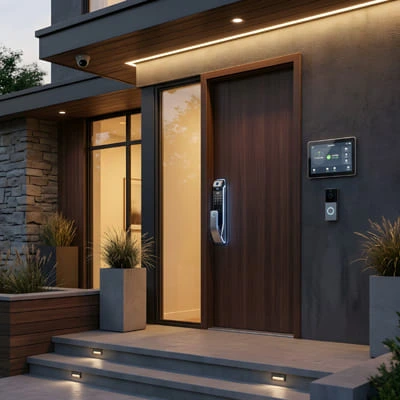
Key features include voice-activated systems for lighting, climate, and emergency alerts, minimizing the need for physical interaction with devices.
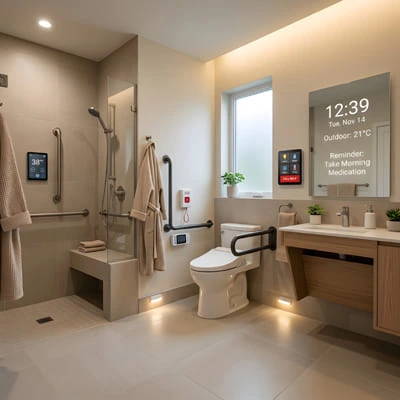
Fall detection sensors, automatic door openers, and adaptive lighting enhance safety and ease navigation.
These technologies must be intuitive, with simplified interfaces and redundancy to compensate for potential cognitive or physical limitations.
In practice, some seniors initially resist technology due to unfamiliarity. However, once familiar, they report greater confidence in managing their environment. Institutions like AARP emphasize that smart home design for seniors should involve user-centered testing and customization to meet varied needs.
Examples of Effective Senior-Friendly Smart Features
- Automated medication reminders integrated with smart speakers.
- Remote monitoring systems that alert caregivers only in emergencies.
- Adaptive HVAC systems that maintain optimal temperatures without manual settings.
- Emergency response systems linked to wearable devices.
“The success of smart homes for seniors hinges on blending technology with empathetic design, ensuring that innovations empower rather than overwhelm.”
Key Entities Driving the Smart Home Ecosystem
The smart home landscape involves a variety of stakeholders and technologies that shape its development and adoption:
- IEEE: Establishes communication standards ensuring device interoperability.
- National Institute on Aging (NIA): Provides guidelines for aging-friendly smart environments.
- Amazon and Google: Major providers of voice assistants that act as smart home control hubs.
- Zigbee Alliance: Promotes a common wireless protocol to connect devices from different manufacturers.
- Energy Star: Certifies energy-efficient smart appliances contributing to sustainability goals.
- HealthTech companies: Integrate medical monitoring and emergency response into smart home systems.
Understanding these entities helps in selecting reliable technologies and anticipating future trends, especially as privacy regulations and cybersecurity measures evolve.
Real-World Benefits and Limitations of Smart Homes
Smart homes deliver measurable benefits, including energy savings—studies suggest up to a 15% reduction in utility bills through intelligent HVAC and lighting controls. Enhanced security reduces burglary risks by enabling real-time monitoring and alerts. For seniors, smart homes delay institutionalization by supporting independent living safely.
However, these systems are not without drawbacks.
Privacy concerns arise from continuous data collection and cloud storage.
Interoperability issues mean devices from different brands may not communicate seamlessly, causing frustration.
Initial costs and technical support needs can deter adoption, especially among older adults.
“Smart home technology excels when customized appropriately, but one-size-fits-all solutions often fail to meet diverse user requirements and environmental conditions.”
Adopting a smart home requires evaluating these trade-offs carefully, ideally with professional consultation and user training to maximize benefits and minimize risks.
Emerging Trends in Smart Home Innovation and Future Outlook
Advancements in AI, edge computing, and 5G connectivity are redefining smart home capabilities. Edge computing reduces latency by processing data locally, enhancing responsiveness and privacy. AI-driven predictive analytics anticipate user needs, adjusting environments proactively.
Integration with healthcare technologies is expanding, enabling remote health monitoring and telemedicine within smart homes.
Additionally, smart grids and renewable energy integration allow homes to optimize energy use dynamically, supporting sustainability.
Despite these innovations, accessibility remains a critical focus.
Designing with universal access ensures smart homes serve all demographics, especially seniors and people with disabilities.
Industry collaborations and regulatory frameworks are evolving to address these challenges.
Practical Implications for Homeowners and Retirees
- Investing in modular smart systems allows gradual adoption tailored to personal needs.
- Regular software updates and cybersecurity measures are essential to maintain system integrity.
- Engaging with certified professionals ensures compliance with safety and accessibility standards.
As technology matures, smart homes will increasingly blend into everyday life, offering enhanced autonomy and quality of living across all age groups.
Frequently Asked Questions (FAQ)
What Defines a Smart Home and How Does It Operate?
A smart home is a residence equipped with interconnected devices that automate and control household functions such as lighting, climate, security, and entertainment. These devices communicate via networks, often managed through a central hub or smartphone app, allowing users to monitor and adjust settings remotely or through voice commands.
How Can Smart Homes Be Adapted to Support Seniors in Retirement Living?
Smart homes for seniors incorporate user-friendly features like voice-activated controls, emergency alert systems, fall detection sensors, and adaptive lighting. These technologies focus on accessibility, safety, and ease of use, helping seniors maintain independence while reducing risks associated with aging.
What Are the Main Challenges in Implementing Smart Home Technology?
Challenges include privacy and data security concerns, compatibility issues among devices from different manufacturers, upfront installation costs, and the learning curve for users unfamiliar with technology. Addressing these requires careful planning, professional support, and selecting interoperable systems.
Which Organizations Influence Smart Home Standards and Safety?
Standards and safety in smart homes are shaped by organizations like IEEE, which develops communication protocols; the National Institute on Aging, which guides senior-friendly design; and industry alliances like the Zigbee Alliance, which promote device interoperability and energy efficiency certifications such as Energy Star.
What Future Trends Will Shape the Evolution of Smart Homes?
Future smart homes will leverage AI for predictive automation, edge computing for faster and more private data processing, and 5G for seamless connectivity. Integration with healthcare and renewable energy systems will also grow, promoting sustainability and enhanced well-being, especially for aging populations.

Architect with extensive experience in residential and commercial design, including renovations and modular construction. Love to share information about Architecture, home and lifestyle in this blog.