Last updated on September 14th, 2026 at 05:26 pm
In traditional Japanese homes, the interplay of furniture, doors, ceilings, and traditional objects forms the backbone of a minimalist yet profoundly functional lifestyle. These elements are not mere decorations; they embody centuries of architectural wisdom aimed at harmonizing human living with nature and climate. Understanding how these components work together reveals why Japanese interiors feel calm, intentional, and sustainable in ways that go beyond aesthetics.
This article explores the role of furniture, doors, ceilings, and traditional objects within the Japanese lifestyle, focusing on their architectural significance and human-centered design. It will clarify how these elements adapt to climate, support slow living, and create balanced, flexible spaces that accommodate both daily life and cultural rituals.
The Essentials of Japanese Interior Elements
- Japanese furniture emphasizes multifunctionality and adaptability, often designed to be lightweight and movable to optimize space usage.
- Sliding doors, or fusuma and shoji, regulate light, airflow, and privacy, reflecting a deep understanding of seasonal climate variations.
- Ceilings in traditional homes use natural materials and construction methods that enhance ventilation and thermal comfort without relying on technology.
- Traditional objects serve both utilitarian and symbolic roles, connecting inhabitants to cultural heritage while supporting practical needs.
- This integration of elements exemplifies a human-centered and climate-aware architectural philosophy that prioritizes intentional and slow living.
How Furniture, Doors, Ceiling, and Traditional Objects Shape Japanese Minimalist Homes
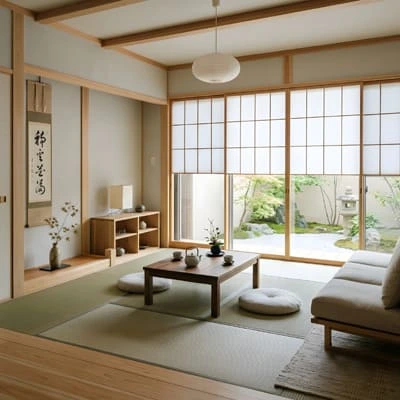
The Japanese approach to interior design is rooted in the concept of ma, or the conscious use of empty space, which allows furniture, doors, ceilings, and traditional objects to perform multiple roles in a restrained environment. Furniture in Japanese homes is typically low, modular, and portable—tatami mats, zabuton cushions, and chabudai tables exemplify this. They support various activities without cluttering the space permanently.
Doors, mainly sliding types like fusuma (opaque panels) and shoji (translucent paper panels), serve more than just functional separation. They manage light and airflow delicately, adapting interior spaces to seasonal changes. These doors also blur the boundaries between rooms and nature, fostering a fluid spatial experience uncommon in Western homes.
Ceilings, often crafted from wood or bamboo, contribute to natural ventilation strategies.
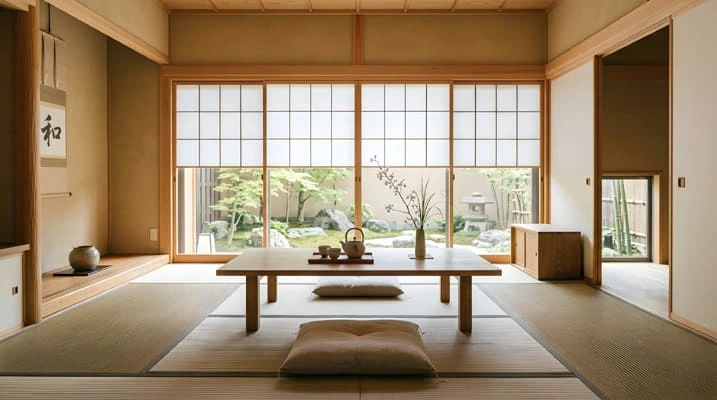
Their height and materials help regulate indoor temperature by promoting airflow and preventing heat buildup during humid summers.
This passive climate control aligns with sustainable building practices long before modern HVAC systems existed.
Traditional objects, such as ikebana flower arrangements, bonsai, and tokonoma alcoves, provide subtle focal points that anchor the design to cultural identity and mindfulness.
These items are intentionally sparse but meaningful, reinforcing a lifestyle that values quality over quantity.
“The Japanese interior is a testament to how thoughtful design can merge climate sensitivity with human needs, creating spaces that breathe and adapt without excess.” — Architectural Digest Japan, 2023
The Technical Anatomy of Japanese Furniture and Its Role in Daily Life
Furniture in Japanese homes is defined by simplicity and mobility. The core pieces—tatami mats, futons, chabudai tables, and tansu chests—are designed with lightweight materials such as wood and rice straw. This enables easy rearrangement, which aligns with the cultural practice of transforming rooms throughout the day for different purposes.
From a technical standpoint, tatami mats (woven straw mats approximately 90 cm by 180 cm) not only serve as flooring but also regulate humidity by absorbing and releasing moisture.
Futons can be folded and stored away, promoting a clutter-free environment that supports mental clarity and flexibility.
In practice, this multifunctionality means a single room can serve as a dining area, living room, and bedroom, reducing the need for excess furniture.
This adaptability conserves resources and space, reflecting Japan’s historical constraints of limited land and high population density.
The Functionality and Climate Adaptation of Traditional Japanese Doors
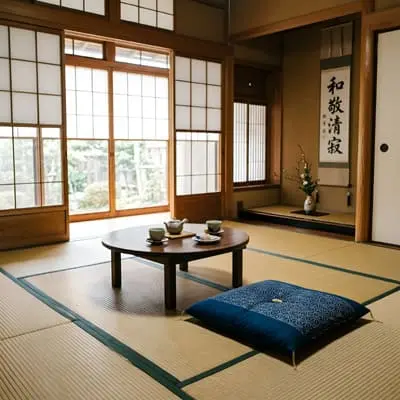
Sliding doors like fusuma and shoji are engineered for optimal climate responsiveness. Fusuma, made of wood frames covered with opaque paper or cloth, provide insulation and privacy, while shoji, consisting of translucent paper on wooden lattice frames, allow diffused natural light to enter.
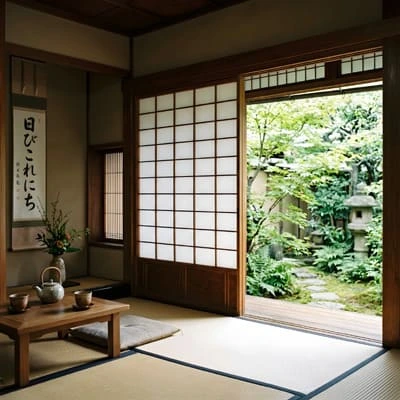
These doors facilitate cross-ventilation, crucial in Japan’s humid summers, by enabling controlled airflow between rooms and the outdoors.
Their sliding mechanism also minimizes the space required to open and close doors, an important factor in compact homes.
Moreover, the materials used are breathable and sustainable, contributing to indoor air quality. Modern architects often study these traditional systems for inspiration when designing energy-efficient buildings that reduce reliance on mechanical cooling.
“Sliding doors in traditional Japanese architecture exemplify how form follows function, balancing privacy, light, and ventilation seamlessly.” — Journal of Architectural Research, 2022
Ceiling Design: Natural Materials and Passive Ventilation in Traditional Homes
The ceiling in a traditional Japanese residence is not merely a cover but an active participant in climate control. Constructed from wood, bamboo, or woven reeds, ceilings are often vaulted or slightly raised, allowing hot air to rise and escape through vents or eaves.
This passive ventilation system reduces indoor humidity and temperature without electricity. The choice of natural, breathable materials further enhances air circulation and prevents mold growth, which is a common issue in Japan’s wet climate.
Ceiling height and structure vary depending on the region and seasonality, demonstrating an architectural responsiveness to local climate conditions. This design strategy underscores how traditional homes integrate environmental awareness with human comfort.
The Cultural Significance and Practicality of Traditional Objects in Japanese Interiors
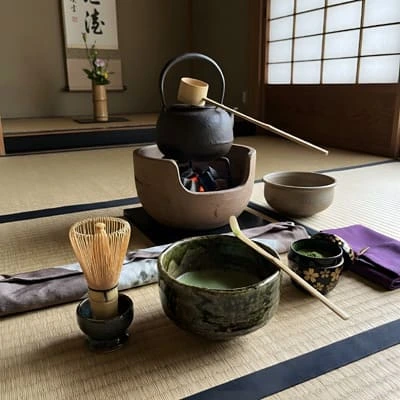
Traditional objects in Japanese homes serve dual roles: they are practical tools and cultural artifacts. Items such as the tokonoma (alcove for art display), kakejiku (hanging scrolls), and tea ceremony utensils are curated to reflect the passing of seasons and aesthetic philosophies like wabi-sabi (beauty in imperfection).
These objects are intentionally minimal to avoid distraction, fostering mindfulness and tranquility.
They also connect the inhabitants to nature and tradition, reinforcing a lifestyle that values intentionality and presence.
Practically, many traditional objects are designed for longevity and repairability, contrasting sharply with disposable consumer culture.
This sustainability ethos aligns with Japan’s broader architectural principles of slow living and respect for materials.
Applying Japanese Principles to Contemporary Residential Design
Adopting Japanese concepts of furniture, doors, ceilings, and traditional objects in modern homes requires understanding their underlying principles rather than mere replication.
The focus should be on flexibility, climate responsiveness, and cultural intentionality.
Designers and homeowners can incorporate sliding partitions to create adaptable spaces, use natural materials for ceilings and flooring to improve indoor climate, and select furniture that supports multifunctional living. Integrating traditional objects with meaning can enrich the environment without clutter.
However, it is important to acknowledge that this approach works best in contexts valuing slow, mindful living and may not suit fast-paced urban lifestyles without adaptation. The success of these principles depends on thoughtful implementation grounded in local climate and cultural needs.
Frequently asked question (FAQ)
What Materials Are Commonly Used for Traditional Japanese Furniture?
Traditional Japanese furniture primarily uses natural materials such as wood, bamboo, and rice straw. Tatami mats, for example, are made of woven rice straw that regulates humidity, while chabudai tables and tansu chests utilize lightweight woods like cedar or cypress. These materials support mobility, sustainability, and climate responsiveness in the home.
How Do Sliding Doors Contribute to Climate Control in Japanese Homes?
Sliding doors like fusuma and shoji regulate airflow and light within Japanese homes. Fusuma provides insulation and privacy, while shoji allows soft, diffused sunlight to enter. Their sliding mechanism maximizes space efficiency and facilitates cross-ventilation, which is essential for managing humidity and temperature in Japan’s varied climate.
Why Are Ceilings Important in Traditional Japanese Architecture?
Ceilings in traditional Japanese homes are constructed with natural materials and designed to aid passive ventilation. Their height and structure allow hot, humid air to rise and escape, reducing indoor moisture and heat without mechanical systems. This contributes to healthier indoor environments and energy efficiency aligned with sustainable design.
What Role Do Traditional Objects Play Beyond Decoration?
Traditional objects in Japanese interiors carry cultural and practical significance. They embody values like mindfulness and seasonal awareness while serving functional roles in daily life. Items such as tokonoma alcoves or tea utensils connect inhabitants to heritage, promoting a calm and intentional living atmosphere.
Can Japanese Minimalist Design Principles Be Applied Outside Japan?
Yes, but with adaptations. Japanese minimalist principles emphasize flexibility, climate responsiveness, and cultural intentionality, which can inspire global design. However, success depends on tailoring these elements to local climate, lifestyle, and cultural context to maintain authenticity and functionality.

Architect with extensive experience in residential and commercial design, including renovations and modular construction. Love to share information about Architecture, home and lifestyle in this blog.