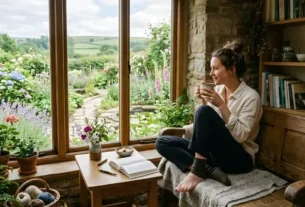
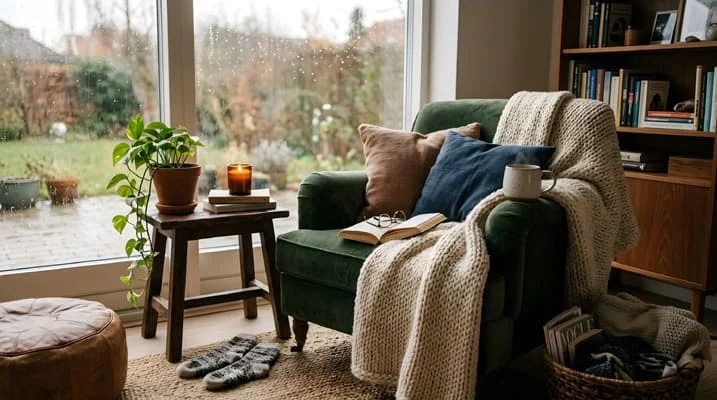
Hygge at home means creating spaces and rituals built around genuine warmth, comfort, and connection — soft lighting, natural textures, and unhurried togetherness — rather than simply decorating with candles and blankets. It’s a Danish approach to daily life that treats coziness as a deliberate practice, not just an aesthetic.
If you’ve watched Denmark top global happiness rankings year after year and wondered what a small, cold, high-tax country is doing right, hygge is a genuine part of the answer. Denmark placed third among 155 countries in the 2026 World Happiness Report, continuing a run of consistently top-tier rankings, and researchers who study Danish wellbeing point specifically to hygge — the cultural practice of intentional coziness and connection — as a meaningful contributor to that sustained satisfaction, not a byproduct of it.
Hygge at home isn’t a decorating trend you can buy your way into with the right candles and throw blankets, though those genuinely help. This guide walks through what hygge actually means, the materials and rituals that define it, and how to bring it into your own home through the colder months ahead.
What Hygge Actually Means (Beyond “Cozy”)
Hygge, pronounced roughly “hoo-gah,” resists a clean English translation, which is part of why it’s so often reduced to a simplified “cozy” in casual use. A more accurate definition, from Meik Wiking, CEO of Denmark’s Happiness Research Institute, describes hygge’s key ingredients as togetherness, relaxation, indulgence, presence, and comfort — a genuinely broader concept than physical coziness alone.
Snippet: Hygge is a Danish concept often translated as “intentional intimacy” — the practice of creating safe, warm, unhurried moments of connection and comfort, whether alone or with others, rather than simply describing a cozy physical space.
That distinction matters practically.
A beautifully decorated room lit with candles and filled with soft textiles isn’t genuinely hygge if it’s experienced rushed, alone with a phone, or as a backdrop for a photo rather than a lived moment. Hygge requires both the physical setting and a genuine quality of presence within it.

The Materials and Textures That Define Hygge at Home
Physical environment still does real work in supporting hygge, even though it’s not the whole concept. Certain materials and sensory qualities consistently show up in genuinely hygge-inspired spaces.
| Element | Sensory Quality | Where It Works Best |
|---|---|---|
| Candles | Warm, flickering, soft glow | Living room, dining table, bathroom |
| Wool and sheepskin | Nubby, dense warmth | Throws, socks, seating |
| Blond wood | Light, natural, warm-toned | Furniture, flooring, shelving |
| Woven textiles | Tactile, handmade quality | Blankets, cushions, rugs |
| Warm lighting | Low, amber-toned illumination | Table lamps, string lights |
| Hot drinks and pastries | Comforting, sensory ritual | Shared or solitary moments |
Winter is considered the most genuinely hygge time of year, and the classic sensory palette — candles, nubby woolens, shearling slippers, woven textiles, and blond wood — appears consistently in descriptions of Danish home life through the coldest months, according to reporting on hygge culture from WFAE, which drew on interviews with Danish happiness researchers and cultural writers covering the concept’s global popularity.
Creating Hygge Rituals, Not Just Hygge Decor
The physical materials only support hygge fully when paired with genuine, unhurried rituals — this is the piece most decor-focused coverage of the trend tends to skip entirely.
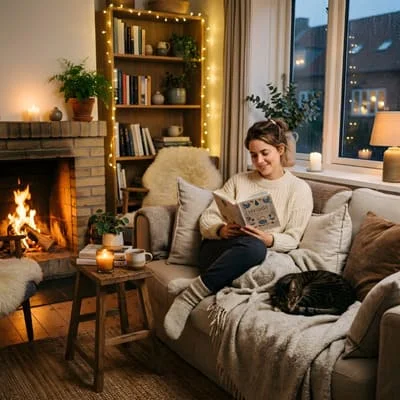
A hygge ritual doesn’t need to be elaborate. Sharing a hot drink with someone without a phone nearby, lighting a candle specifically to mark the transition from a working day into an evening, or taking a slow walk in cold air before returning to a warm home all qualify, since the defining quality is genuine presence rather than any particular activity.
Hygge can also happen alone — reading by lamplight, or simply sitting with a warm drink and no other agenda, counts just as fully as a shared gathering.
Quick tip: If you’re new to hygge, start by choosing one small daily moment to protect deliberately — a morning coffee before checking your phone, or an evening candle lit at the same time each night. Consistency matters more than scale in building a genuine hygge practice.
Room-by-Room Ways to Bring Hygge Into Your Home
Applying hygge principles room by room helps translate the concept from an abstract feeling into concrete, achievable changes.
- Living room: Layer warm lighting sources — lamps rather than overhead lighting — and add a genuinely soft throw and cushion in natural materials like wool or sheepskin.
- Bedroom: Choose warm, low lighting for evening hours and prioritize natural, breathable textiles for bedding to support both comfort and genuine rest.
- Kitchen and dining area: Keep a kettle or pot ready for warm drinks, and consider a small ritual around a shared meal or hot beverage without screens present.
- Bathroom: Candles and warm lighting transform a purely functional space into a genuine moment of unhurried care, particularly during a bath or evening routine.
- Entryway: A warm, welcoming first impression — soft lighting, a place to sit while removing shoes — sets the tone for the hygge quality of the rest of the home.
Common Misconceptions About Hygge
A few persistent misunderstandings shape how hygge gets discussed, often reducing it to something narrower than it actually is.
The assumption that hygge is purely a decorating aesthetic — candles and blankets alone — misses the genuine presence and connection at its core, which is what actually distinguishes it from ordinary coziness.
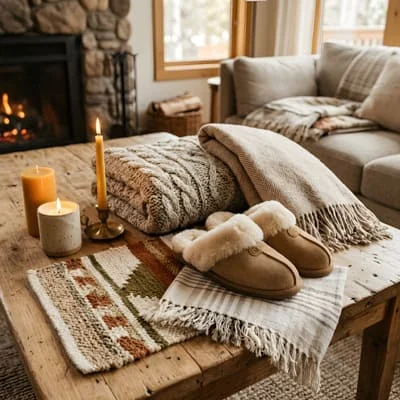
The belief that hygge requires spending money on new decor also doesn’t hold up against its cultural roots: hygge developed as an everyday practice accessible regardless of income, built around genuine presence rather than acquisition.
And the idea that hygge is only relevant to winter overlooks that Danes describe hyggelige moments and spaces year-round, even though the concept is most strongly associated with the colder months when the practice becomes most visible and most needed.
Bringing Genuine Warmth Into Your Colder Months
Genuine hygge at home combines the right physical elements — warm lighting, natural textures, wool and wood — with the harder, more important piece: unhurried presence and real connection, whether shared or solitary. Start with one protected daily ritual and one room’s lighting and textiles, rather than trying to hygge your entire home at once, and let the practice build from there. If you’ve found a hygge ritual that’s genuinely made your colder months feel warmer, I’d love to hear what it is.

Architect with extensive experience in residential and commercial design, including renovations and modular construction. Love to share information about Architecture, home and lifestyle in this blog.